Showing posts with label Al Qaeda. Show all posts

Monday, September 12, 2011

It's not extreme ideology that creates most Afghan or Iraqi insurgents or Al Qa'ida men, it’s killing members of their family, country or religion

Tony Blair is still pointing to Islamic “extreme ideologies” as “the threat” and the cause of all opposition to the US led “liberations” of Iraq and Afghanistan. Blair adds that it’s not about anything “we” do to “them” (1) – (2).

Yet one British reporter in Libya for Al Jazeera English the day the rebels took Tripoli recounted how Iraqis had come up to him in Baghdad the day Saddam was overthrown and told him they loved Americans, who were the greatest people in the world. A week later, one of the same people told him American troops had killed two members of his family – and that he would now kill as many Americans as he could.

This was not an unusual case. A CIA intelligence assessment in 2005 found the typical Iraqi insurgent was “motivated to fight because the United States is occupying his country” and “a family grievance, someone was hurt by coalition forces”, though adding that “There is also [in this Iraqi insurgent] religion and nationalism that results in a view he must fight on to get non-Muslims out of Muslim territory.” (3)

‘Hurt’ here is a nice vague word that papers over family members jailed without trial, tortured by Coalition forces or by US trained Iraqi government ‘police commandos’ or ‘counter-terrorist’ units using the same torture methods as under Saddam, or raped or killed by them. Blair’s claim that only insurgents and Al Qa’ida kill civilians in Iraq, with British , American and Iraqi government forces not responsible for killing any, is demonstrably and very false (4) – (8).

American journalist Thomas Ricks even found American forces often ‘arrested’ the wives and children of suspected insurgents – and often even if the suspect did give themselves up, US forces had ‘lost’ their families in the horrific prison torture network of which Abu Ghraib was the tip of the iceberg (9).

While Blair is probably right that terrorist attacks killed more civilians than Coalition forces did, due to truck, car and suicide bombings, even US military statistics showed that over 75% of insurgent and/or terrorist attacks targeted Coalition or Iraqi government armed forces (10).

So the insurgents’ motives include not just the religious ones that Blair sees as the only issue, but anger at foreign troops having killed, tortured or raped a member of their family; and opposition to foreign troops occupying their country. These are not examples of an alien ideology distorting reality, but reactions anyone can understand and empathise with.

Our enemies’ motives also include opposition to a new government that uses the same death and torture squad techniques on it’s people as the military government of El Salvador in the 80s, or Saddam Hussein himself (11).

Similarly, when many Iraqi insurgents turned from being allied to Al Qa’ida to accepting American money to fight it, the reason was not their ideology changing to one more similar to the British or American governments’, but disgust at Al Qa’ida killing Iraqi civilians (12) – (14).

Afghanistan : it’s mostly not about extreme Islamic ideology either
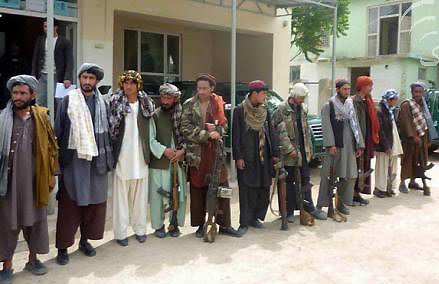
In Afghanistan the extremism of the Taliban is notorious. Yet US intelligence analysts found that 90% of the people NATO are fighting in Afghanistan are neither Taliban nor even “religiously motivated”, but fighting out of a cultural tradition of attacking foreign troops who are occupying their lands (which in Afghanistan may include for instance non-Pashtuns occupying Pashtun areas, or even soldiers from a tribe from another valley) (15) – (16).

A study by the US National Bureau of Economic Research also found that the number of attacks on NATO forces in each area of Afghanistan correlated closely with incidents in which NATO troops killed civilians in that area, with, on average, six extra attacks taking place each time civilians were killed (17).

There is also a fair amount of evidence of the ‘El Salvador option’ of US trained and led native ‘counter terrorist’ and ‘militia’ death squads being employed by the US in Afghanistan in summary executions in night raids (often of teenagers who turn out to be innocent). As in Iraq this allows the US military massive influence while denying any direct involvement – US officials for instance confirming that a raid had had US forces present but with the ‘trigger pullers’ being Afghan (18) – (20).

As with Al Qa’ida in Iraq most of the opposition to the Taliban among Afghans is due to Taliban killing civilians.

(US, UN and Afghan government sources show that Taliban and other opponents of NATO and the Karzai government have been responsible for the majority of civilian deaths for several years including 2011 so far. Given the Karzai government and the UN giving slightly higher figures for civilian casualties than NATO this can’t be discounted entirely as biased reporting of numbers.  However the total number of civilians killed has also been rising each year. (21) – (25).

NATO forces are also the body with the most security resources to collect enough statistics to make even a rough estimate of the total for each year across the whole country (21) – (26).

NATO figures for civilian casualties caused by their forces are also much lower than those of the Afghan Independent Human Rights Commission’s  figures in the minority of cases in which the AIHRC conducts it’s own investigation, though the UN may increase it’s figures in such cases. The AIHRC are all appointed by President Karzai and it’s head, Sima Samar, has had death threats from the Taliban and has said she’s in favour of NATO forces staying on to defeat the Taliban. This suggests NATO and UNAMA figures may understate the number of civilians killed by NATO and Afghan government forces. (26).

Even Al Qa’ida gets many recruits who want to protect Muslim civilians from being killed

Photo : The aftermath of the Madrid bombing

Al Qaeda was always a tiny minority of the people fighting the US and it’s allies and most Muslims want nothing to do with them, largely because they have often deliberately targeted civilians, which is not justified either morally or by anything in the Quran, but they have also repeatedly said they are killing our civilians because we are killing their (Muslim) civilians.

After 9-11 Bin Laden said “Every time they kill us, we kill them” (27). The Madrid bombers asked “Is it OK for you to kill our children, women, old people and youth in Afghanistan, Iraq, Palestine..? And is it forbidden to us to kill yours.” (28). Al Qa’ida in Europe said the July 7th bombings were revenge for the wars in Afghanistan and Iraq (29). In 2004 Bin Laden offered a truce to European countries if they withdrew their troops from Afghanistan and Iraq, saying “stop spilling our blood so we can stop spilling yours” (30).

This does not mean their murder of civilians was justified. Two wrongs cannot make a right. It is never justified to target civilians or take revenge on people not responsible for the acts you are taking revenge for. Taking revenge is usually pointless and counter-productive.

Al Qa'ida have also lost support among Muslims for targeting Muslim civilians as supposedly not 'true' Muslims.However these statements are more evidence that Al Qa’ida, like other Iraqi and Afghan insurgents, have motivations which are based at least partly on reality and which we can understand.

Only someone blinded by ideology could claim that the US and its allies have done nothing to turn any Afghans, Iraqis or Muslims against them

It’s hard to believe that Tony Blair can genuinely fail to see that if you kill members of the families of many thousands of people, or torture people by the thousand, many of them will hold it against you and some will seek revenge.

The fact that some Muslims, seeing themselves as part of a global community of Muslims, may also think they have a duty to fight to protect other Muslims in other countries, should not be surprising either. It’s not so different from Tony Blair, a British Prime Minister, deciding that we had a moral duty to stand ‘shoulder to shoulder’ with Americans due to ‘shared values’ after September 11th.

No doubt Blair is right that a minority of Muslims would be extreme in their views no matter what the US government and military and it’s allies did or didn’t do. Bin Laden for instance once claimed that “the crusaders” had allied with the Serbs against the Muslims in the former Yugoslavia.

To claim that nothing the US led alliance has done in terms of military action, torture, or supporting the dictatorships and occupations of others over mostly Muslim populations has turned anyone against us, or that anyone opposed to the US led alliance is only opposed due to ideology, is just him believing what he would like to believe though, blindly refusing to see the facts. That is deluded. You might even say that he clings so blindly to an ideology in which the US and it’s allies can do no wrong - and that this ideological belief is distorting his perception of reality.

Many converts to Islamic extremism may well be more symptoms of how some people react to having family members killed by foreign forces than a cause of them, just as the number of votes the BNP gets in the UK rises with the unemployment rate and rose after the London bombings. Blair and Bush and the neo-conservatives like to pretend that history began on September 11th – that it was what the Khmer Rouge called Year Zero, but in fact Israeli killings of Palestinian civilians and occupation of the West Bank and Gaza has been a motivating factor for Islamic extremist groups for decades, as have American and European support for torturing dictatorships in Muslim countries, along with civilians killed in wars on Muslim countries.


(1) = Independent 10 Sep 2011 War on terror 'not over' says Tony Blair,http://www.independent.co.uk/news/uk/politics/war-on-terror-not-over-says-tony-blair-2352499.html ; ‘Mr Blair warned the threat would only end when "we defeat the ideology". …"I think it will take a generation, but the way to defeat this ideology ultimately is by a better idea, and we have it, which is a way of life based on openness, democracy, freedom and the rule of law."’…my view is that actually this is a spectrum of which the terrorists are at one end but actually that spectrum of radical Islamism goes far, far deeper than we think…."It is profound, it is an ideology, it is a movement and it is still there, still with us.

(2) = BBC News 10 Sep 2011 ‘Tony Blair denies military action 'radicalised' Muslims’,http://www.bbc.co.uk/news/uk-politics-14858265 ; ‘The reason why these people are radicalised is not because of something we're doing to them. …There is this view, which I'm afraid I believe is deeply naive in the West, that somehow these people, you know, misunderstand our motives, that we've confused them, that that's why they've become radicalised. …And until we stop accepting that somehow we, by our actions, are provoking these people to be as they are, we will carry on with this problem….Mr Blair said that military force should be considered to stop Iran developing a military nuclear programme. "I don't think it would include invasion but I think you cannot rule out the use of military force against Iran if they continue to develop nuclear weapons in breach of the international community's obligations on them."’

 (3) = Washington Post 06 Feb 2005 ‘CIA Studies Provide Glimpse of Insurgents in Iraq’,http://www.washingtonpost.com/ac2/wp-dyn/A1508-2005Feb5?language=printer

(4) = NYT magazine 01 May 2005 ‘The Way of the Commandos’,http://www.nytimes.com/2005/05/01/magazine/01ARMY.html

(5) = New York Times Magazine 01 May 2005 ‘The Way of the Commandos’, http://www.nytimes.com/2005/05/01/magazine/01ARMY.html?pagewanted=1&_r=1

(6) = Nation 06 Jun 2009 ‘Iraq’s new death squad’, http://www.thenation.com/doc/20090622/bauer

(7) = Amnesty International World Report 2010 (covering 2009) – Country Report Iraq,http://report2010.amnesty.org/sites/default/files/AIR2010_AZ_EN.pdf#page=123 ;(once pdf loads, scroll down to page 125 (by PDF page number) or 178 (number marked on page)

(8) = On US and British forces in Iraq killing civilians see this link and sources listed on it and also this one

(9) = Thomas E. Ricks (2006) ‘FIASCO – the American military adventure in Iraq’, Penguin, London, Chapter 11 - pages 236-238 of paperback edition & chapter 12, pages 283-284 of paperback edition

(10) = Brookings Institution (July 2008) – Iraq Index, Page 8 – Enemy-Initiated Attacks against the Coalition and it’s partners, source MNF (multinational forces) Iraq, see Page 8, http://www.brookings.edu/fp/saban/iraq/index.pdf

(11) = See the part of the blog post on this link with the sub-heading ‘Killing and torturing Iraqis - supposedly to save them from Saddam doing it’ and the sources for it

(12) = NPR 31 Mar 2005 ‘Profile of an Iraqi Insurgent’, http://www.npr.org/templates/story/story.php?storyId=4568785, He says he grew disillusioned with the insurgency, which he says has been "hijacked by foreigners" and directs its attacks against Iraqis, not Americans.

(13) = Christian Science Monitor 06 Feb 2006 ‘Sunni tribes turn against jihadis’,http://www.csmonitor.com/2006/0206/p01s01-woiq.html ; ‘Sheikh Osama al-Jadaan, head of the influential Karabila tribe… He's also turned away from supporting Abu Mussab al-Zarqawi and other foreign fighters in Iraq. "We realized that these foreign terrorists…claim to be striking at the US occupation, but the reality is they are killing innocent Iraqis in the markets, in mosques, in churches, and in our schools."

(14) = Time 31 Jan 2011 ‘The Insurgent's Tale: Rolling Stone's 2005 Profile of a Soldier Reconsidering Jihad’,http://www.rollingstone.com/politics/news/the-insurgents-tale-rolling-stones-2005-profile-of-a-soldier-reconsidering-jihad-20110131 ; ‘At thirty-two, Khalid was beginning to have serious reservations about the course of the insurgency in Iraq. They are over-killing there. Fighting foreign soldiers was one thing — he had been doing it all of his adult life. But did his faith really sanction killing civilians in their own country? The blood of people is too cheap.’

(15) = Boston Globe 09 Oct 2009 ‘Taliban not main Afghan enemy - Few militants driven by religion, reports say’,http://www.boston.com/news/world/middleeast/articles/2009/10/09/most_insurgents_in_afghanistan_not_religiously_motivated_military_reports_say/

(16) = Washington Post 27 Oct 2009  ‘U.S. official resigns over Afghan war’, http://www.washingtonpost.com/wp-dyn/content/article/2009/10/26/AR2009102603394_3.html?hpid=topnews&sid=ST2009102603447

(17) = AP 02 Aug 2010 ‘Study ties civilian deaths to attacks on U.S. forces’, http://www.msnbc.msn.com/id/38530360/ns/world_news-south_and_central_asia/t/study-ties-civilian-deaths-attacks-us-forces/#.Tm1FuOxZ-So ; for full report see Luke N. Condra, Joseph H. Felter, Radha K. Iyengar, Jacob N. Shapiro (2010) ‘The Effect of Civilian Casualties in Afghanistan and Iraq’  , National Bureau of Economic Research, NBER Working Paper No. 16152, July 2010, http://www.nber.org/papers/w16152 ; The fact that no correlation was found in Iraq may well be due to a greater degree of nationalism in Iraq, with most Iraqis seeing themselves as Iraqi first, compared to what one American officer called ‘valleyism’ in Afghanistan, with community loyalties often limited to one valley (see (16) above)

(18) = Guardian 22 Nov 2009 'US pours millions into anti-Taliban militias in Afghanistan', http://www.guardian.co.uk/world/2009/nov/22/us-anti-taliban-militias-afghanistan

(19) = On the ‘El Salvador option’ of US trained and/or led native death squads from El Salvador to Pakistan, Afghanistan and Iraq to Colombia see the blog post on this link and sources for it

(20) = On summary executions of people who are often later found to be innocent and teenage boys see the blog post on this link – scroll down to the sub-heading ‘Night Raids and the El Salvador Option moving from Iraq to Afghanistan’ or to see sources for it to ‘Sources for Night raids etc’. Some links may have changed but you should be able to find the original articles by googling the newspaper name and the headline

(21) = Afghanistan Conflict Monitor ( of simon Fraser University, Canada) – Facts and Figures – Civilian Casualties http://www.conflictmonitors.org/countries/afghanistan/facts-and-figures/casualties/civilians (tables using UN statistics for 2007-2010 showing civilian casualties and whether they were caused by NATO or Afghan government forces or their allies (PGF =Pro-Government Forces) or their enemies (AGF = Anti-Government Forces)

(22) = Casualty Monitor – Civilian Casualties: Afghanistan – more tables showing the same things and again based on UNAMA figures, http://www.casualty-monitor.org/p/civilian-casualties-afghanistan.html

(23) = Afghan Independent Human Rights Commission AIHRC (2010) ‘Afghanistan Annual Report on the Protection of Civilians in Armed Conflict’, http://www.aihrc.org.af/2010_eng/Eng_pages/Reports/Thematic/Executive_Summary_Final.pdf

(24) = guardian.co.uk 19 Jul 2010 ‘Afghanistan civilian death toll has risen sharply, says United Nations’,http://www.guardian.co.uk/world/2011/jul/19/afghanistan-civilian-deaths-rise-un

(25) = USA Today 22 Jun 2011 ‘Taliban behind most Afghan civilian casualties’,http://www.usatoday.com/news/world/afghanistan/2011-06-22-afghan-civilian-casualties_n.htm

(26) = On problems with and likely biases in Afghan civilian casualty statistics in general; and on US civilian casualty counts on NATO airstrikes being far lower than AIHRC counts see the blog post on this link and sources for it

(27) = Guardian 12 Nov 2001 , ‘Bin Laden denies anthrax attacks’, http://www.guardian.co.uk/world/2001/nov/12/afghanistan.anthrax

(28) = Guardian 12 Mar 2004, ‘The clues that point towards al-Qaida’, http://www.guardian.co.uk/world/2004/mar/12/alqaida.spain2

(29) = Guardian Unlimited 17th July 2005 , 2.15p.m update ‘Al-Qaida in Europe claims responsibility for blasts’ http://www.guardian.co.uk/uk/2005/jul/07/terrorism.july7

(30) = Reuters / guardian.co.uk 15 Apr 2004 ‘Excerpts from 'Bin Laden' tape’, http://www.guardian.co.uk/world/2004/apr/15/alqaida.usa

Wednesday, August 24, 2011

Libya – Even rebels fear civil war between them or chaos - add the risk of an Iraq style insurgency or a Somalia like civil war

Some of the coverage of the war in Libya makes it sound as though a rapid collapse of Gaddafi’s forces followed by a rapid transition to a democracy is a foregone conclusion. Unfortunately this is being very optimistic.

Rebel claims that Gaddafi’s forces would all surrender as soon as they took Tripoli as they were “cowards” or only fighting for Gaddafi out of fear have been proven wrong proven wrong by so far three days of resistance by Gaddafi loyalists in Tripoli. Many are fighting on because they fear what the rebels may do to them – and even some rebels fear there may be bloody chaos or civil war between rebel factions if Gaddafi is defeated.

The Independent reported that:

‘Adem Husseini, 40, also from Manchester, foresaw a period of turbulence after Colonel Gaddafi and his regime are driven from power. "I am going to go back to the UK after the job is done, but I am not going to bring my family for the next three years. There are too many men with guns – a lot of them very young. I am talking about heavy weapons. Some people even have their own private tanks. We are fighting for freedom. History will record we were on the right side. But we are going to go through a very risky time.’ (1)

In April Hillary Clinton and Libyan defector Moussa Koussa warned of the risks of Libya descending into a long civil war and turning into another Somalia and becoming a haven for Al Qa’ida as a result of the chaos (2)

The rebels are split on regional, religious (moderate vs hardline fundamentalist Muslims) and tribal lines ;and there are rivalries among different military commanders and politicians for leadership, plus divisions between those who have opposed Gaddafi for decades and those (like TNC head Jalil) who recently defected.

Patrick Cockburn writes that ‘The rebel fighters in Misrata, who fought so long to defend their city, say privately that they have no intention of obeying orders from the TNC.’ (the rebel Transitional National Council).(3)

Guardian reporter Chris Stephen in Misrata reports ‘with the still unexplained murder of army commander Abdul Fatah Younis seeing units loyal to him coming back to the front and threatening violence against NTC officials they blame for the killing. Their anger was assuaged only with the appointment of a new army commander, Suleiman Obedi, who is from the same Obedi tribe as Younis. Another split has been between Misrata and Benghazi. After the assassination, Misrata rebel army spokesman Ibrahim Betalmal underlined to the Guardian that Misratan units did not accept orders from NTC military command, while continuing to remain on paper loyal to the NTC.’ (4)

(Even the imminent defeat of Gaddafi’s forces in Tripoli is uncertain, with rebel reports (also “confirmed” by the ICC) that Saif Gaddafi had been captured turning out to have been untrue or premature and fighting having continued even after rebels got to the centre of the city. (5) – (7)

Saif claimed the rebels had been defeated in ‘a trap’, which has happened several times when rebel forces took the centre of towns before being attacked from all sides by Gaddafi’s forces – though these claims could be propaganda too.)

The many different, unlikely and inconsistent stories told by the rebels about the killing of General Younis (a defector from Gaddafi to the rebels) and the subsequent dismissal of the entire Transitional National Council by it’s head Mustafa Abdul Jalil also shows serious divisions among the rebels. Some rebel stories said Younis was killed by Gaddafi’s forces (who strangely killed him and his bodyguard without killing any of the rebel troops ‘escorting’ or arresting Younes and his men to take them before the rebel council to answer charges of disloyalty). Other accounts by different TNC spokespeople said an Islamist rebel faction (8) – (13)

Photo: General Younes

Fighting between rival Islamist factions among the rebels has already  happened long before they even reached Tripoli (14).

This and the attempted kidnapping of an Australian freelance journalist in rebel held Benghazi by two armed men in military fatigues suggests the TNC either isn’t in control of all the rebels, or else is behavihttp://www.blogger.com/img/blank.gifng similarly to Gaddafi’s forces (15). It’s especially suspicious as Shelton was reporting on Younis’ death (16).

Personal rivalries are also a problem. In earlier stages of the war rebel officers sometimes refused even to talk to one another to co-ordinate offensives on towns held by Gaddafi (17).

Islamic factions are a big part of rebel military forces.

A French newspaper reported in April that one rebel Islamist faction is led by Hakim Al Sadi, who was previously with the Taliban in Afghanistan and says his aim is to “kill Gaddafi and establish an Islamic state in Libya.” (18)

The same report says that ‘Iman Bugaighis, the spokesman for the National Transition Council’ admitted that “We have twenty-five fighters on the front that were linked to al-Qaida… But they have done their prison, and they now only fight for the liberation of Libya.”(19)

So while Gaddafi’s claims that all the rebels are Al Qa’ida are not true, he seems to be right that some of them are.

So there is a serious risk of a Somalia or Afghanistan style civil war with the winners of each round splitting and fighting among one another – and of Libya splitting up like Somalia into two or three separate countries in practice (Somalia currently has Puntland and Somaliland as effectively separate states). The most likely split would be between the three main Italian colonies that made up Libya at independence, which correspond to the three main rebel factions – Cyrenaica in the East (the Benghazi rebels), Tripolitania in the North-west centred on Tripoli (the rebels who defected from Gaddafi) and Fezzan in the South-West(the western Berber and mountain Arab rebels) (20) -(21).

Many people have pointed out that Libya does not have the religious, ethnic or cultural diversity of Iraq - but Somalia is overwhelmingly made up of Sunni Muslims from the same nomadic herding culture, but has been in a decades long civil war between different clans and leaders and more recently between those Islamists willing to co-operate with the US against Al Qa'ida and those who refuse to. So civil war in Libya is still a serious risk.

NATO's involvement could make this more or less likely. If it aims to keep the rebels unified it could reduce the risk, but in Iraq the US and Coalition forces tended to play on divisions among Iraqis and try to get them fighting and distrusting each other in order to secure the oil laws and contracts wanted by US and other coalition oil companies (see Greg Muttitt's book 'Fuel on the Fire' on this). There is a serious risk of NATO governments doing the same in Libya.

There is also the risk of an in Iraq style insurgency either by armed Islamic fundamentalist groups at odds with the other rebels, Gaddafi supporters, or Libyans who don’t support Gaddafi but distrust the rebels due to their close links with foreign governments with ulterior motives (primarily oil contracts and prices more favourable to their firms; increased oil production and exports to benefit NATO countries’ oil importing economies; and control of air bases and ports – the US and Britain having had control of the Wheelus Field air base near Tripoli under Gaddafi’s predecessor King Idris) (22). The insurgency in Iraq lasted long after Saddam’s overthrow and his capture, with more insurgents having been opponents of Saddam than supporters.

NATO seem to have managed to organise and co-ordinate the rebel forces far more effectively than in the earlier stages of the war – probably because many NATO special forces, CIA men and French Foreign Legion troops are on the ground advising rebel units – as are NATO ‘private security contractors’ – their usual euphemism for mercenaries – who include former SAS men. Many reports from journalists on the ground in Libya talk of western men who were not keen to be filmed or interviewed – and the Obama administration told congress that CIA operations in Libya could not be overseen by them as they were not military forces (23) – (29) .

The "advisers" may actually be fighting - as tens of thousands of American 'military advisers' did in Nicaragua in the 80s on the side of the Contras who backed Somoza, the former dictator. Defence expert Robert Fox has suggested that UAE and Qatari Special forces trained by NATO special forces may have been leading the attack on Tripoli.

Whether NATO will be able to prevent rebel factions turning on one another if Gaddafi’s forces are entirely defeated is another matter.

It's possible that by making funding and trade deals conditional on rebels staying part of a single TNC NATO governments or the UN might be able to reduce the risk of civil war, but it's not guaranteed to work, especially as other countries such as Russia and China may be backing their own preferred candidates or groups to try to ensure they get oil contracts in Libya too. The civil wars in Afghanistan and Somalia have lasted as long as they have partly due to many different neighbouring governments and world powers backing different factions there.

So it’s far too early to be hanging up the Mission Accomplished banner in Libya – and there’s no guarantee that it will lead to democracy, peace and human rights even if NATO achieves it’s aims.


(1) = Independent 20 Aug 2011 ‘Next stop Tripoli – Libya's rebels sense victory is within reach’, http://www.independent.co.uk/news/world/africa/next-stop-tripoli-ndash-libyas-rebels-sense-victory-is-within-reach-2340837.html

(2) = Bloomberg 13 Apr 2011 ‘Clinton’s ‘Failed State’ Warning Hangs Over Libya as NATO Officials Meet’, http://www.bloomberg.com/news/2011-04-12/clinton-s-failed-state-warning-hangs-over-libya-as-nato-can-t-stem-chaos.html

(3) =  Independent 22 Aug 2011 ‘Despite the euphoria, the rebels are divided’, http://www.independent.co.uk/news/world/africa/despite-the-euphoria-the-rebels-are-divided-2341792.html

(4) = guardian.co.uk 22 Aug 2011 ‘Libya: rebel forces reach heart of Tripoli - live updates’,

http://www.guardian.co.uk/world/middle-east-live/2011/aug/22/libya-middle-east-unrest-live#block-45

(5) = guardian.co.uk 22 Aug 2011 ‘Libya: rebel forces reach heart of Tripoli - live updates’, http://www.guardian.co.uk/world/middle-east-live/2011/aug/22/libya-middle-east-unrest-live#block-66

(6) = Hague Justice Portal 22 Aug 2011 ‘ICC confirms that Saif Al-Islam Gaddafi has been arrested in Libya’, http://www.haguejusticeportal.net/eCache/DEF/12/892.TGFuZz1FTg.html

(7) = Guardian.co.uk 22 Aug 2011 ‘Libya: rebel forces reach heart of Tripoli - live updates’,http://www.guardian.co.uk/world/middle-east-live/2011/aug/22/libya-middle-east-unrest-live

(8) = Guardian 29 Jul 2011 ‘Abdul Fatah Younis ambush killing blamed on pro-Gaddafi forces’,http://www.guardian.co.uk/world/2011/jul/29/abdul-fatah-younis-killed-libya

(9) = Guardian.co.uk 29 Jul 2011 ‘Libyan rebels fear rift after death of Abdel Fatah Younis’,

http://www.guardian.co.uk/world/2011/jul/29/libyan-rebels-rift-death-younis ; Before the announcement of his death, armed men declaring their support for Younis appeared on the streets of Benghazi claiming they would use force to free him from NTC custody….Minutes after Jalil's statement at a chaotic late-night press conference at a hotel in Benghazi, gunfire broke out in the street outside. Members of Younis's tribe, the Obeidi, one of the largest in the east, fired machine guns and smashed windows, forcing security guards and hotel guests to duck for cover.

(10) = Guardian.co.uk 30 Jul 2011 ‘Libyan rebel soldiers killed Younis’, http://www.guardian.co.uk/world/2011/jul/30/libyan-rebel-soldiers-killed-younis ; General Abdel Fattah Younis shot dead by Islamist-linked militia within the anti-Gaddafi forces, says senior opposition minister……. Younis was killed in mysterious circumstances on Thursday. Initially, Mustafa Abdul Jalil, president of the National Transitional Council, the rebel's government, claimed the murder had been carried out by Gaddafi-linked forces…..That was starkly contradicted by oil minister Ali Tarhouni who confirmed Younis had been killed by members of the Obaida Ibn Jarrah Brigade, a group linked to the rebels……Tarhouni told reporters Younis was being brought back to Benghazi when he was shot. A militia leader who had gone to fetch him from the front line had been arrested and confessed that his subordinates had carried out the killing.

(11) = Independent 30 Jul 2011 ‘Rebel feud puts UK's Libya policy in jeopardy’,http://www.independent.co.uk/news/world/africa/rebel-feud-puts-uks-libya-policy-in-jeopardy-2328626.html ;

Increasing evidence has begun to emerge that the savage killings of General Abdel Fatah Younes and two other senior officers – who were shot and whose bodies were burnt – may have been carried out by their own side….Gen Younes, who had himself served as interior minister in the regime, had been accused of holding secret talks with Tripoli officials and leaking military secrets. The news of his arrest led to men from the Obeidi tribe gathering outside the Tibesti Hotel on Thursday evening, where the rebels were due to hold a press conference, threatening to take action to free the commander unless he was released….. Mr Jalil held that Gen Younes had merely been "summoned" for questioning and been released on his own recognisance before being killed in an attack by an "armed gang". Rebel security forces, he maintained, were still trying to find the bodies, but the TNC leader refused to answer questions on how, in that case, he could know that the men were already dead…..  Meanwhile Mr Jalil's version of events was contradicted by the TNC's military spokesman, Mohammed al-Rijali, who stated that Gen Younes had been detained at the oil port of Brega and brought to Benghazi for interrogation prior to his death. A third rebel official, a senior security officer, Fadlallah Haroun, maintained that three corpses had already been found before Mr Jalil had made his announcement. He could not explain why the TNC leader had failed to mention this at the press conference.

(12) = NPR 03 Aug 2011 ‘Rebel Leader’s Death Puts Eastern Libya On Edge’,

http://feb17.info/news/rebel-leaders-death-puts-eastern-libya-on-edge/ ; At the tribal gathering, Younis’ sons — who didn’t want their names used — say that if the rebel leadership couldn’t bring their father’s killers to justice then they hoped the tribe would….“The way he was killed looks like a betrayal,” says one son, adding that no one is above suspicion….Another son says he believes the rebel council was involved.

(13) = guardian.co.uk 09 Aug 2011 ‘Libyan rebel leader sacks entire cabinet’ http://www.guardian.co.uk/world/2011/aug/09/libyan-rebel-leader-sacks-cabinet

(14) = guardian.co.uk 31 Jul 2011 ‘Younis assassination magnifies divisions among Libyan rebels’, http://www.guardian.co.uk/world/2011/jul/31/libya-younis-rebels-ramadan-analysis ; ‘News of fighting involving rival Islamist factions came as yet another worrying sign of internal division at a time when western political and military support for the rebels has reached the point of no return.’

(15) = Committee to Protect Journalists 22 Aug 2011 ‘Australian journalist attacked by assailants in Benghazi’, http://cpj.org/2011/08/australian-journalist-attacked-by-assailants-in-be.php

(16) = The National 31 Jul 2011 ‘The death of General Younis makes us stronger, Libya rebels say’, http://www.thenational.ae/news/worldwide/middle-east/the-death-of-general-younis-makes-us-stronger-libya-rebels-say

(17) = Independent 24 Mar 2011 ‘ Kim Sengupta: The resistance has foundered on its own indiscipline and farcical ineptitude’, http://www.independent.co.uk/opinion/commentators/kim-sengupta-the-resistance-has-foundered-on-its-own-indiscipline-and-farcical-ineptitude-2251298.html ;The rebels' operations are further undermined by an absence of command and control. On Monday two men standing within a hundred yards of each other, "Captain" Jalal Idrisi and "Major" Adil Hassi, claimed to be in charge of the fighters who were meant to be attacking Ajdabiya. A brief advance soon turned into a chaotic retreat. Major Hassi then claimed that the misjudgement in going forward had been Captain Idris's idea. But why didn't they liaise? "We haven't got communications equipment" he responded. But the Captain is standing just over there, journalists pointed out. "I don't talk to him," said Major Hassi.

(18) = Le Journal de dimanche 02 April 2011 ‘En Libye, les djihadistes montent au front’,

http://www.lejdd.fr/International/Afrique/Actualite/Al-Qaida-s-implique-en-Libye-293649/?from=headlines ; English translation at http://translate.google.co.uk/translate?js=n&prev=_t&hl=en&ie=UTF-8&layout=2&eotf=1&sl=fr&tl=en&u=http%3A%2F%2Fwww.lejdd.fr%2FInternational%2FAfrique%2FActualite%2FAl-Qaida-s-implique-en-Libye-293649%2F%3Ffrom%3Dheadlines

(19) = See (18) above

(20) = Bloomberg 13 Apr 2011 ‘Clinton’s ‘Failed State’ Warning Hangs Over Libya as NATO Officials Meet’, http://www.bloomberg.com/news/2011-04-12/clinton-s-failed-state-warning-hangs-over-libya-as-nato-can-t-stem-chaos.html; '“It looks like a very untenable situation,” Geoff Porter, an analyst at North African Risk Consulting, said in an interview from New York. “Where we are heading is a de facto partition, between Tripolitania and Cyrenaica,” the historic names for western and eastern Libya.'

(21) = Ronald Bruce St. John (2008) ‘Libya From Colony to Independence’,  Oneworld Paperback/Oxford, Chapters 3 -4 (on the colonial divisions of Libya under Italy and later France and Britain - Tripolitania, Cyrenaica and Fezzan)

(22) = Ronald Bruce St. John (2008) ‘Libya From Colony to Independence’,  Oneworld Paperback/Oxford, pages 97-8, 105-106, 116, 141-142(on Wheelus Field air base and the US under Idris, plus Gaddafi telling US forces to leave)

(23) = BBC News 06 Mar 2011 ‘Libya unrest: SAS members 'captured near Benghazi'’,http://www.bbc.co.uk/news/world-middle-east-12658054

(24) = NYT 30 Mar 2011 ‘C.I.A. Agents in Libya Aid Airstrikes and Meet Rebels’,http://www.nytimes.com/2011/03/31/world/africa/31intel.html

(25) = Guardian 31 Mar 2011 ‘Libya: SAS veterans helping Nato identify Gaddafi targets in Misrata’,http://www.guardian.co.uk/world/2011/may/31/libya-sas-veterans-misrata-rebels ; Former SAS soldiers and other western employees of private security companies are helping Nato identify targets in the Libyan port city of Misrata, the scene of heavy fighting between Muammar Gaddafi's forces and rebels, well-placed sources have told the Guardian.

(26) = Al Jazeera 03 Apr 2011 ‘Libyan rebels 'receive foreign training'’,http://english.aljazeera.net/news/africa/2011/04/201142172443133798.html ; US and Egyptian special forces have reportedly been providing covert training to rebel fighters in the battle for Libya, Al Jazeera has been told….An unnamed rebel source related how he had undergone training in military techniques at a "secret facility" in eastern Libya.

(27) = Bloomberg Businessweek 03 Apr 2011 ‘NATO Escalates Libya Campaign After Rebels Criticize Mission’,http://www.businessweek.com/news/2011-04-06/nato-escalates-libya-campaign-after-rebels-criticize-mission.html

(28) = Washington Post 22 Aug 2011 ‘Allies guided rebel ‘pincer’ assault on Tripoli’http://www.washingtonpost.com/world/national-security/allies-guided-rebel-pincer-assault-on-tripoli/2011/08/22/gIQAeAMaWJ_story.html; British, French and Qatari Special Forces have been operating on the ground in Libya for some time and helped the rebels develop and coordinate the pincer strategy, officials said. At the same time, CIA operatives inside the country — along with intercepted communications between Libyan government officials — provided a deeper understanding of how badly Gaddafi’s command structure had crumbled, according to U.S. officials.

(29) = Independent 23 Aug 2011 ‘Rebels claim the victory – but did the Brits win it?’,http://www.independent.co.uk/news/world/africa/rebels-claim-the-victory-ndash-but-did-the-brits-win-it-2342152.html

Friday, April 29, 2011

Yemen and Bahrain : What about the responsibility to protect civilians and support democracy in Yemen and Bahrain?


We’re hearing a lot of talk about protecting civilians and promoting democracy in the Arab world. This focuses largely on Libya and to a lesser extent on Syria, as if these two were the only dictatorships killing their own people.

Meanwhile, in Yemen, over 130 of the thousands of people shot by snipers on behalf of dictator Ali Abdullah Al Saleh have been killed, thirteen of them this week. Victims include 26 children killed and 200 wounded so far on UN figures (1) – (8). Far from backing the protesters, US military aid to Saleh and American and British training of his forces continues (9) – (11). It’s significant that while some of the Yemeni military has turned against Saleh over the killings the US and British trained special forces remain loyal to him (12). So much for British and American training promoting respect for democracy and human rights. While Syria's ambassador had his invitation to the royal wedding revoked over massacres of civilians by President Assad's forces, Yemen’s ambassador was still invited to the Royal Wedding.

In Bahrain, journalists, Physicians for Human Rights and Amnesty International report King Khalifa’s forces have shot and killed unarmed protesters, hijacking ambulances , and entering hospitals to beat, threaten, arrest, torture wounded protesters and doctors, nurses and ambulance crews. Some of those arrested have died in suspicious circumstances. Some protesters say they have witnessed the summary execution of arrested protesters. Amnesty International report 500 people have been ‘disappeared’ (13) – (25). The US fifth fleet is anchored in sight of the Pearl Roundabout, yet no marines have been ordered to protect Bahraini civilians.

Far from the British government placing any sanctions on Bahrain’s monarchy and it’s forces, Bahrain’s ambassador, Khalifa Bin Ali al-Khalifa (likely a relative of the King from his name) and the former head of the torturing Bahraini National Security Agency, was invited to the Royal Wedding (26). Bahrainis who protested peacefully in London against the killings have had pilot training lessons cancelled by Gatwick Aviation Authority at the request of the government of Bahrain (27).

Foreign Secretary William Hague pretends Bahrain is “completely different” from Libya as King Khalifa has offered “dialogue” and a referendum on a new constitution (28). Yet Gadaffi’s government has also offered “dialogue” or “negotiations” with the rebels repeatedly, including on a new constitution (29) – (30). Gaddafi, Khalifa and Saleh are all unelected dictators who made these offers after having unarmed protesters killed.

NATO governments call on both sides to show restraint, as if unarmed protesters and the people killing them are equally to blame. They lie about the “violence” in Bahrain being “sectarian”, ludicrously implying that the Shia majority in Bahrain are Iranian agents, which incidentally is the same story about ‘foreign agents causing Sectarian violence’ that was used by Mubarak in Egypt and is still used by Gaddafi in Libya and Assad in Syria.

NATO governments also buy Saleh’s lies about how Al Qa’ida will take over Yemen if he falls, despite many of Saleh’s own party’s MPs having joined the protesters – and despite Saleh having himself  backed Al Qa’ida in the 1990s when it was fighting against southern rebels in Yemen. NATO have also carried out missile strikes on people who they claimed they suspected were Al Qa’ida, but turned out to be Yemeni politicians and tribal leaders who were trying to negotiate a peace deal to end the civil war between the government and southern separatists, which has been exacerbated by NATO and Saudi special forces and air and drone strikes. (31) – (36) .

Either Al Saleh is playing NATO governments like a fiddle, or else NATO governments are lying about the real reason they’re backing him.

As long as the civil war continues Saleh can point to the supposed threat of an Al Qa’ida takeover – and cream a bit for himself and his supporters from US financial aid. He can remain dictator. Firms from NATO countries including GE Oil and Gas and Transocean of the US and the British based Orion Group can keep getting contracts to drill in Yemen and it’s territorial waters too – along with some others who’d rather remain anonymous. Others include Nexen (Canadian), Total (French), Occidental (American) and Hunt Oil (American).

According to the US Energy Information Agency , Yemen has relatively small oil reserves (about 3 billion barrels estimated), but, ‘because of its location on the Bab el-Mandab, one of the world's most strategic shipping lanes, through which an estimated 3.5 million barrels of oil passed daily in 2010. Disruption to shipping in the Bab el-Mandab could prevent tankers in the Persian Gulf and the Gulf of Aden from reaching the Suez Canal/Sumed pipeline complex, requiring a costly diversion around the southern tip of Africa to reach western markets.’ (37)

Yemen’s oil production is minor in terms of global production (only 0.22% of the total), but that doesn’t mean the profits made there aren’t significant for certain firms. Yemen is not a member of OPEC, an organisation the US has planned to break up in the past.

Our governments are backing allied dictatorships while they murder civilians even as they condemn hostile ones for the same crimes. They “intervene” only when a government which refuses them military bases or oil contracts, or runs economic policies that threaten maximum profits for their oil and arms companies is in place. If they really support democracy and want to protect civilians, they should prove it by ending all support for all the dictatorships – from Libya and Syria to Egypt, Kuwait, Saudi, Yemen, Bahrain, Oman and Qatar – and giving at least full verbal support to the protesters instead.

Some of the media have asked why the Arab governments aren’t sending more of their forces to help protect civilians in Libya. The fairly obvious answer is that they’re too busy killing their own civilian pro-democracy protesters, who, unlike in Libya, are pretty much entirely un-armed – and doing so with the continued support of our own governments. The Qatari government, which is widely praised for it’s role in supporting the Libyan rebels, is,  as Craig Murray points out, a monarchy not a democracy, even according to the US State Department. It permits Al Jazeera to report freely about events in other countries. but, according to Human Rights Watch it allows absolutely no freedom of speech or assembly within Qatar itself and allows migrant workers to suffer exploitation and abuse (38) – (39).


 (1) = Amnesty International 18 Mar 2011 ‘Yemeni authorities must act over sniper killings of protesters’,http://www.amnesty.org/en/news-and-updates/yemeni-authorities-must-act-over-sniper-killings-protesters-2011-03-18 ; ‘The Yemeni authorities must immediately act to bring to justice those responsible for an apparently co-ordinated sniper attack on protesters in Sana’a today that has left dozens dead. At least 40 people were killed and more than 200 wounded.

(2) = Amnesty International 6 Apr 2011 ‘International community must help probe Yemen’s protest killings’,http://www.amnesty.org/en/news-and-updates/report/international-community-must-help-probe-yemen%E2%80%99s-protest-killings-2011-04-06

(3) = Amnesty International 20 Apr 2011 ‘Yemeni activist at risk as death toll mounts’,http://www.amnesty.org/en/news-and-updates/yemeni-activist-threatened-death-toll-mounts-2011-04-20

(4) = BBC News 19 Apr 2011 ‘Yemen: Three killed at Sanaa and Taiz protests’,http://www.bbc.co.uk/news/world-middle-east-13130330 ; ‘Yemeni security forces have opened fire on anti-government protesters in the capital, Sanaa, and the southern city of Taiz, witnesses and medics say…At least two protesters were killed in Sanaa, while another died in Taiz. …More than 120 people have been killed in two months of protests demanding President Ali Abdullah Saleh step down…Security forces fired live rounds and tear gas "indiscriminately" at the crowd, witnesses said.’

(5) = AP 19 Apr 2011 ‘UNICEF: 26 children killed during Yemen protests’,http://www.msnbc.msn.com/id/42658636/ns/world_news-mideast/n_africa/

(6) = UNocHA IRIN news 05 Apr 2011 ‘YEMEN: Children killed, traumatized by upsurge in violence’,http://www.irinnews.org/report.aspx?reportid=92378

(7) = Reuters 05 Apr 2011 ‘Armed men, police fire on Yemeni protesters’,http://uk.news.yahoo.com/22/20110405/tpl-uk-yemen-clashes-81f3b62_2.html

(8) = Guardian 28 April 2011 ‘Yemen security forces kill 12 in anti-regime demonstration’,http://www.guardian.co.uk/world/2011/apr/27/yemen-campaign-against-president-saleh

(9) = AFP 05 Apr 2011 ‘No plans to suspend military aid to Yemen: US’,http://www.rawstory.com/rs/2011/04/05/no-plans-to-suspend-military-aid-to-yemen-us/

(10) = Reuters 05 Apr 2011 ‘U.S. urges Yemen transition, no aid cut-off-Pentagon’,http://www.reuters.com/article/2011/04/05/us-yemen-usa-pentagon-idUSTRE7346V720110405

(11) = BBC 26 Mar 2011 ‘Saleh departure in Yemen: A matter of 'when', not 'if'’,http://www.bbc.co.uk/news/world-middle-east-12868544

(12) = See (11) above, second last sentence reads ‘While some other military units have joined the opposition, the elite US- and British-trained troops, headed by Mr Saleh's son and nephew, remain loyal to the president.’

(13) = guardian.co.uk 16 Mar 2011 ‘Bahrain unleashes forces on protesters' camp’, http://www.guardian.co.uk/world/2011/mar/16/bahrain-protesters-military-operation-manama ; Military troops have opened a large-scale assault against hundreds of anti-government protesters occupying a landmark square in Bahrain's capital. At least two protesters and three policemen were reported to have been killed, and hundreds injured when riot police overran Pearl roundabout, the focal point for a two-month anti-government uprising.

Gunfire was heard throughout the capital and at least five helicopters were circling scenes of clashes, amid widespread panic on the streets below.

Riot police also entered Manama's Salmaniya medical centre for the first time since the demonstrations began and doctors reported they were being prevented from reaching the hospital and treating patients inside.

(14) = BBC 15 Mar 2011 ‘Bahrain king declares state of emergency after protests’, http://www.bbc.co.uk/news/world-middle-east-12745608

(15) CNN 16 Mar 2011 ‘Witnesses: Security forces attack protesters and doctors in Bahrain’, http://edition.cnn.com/2011/WORLD/meast/03/16/bahrain.protests/index.html Security forces blocked highways leading to the capital and formed a ring around the country's main hospital, Salmaniya Medical Complex, not letting people enter or leave, witnesses said. Security forces then stormed the hospital and beat staffers, several doctors there said.  Doctors have been hiding in rooms, said Yousif Sharaf, a doctor at the hospital. "We are trapped," Sharaf said. "We are asking for the security forces to please stay outside the hospital. They are beating the staff." Fatima Haji, another doctor, also said she was trapped in the hospital."We are in a small group hiding," Haji said, her voice rising with emotion. "This is a government hospital. How can this happen in a government hospital?"Haji said two people had died in the hospital Wednesday morning, and she feared for the other patients there because the doctors were not able to work.

(16) = BBC News 20 Feb 2011 ‘Bahrain protests: Your stories’,http://www.bbc.co.uk/news/mobile/world-middle-east-12504658

(17) = BBC World Service 16 Mar 2011 ‘Bahrain security forces in crackdown on Pearl Square’,http://www.bbc.co.uk/worldservice/news/2011/03/110316_bahrain_sl.shtml

(18) = BBC News 16 Mar 2011 ‘Bahrain crackdown on protests in Manama's Pearl Square’,http://www.bbc.co.uk/news/world-middle-east-12755852

(19) = Independent 17 Mar 2011 ‘Bahrain protesters driven out of Pearl Square by tanks and tear gas’,http://www.independent.co.uk/news/world/middle-east/bahrain-protesters-driven-out-of-pearl-square-by-tanks-and-tear-gas-2244165.html

(20) = Amnesty International 17 Mar 2011 ‘Evidence of Bahraini security forces’ brutality revealed’,http://www.amnesty.org/en/news-and-updates/report/evidence-bahraini-security-forces%E2%80%99-brutality-revealed-2011-03-16

(21) = Amnesty International 21 Apr 2011 ‘Bahrain: International pressure needed now to halt spiralling human rights crisis’, http://www.amnesty.org/en/news-and-updates/bahrain-international-pressure-needed-now-halt-spiralling-human-rights-crisis-2011- ; On disappearances - ‘More than 500 people have been arrested in the last month…In virtually all cases, weeks after their arrest, their whereabouts remain unknown….Some detainees have reportedly been tortured or otherwise ill-treated following arrest. At least four detainees are known to have died in custody in suspicious circumstances.’

(22) = Amnesty International 20 Apr 2011 ‘Bahrain urged to stop targeting protesters as two more die in custody’,http://www.amnesty.org/en/news-and-updates/bahrain-urged-stop-targeting-protesters-two-die-custody-2011-04-11

(23) = Amnesty International 24 Mar 2011 ‘Bahrain: Ensuring accountability for excessive force and protection for protesters’, http://www.amnesty.org/en/appeals-for-action/bahrain-ensuring-accountability-excessive-force-and-protection-protesters

(24) = Independent 21 Apr 2011 ‘Bahrain's secret terror’, http://www.independent.co.uk/news/world/middle-east/bahrains-secret-terror-2270675.html ; ‘The intimidation and detention of doctors treating dying and injured pro-democracy protesters in Bahrain is revealed today in a series of chilling emails obtained by The Independent. ..At least 32 doctors, including surgeons, physicians, paediatricians and obstetricians, have been arrested and detained by Bahrain's police in the last month … One doctor, an intensive care specialist, was held after she was photographed weeping over a dead protester. Another was arrested in the theatre room while operating on a patient… Many of the doctors, aged from 33 to 65, have been "disappeared" – held incommunicado or at undisclosed locations. Their families do not know where they are. Nurses, paramedics and ambulance staff have also been detained.’

(25) = Independent 22 Apr 2011 ‘Bahrain security forces 'tortured patients'’,http://www.independent.co.uk/news/world/middle-east/bahrain-security-forces-tortured-patients-2272618.html ; ‘Bahrain’s security forces stole ambulances and posed as medics to round up injured protesters during a ferocious crackdown on unarmed demonstrators calling for reform of the monarchy, an investigation by a rights group reveals today. ..The first major report on repression of the medical profession during the country’s crisis details how a doctor was abducted during an operation and injured patients lying in hospital were tortured and threatened with rape. ..The investigation by Physicians for Human Rights (PHR).’

(26) = Guardian 28 April 2011 ‘Bahrain 'torture service' official to attend royal wedding’,http://www.guardian.co.uk/uk/2011/apr/28/bahraini-linked-to-torture-royal-wedding

(27) = guardian.co.uk 28 Apr 2011 ‘Bahraini trainee pilots suspended from UK flying school after attending protests’, http://www.guardian.co.uk/world/2011/apr/28/bahraini-trainee-pilots-suspended

(28) = = Foreign and Commonwealth Office 20 Mar 2011 ‘UN intervention in Libya: Foreign Secretary on BBC Radio 5’, http://www.fco.gov.uk/en/news/latest-news/?id=569183782&view=News ; ‘Yes Bahrain is a different case from Libya, it’s clearly a different case…In Bahrain the Government has offered a national dialogue to the opposition forces, they have offered a referendum on a constitution, you don’t see Colonel Gaddafi offering a referendum on a future constitution.’

(29) = Bloomberg 21 Feb 2011 ‘Libya Violence Deepens as Protestors Claim Control of Second-Largest City’,http://www.bloomberg.com/news/2011-02-20/libyan-revolt-widens-as-attacks-on-protesters-draw-condemnation.html ; ‘Saif Qaddafi offered dialogue with the opposition, a national debate on the constitution, higher wages and unemployment benefits and legal changes to “open up the realms of freedom,” and said the army had made errors in handling the protests’

(30) = Ha’aretz (Israel) 07 Mar 2011 ‘Gadhafi regime offers olive branch to rebels while fighting to regain control over east Libya’, http://www.haaretz.com/news/international/gadhafi-regime-offers-olive-branch-to-rebels-while-fighting-to-regain-control-over-east-libya-1.347653?localLinksEnabled=false ; ‘A leading member of Libya's ruling establishment appealed to rebel leaders for dialogue on Monday, in the clearest sign yet Muammar Gadhafi may be ready to compromise with opponents challenging his rule…Jadallah Azous Al-Talhi, a Libyan prime minister in the 1980s who is originally from eastern Libya, appeared on state television reading an address to elders in Benghazi, the main base of the anti-Gadhafi rebels…He asked them to "give a chance to national dialogue to resolve this crisis, to help stop the bloodshed, and not give a chance to foreigners to come and capture our country again."’

 (31) = Foreign and Commonwealth Office 20 Mar 2011 ‘UN intervention in Libya: Foreign Secretary on BBC Radio 5’, http://www.fco.gov.uk/en/news/latest-news/?id=569183782&view=News ; ‘Yes Bahrain is a different case from Libya, it’s clearly a different case…In Bahrain the Government has offered a national dialogue to the opposition forces, they have offered a referendum on a constitution, you don’t see Colonel Gaddafi offering a referendum on a future constitution.’

(32) = William Hague MP, Hansard 17th Feb 2011http://www.publications.parliament.uk/pa/cm201011/cmhansrd/cm110217/debtext/110217-0001.htm#11021765001329 , ‘We urge all sides to avoid violence and for the police to exercise restraint. The Bahraini Government should move quickly to carry out their commitment to a transparent investigation into earlier deaths, and extend that to include today's events and any alleged human rights abuses…I also said to the Foreign Minister that this is a time to build bridges between the different religious communities in Bahrain. I said that we would strongly oppose any interference in the affairs of Bahrain by other nations or any action to inflame sectarian tensions between Bahrain's Sunni and Shi'a communities. ‘

(33) = US Department of State – Remarks by Sec. of State Clinton – Remarks with Egyptian Foreign Minister Al-Araby 15 March 2011 ‘Remarks With Egyptian Foreign Minister Nabil Al-Araby’, http://www.state.gov/secretary/rm/2011/03/158404.htm ; ‘Well, we call for calm and restraint on all sides in Bahrain. We’re particularly concerned about increasing reports of provocative acts and sectarian violence by all groups. The use of force and violence from any source will only worsen the situation and create a much more difficult environment in which to arrive at a political solution.’

(34) = ABC News 27 Mar 2011 ‘Defense Secretary: Yemen Gov’t Collapse 'A Real Problem'’, http://blogs.abcnews.com/politicalpunch/2011/03/defense-secretary-yemen-govt-collapse-a-real-problem.html; ‘“Secretary Gates, you said this week we have not done any post-Saleh planning,” Senior White House Correspondent Jake Tapper said. “How dangerous is a post-Saleh world -- a post-Saleh Yemen to the United States?” he asked…Gates replied, “I think it is a real concern because the most active and, at this point, perhaps the most aggressive branch of al Qaeda -- al Qaeda in the Arabian Peninsula -- operates out of Yemen…“And we have had a lot of counterterrorism cooperation from President Saleh and Yemeni Security Services,” he said…“So if that government collapses or is replaced by one that is dramatically more weak, then I think we'll face some additional challenges out of Yemen.  There's no question about it.  It's a real problem,” Gates told Tapper.’

(35) =BBC News 23 Feb 2011Yemen protest: Ruling party MPs resign over violence’,http://www.bbc.co.uk/news/world-middle-east-12557617

(36) = The Nation 18 Apr 2011 ‘The Dangerous US Game in Yemen’, http://www.thenation.com/article/159578/dangerous-us-game-yemen

(37) = US Energy Information Administration – Country analysis – Yemen Feb 2011,http://www.eia.doe.gov/countries/cab.cfm?fips=YM

(38) = Human Rights Watch 24 Jan 2001 ‘U.S. Should Block Qatar Venue for WTO Meeting’, http://www.hrw.org/en/news/2001/01/24/us-should-block-qatar-venue-wto-meeting

(39) = Human Rights Watch 20 Jan 2008 ‘UAE: Meetings Should Address Migrant Workers’ Rights’,http://www.hrw.org/en/news/2008/01/17/uae-meetings-should-address-migrant-workers-rights

Sunday, January 30, 2011

Egypt : Four Good Reasons why Obama should be backing El Baradei and the Protesters and dropping Mubarak's dictatorship


Obama is risking making the same mistake Carter did during the Iranian revolution in 1979 by continuing to back Mubarak’s dictatorship in Egypt to keep right wing members of his own party and the Republican opposition happy. This ensured the transition was chaotic, allowing Khomeini and extreme fundamentalists to crush the liberals and socialists among the opponents of the Shah’s dictatorship. To minimise the chances of the same happening in Egypt, Obama should tell Mubarak, his NDP party and the Egyptian military to stand down and allow a National Unity government , as demanded by Egyptian protest leader and former IAEA head Mohamed El Baradei , allowing a peaceful transition to democracy. He should also tell Egypt’s  government and military they won’t get a penny more in military aid  till this happens. As El Baradei says US government “life support to the dictator” must end (1).

El Baradei, the protest leader in Egypt, could not be more different from Ayatollah Khomeini, the senior protest leader in Iran in 1979. He is no Islamic fundamentalist and no potential dictator or theocrat.

There is no guarantee what the new government in Egypt will be, whatever Obama does, because Mubarak’s time is running out just as the Shah’s was in 1979. So Obama would be better dropping him to get some influence with the new government – and help ensure the Muslim Brotherhood doesn’t freeze out other opposition groups entirely - than alienating opposition groups who may soon be the new government.

Even if the Muslim Brotherhood come to power through elections – like the AKP Islamic government in Turkey and Hamas in Gaza – these precedents suggest they will not be as extreme as the Taliban, nor are they likely to support Al Qa’ida. They will fight them instead, as Hamas do in order to avoid giving the US any excuse to target them. Zawahiri and most armed jihadists or terrorists hate Islamic political parties like the Egyptian Muslim Brotherhood that seek political power through the ballot box – and are in turn hated by them.

Every expert on jihadist terrorist groups like Al Qa'ida - like Fawaz A. Gerges, has found that torturing dictatorships churn out recruits for them them like factories

Many people are claiming Obama and the US government face a dilemma on Egypt – that if they don’t keep backing Mubarak’s dictatorship the Egyptian Muslim Brotherhood could take power and form a government hostile to the US, or even friendly to Al Qa’ida. The same people have tried to re-write history to claim the Shah was overthrown in 1979 due to Carter not backing his dictatorship strongly enough.

The last Shah (king or emperor) of Iran - dictator of Iran from 1953 to 1979 - US President Carter's administration backed him to the last moment against a revolution involving socialists, liberals and Islamic fundamentalists which was hijacked by Ayatollah Khomeini and the fundamentalists

What we know about Egypt today and the similarities with (and differences from) the events of the 1979 Iranian revolution show that Obama faces no such dilemma though – because backing the dictatorship is even more likely to allow a more extreme Muslim Brotherhood government to come to power.

In 1979 Carter continued to support the Shah’s dictatorship and urge him not to step down or go into exile even after the Iranian army and SAVAK secret police had shot hundreds of unarmed protesters dead and dragged thousands away to torture.  Soon the Iranian army couldn’t stomach facing killing thousands of their own people; and as the demonstrations grew bigger and bigger the military refused to fire on the demonstrators and some began to join them. Carter’s adviser Zbigniew Brzezinski favoured moving from a civilian fronted monarchical dictatorship to a military government, but was over-ruled. His plan was irrelevant anyway as the majority of the military weren’t willing to kill for the Shah anymore (Brzezinski has improved with age and experience – now calling for negotiations with Hamas). The Shah fled into exile and in the chaos Khomeini and the Islamic fundamentalists among the revolutionaries were able to eliminate the socialists, liberals and others (2) – (3).

The strategy of backing a dictatorship did not prevent an Islamic fundamentalist theocracy hostile to the US and Israel, but created one. This was due both to decades of US backed torture and killings by the Shah’s dictatorship and due to Carter’s decision to back it to the last rather than help encourage an orderly transition to democracy and support the more democratic elements of the opposition.

There is a situation in Egypt today which is similar in some ways but very different in others.

Demonstrators fill Tahrir Square in Cairo

The pro-democracy demonstrations were begun by (mostly secular or moderate Muslim) students and trade unionists, are backed by liberals like former UN International Atomic Energy Agency (IAEA) head Mohamed El Baradei and according to Amnesty and International ‘‘This was a protest that crossed class, ideology and religion, and that is what scares the government.’(4) The Muslim Brotherhood have since joined the protests, but are not leading them. So while, as in Iran in 1979, the opposition includes Muslim fundamentalists along with socialists and liberals, the balance of power among them is different.

Photo: Demonstrators and Egyptian soldiers smile at one another - from the Sunday Herald

Human Rights Watch’s were reporting as of yesterday at least 83 people killed so far in Egypt, mostly by soldiers and both uniformed and plain clothes police shooting them with live ammunition or rubber bullets.

They “confirmed at least 33 dead in Alexandria and heard plausible reports of at least 50 to 70 dead at a single morgue in Cairo.” (5)

Reuters similarly reports over 100 dead and 2,000 injured, based mostly on Egyptian doctors and hospitals’ reports (6).

Amnesty International reports over a thousand protesters have been beaten and dragged away by police to join the many prisoners the dictatorship had already jailed (7)

According to a 2004 Human Rights Watch report and Amnesty International’s 2010 annual report on Egypt, adults and children arrested in Egypt are often tortured by methods including “beatings with fists…batons… sticks…and electric cables…suspension in…painful positions…electric shocks” and “sexual intimidation and violence” including sexual abuse of children. Many victims of torture are beaten to death (8) – (9). No wonder the Egyptian people won’t tolerate a government that does this to them and their children. How can the US government justify continuing to support it?

There are conflicting reports about whether “looters” and killers are “thieves” and “Muslim brotherhood” or plain clothes (and fancy dress) secret police (10).  Many Egyptians suspect the latter . Police have certainly done nothing to stop the looters – with ordinary Egyptians organising to defend themselves from them - which makes it likely the dictatorship hope allowing chaos will let them dishonestly pose as the only thing preventing chaos (11).

 The Algerian military have a longstanding practice of dressing up as Islamic fundamentalists, complete with fake beards, to carry out massacres of civilians and blame them on Islamic fundamentalist groups in order to allow their dictatorship to pose as defending the people against Islamic fundamentalists. (though some massacres were also carried out by fundamentalist terrorist groups) (12)

The soldiers and police responsible for the killings in Egypt are heavily funded and armed by the US government. The Obama administration has so far provided Mubarak’s dictatorship with $1.3bn a year of military aid (a 25% increase on the amount provided by the Bush administration), plus arms sales  (13) – (14).

The US government initially provided statements of support for the dictatorship even after the shooting had begun. Though some of it’s statements have been more critical since, they have stopped well short of calling for Mubarak and his NDP party to stand down and allow a peaceful transition to democracy.

US Secretary of State (i.e foreign minister) Hillary Clinton on Thursday described Mubarak’s regime asstable” and said that it was attempting to meet the legitimate needs of it’s people – claims met with well deserved scorn by El Baradei (15).

US Vice President  Joe Biden double standard has lead him to claim that Mubarak, as “ a good friend and ally of the United States” is not a dictator, even though he is having his own people shot dead for protesting democracy, has rigged elections, banned opposition parties and jailed the Presidential candidates even of those parties he hasn’t banned – plus jailing thousands of people without fair trial and tortured them (16) – (17).

The marginally tougher line taken from Friday the 28th on rapidly became vague and self-contradictory. This may be due to splits in the Obama administration, or might be an attempt to send mixed messages in the hope of satisfying both supporters and opponents of backing Mubarak in the US.

US officials first said they were “reviewing” (not suspending) military aid to Egypt – and that the future of it would depend on Mubarak “addressing the legitimate needs of the Egyptian people” and on the behaviour of his government and the Egyptian military. Clinton then  reversed this – saying there isno discussion as of this time about cutting off any aid”  to Egypt, adding “we always are looking at and reviewing our aid” (18) – (19).

(This echoes the US administration’s and the EU’s dissembling on the 2009 military coup in Honduras  , which they responded to by allowing it (despite having US troops and bases in the country)  and by recognising sham elections taking place under conditions of opponents of the coup makers being tortured and killed  and a boycott by the elected government’s supporters.)

British Foreign Minister William Hague has parroted Clinton almost word for word on Egypt, with the same lack of any call on the dictator to stand down and the same call on the dictatorship and the people to both avoid violence – as though the unarmed pro-democracy protesters fighting back against armed police with armoured cars are equally to blame for it (20) – (21).

Israel’s government, as usual hypocritically condemning dictatorship in Arab countries while simultaneously allying with the dictators, has made statements supportive of Mubarak, saying it’s confident his government will weather the storm (22).

Calls from the US  and UK governments to address the “legitimate needs of the Egyptian people” are too vague – and calls to avoidviolence or provocations that could cause violence” are fence-sitting between the dictatorship and the people. The vast majority of violence by the protesters has been by the dictator’s police firing on or dragging away unarmed demonstrators (23).

Photo: Mohamed El Baradei makes a speech to protesters in Tahrir Square

The main protest leader Mohamed El Baradei couldn’t be more different from the 1979 Iranian revolution’s main spokesman Ayatollah Khomeini. He is no Islamic fundamentalist, nor a potential dictator or theocrat. El Baradei is a well educated Egyptian and Nobel peace prize winner who lost his position as UN IAEA nuclear watchdog head after the Obama administration succeeded where Bush had failed in having him replaced because of his refusal to do US governments’ bidding in hyping Iraq’s non-existent nuclear programme in 2002-2003, or in exaggerating Iran’s nuclear programme (24) – (28) . This will not have won him many friends at the top levels of either main party in the US – whose government under Bush tapped his phone to try to get ammunition against him (29). His criticism of the Iraq war and of  the Bush and Obama administration’s for backing dictatorships like Mubarak’s won’t have won him many either (30). (Baradei’s successor as IAEA head has assured US officials he’ll do as the US government tells him (31) – (33) However Baradei publicly praised Obama’s change of policy on Iran compared to Bush – and the neo-cons of the Bush administration are no friends of Obama, so he personally and politically may not be entirely hostile to Baradei (34). His high international profile makes it more difficult for Mubarak to jail or kill Baradei and boosts the protesters’ media profile. He’s also a very eloquent spokesman.

As Baradei has saidThe American government cannot ask the Egyptian people to believe that a dictator who has been in power for 30 years would be the one to implement democracy. This is a farce.” (35)

Bush spent 8 years telling us Mubarak was implementing reforms and moving towards democracy. It never happened (36). It won’t happen under Mubarak or his cronies now either.

Fence sitting by the Obama administration on Egypt is due to the right of the Republican and Democratic parties (along with the ever present Israel lobby) criticising them for supposedlytaking the side of the demonstrators” and risking a US and Israeli allied government  being replaced by a neutral or hostile Muslim Brotherhood one (37).

A peaceful, orderly transition would give the best chance for a multi-party democracy, which would be a much better result for everyone than an Islamic revolution – but that peaceful transition is unlikely unless Mubarak is persuaded to stand down and go into exile.

Islamic Parties in government (and in opposition) are enemies of Al Qa’ida and other Jihadist terrorists, not their friends –including the Egyptian Muslim Brotherhood

In Turkey the AKP Islamic party (‘Justice and Peace’ party) led by Prime Minister Tacip Erdogan has been much more moderate than the extreme nationalist military dictators who preceded it. It has not meekly deferred to the US or stayed allied with Israel on foreign policy – refusing to allow US troops to invade Iraq from it’s territory in 2003 and clashing with Israel over the Israeli military attack on the civilian Gaza aid flotilla, but neither has it been actively hostile to either – and only placed restrictions on trade with Israel after the attack on it’s citizens in the Gaza flotilla. The AKP has certainly not had any links to Al Qa’ida or similar groups – instead jailing Al Qa’ida members for bombings of the British consulate and banks in Turkey (38).

According to experts, such as Fawaz A. Gerges and  Loretta Napoleoni, Islamic parties in the Middle East are frequently targeted by armed jihadist groups as “collaborators” for taking part in elections and hate one another. In fact Gerges found that Zawahiri (Bin Laden’s Egyptian deputy in Al Qai’da) hates and despises the Muslim Brotherhood for trying to get power through peaceful political campaigns (39) – (40). Hamas in Gaza, far from allying with Al Qa’ida or other international Jihadist groups have fought and killed Al Qa’ida linked groups and anyone allied to them in order to ensure the Israeli government cannot tar them with the Al Qa’ida brush (41).

So it’s quite possible that even if the Muslim Brotherhood came to power in Egypt through elections (As opposed to taking power by force) that it would be considerably more moderate than the Taliban and no ally of Al Qa’ida.

Allowing them to take part in elections is likely to make them more moderate by strengthening the hand of those who prefer the peaceful political route and weakening that of those who say force is the only thing that can succeed. Banning them from participating in elections will increase recruitment to armed jihadist and terrorist groups.

There is no way to know what the results of democratic elections would be – but that is the whole point of democracy - to let the people of a country decide their own government. The Muslim Brotherhood would certainly get a significant number of votes and seats, but whether they would be the sole governing party, part of a coalition government, or the main opposition party can’t be known. While we can hope the Muslim Brotherhood don’t win elections, no-one has any right to tell the Egyptian people who they can or can’t vote for.

Once again, backing the dictatorship will not guarantee the Muslim Brotherhood will be excluded from power either. It makes it more likely that when the regime does fall it will do so in chaos that could allow the Brotherhood to seize power by force rather than a National Unity government allowing a transition  to democracy, as proposed by El Baradei.

This is not about getting Mubarak or else an Egyptian Taliban

We should also be sceptical of our governments using the excuse that they have to back dictatorships for fear of Islamic fundamentalists, given that they arm and support the Saudi dictatorship, who, even according to Clinton’s private admissions, provide the largest haven for funders of terrorism in the world; whose religious police force schoolgirls back into burning buildings to die rather than allow others to see them “improperly dressed”; and whose government backed the Taliban (42) – (44). The US government also continues to arm and fund Pakistan’s military, who have always funded and trained jihadist terrorist groups in India, Kashmir, Afghanistan – and in Pakistan itself, to intimidate the military’s secular civilian and moderate Muslim rivals for control of Pakistan’s government, public funds and foreign aid (45).

As El Baradei has saidThis is what the regime ... sold to the West and to the U.S.: 'It's either us, repression or al Qaeda-type Islamists.” (46). The reality is that is not the only choice – and even if it was, it would be the choice of Egyptians. No-one else has the right to deny them the same democratic rights and freedoms they enjoy, to tell them they and their children must accept a corrupt government that tortures, kills and even rapes them and their children.

Time for the US government to stand for the freedom and democracy it claims to support

As El Baradei saysWhen you see today almost over 100,000 young people getting desperate, going to the streets, asking for their basic freedom, I expected to hear from secretary Clinton stuff like 'democracy, human rights, basic freedom' – all the stuff the US is standing for” (47)


Sources


(1) = Reuters 30 Jan 2011 ‘ElBaradei urges U.S. to abandon Mubarak’,http://www.reuters.com/article/2011/01/30/us-egypt-usa-elbaradei-idUSTRE70T30920110130?feedType=RSS&feedName=topNews

(2) = Lawrence Freedman (2008) ‘A Choice of Enemies’, Weidenfield & Nicolson, London, 2008, Chapter 4, especially pages 64 - 72

(3) = Kenneth M. Pollack ‘The Persian Puzzle’, Random House, New York, 2005, chapters 4 – 6

(4) = Amnesty USA 27 Jan 2011 ‘Egyptian Protests Day 3: Next Steps’, http://blog.amnestyusa.org/middle-east/egyptian-protests-day-3-next-steps/

(5) = Human Rights Watch 29 Jan 2011 ‘Egypt: End Use of Live Fire at Peaceful Protests’,
http://www.hrw.org/en/news/2011/01/29/egypt-end-use-live-fire-peaceful-protests

(6) = Reuters 29 Jan 2011 ‘Death toll in Egypt's protests tops 100: sources’,http://www.reuters.com/article/2011/01/29/us-egypt-dead-idUSTRE70S3ZM20110129

(7) = Amnesty International 28 Jan 2011 ‘Egyptian authorities urged to rein in security forces’,
http://www.amnesty.org/en/news-and-updates/egyptian-authorities-urged-rein-security-forces-2011-01-28

(8) = Human Rights Watch 25 Feb 2004 ‘Egypt’s Torture Epidemic’,
http://www.hrw.org/en/reports/2004/02/25/egypt-s-torture-epidemic

(9) = Amnesty International World Report 2010 – Country Report – Egypt,http://report2010.amnesty.org/en/regions/middle-east-north-africa and http://report2010.amnesty.org/sites/default/files/AIR2010_AZ_EN.pdf#page=77

(10) = See (3) above

(11) = Al Jazeera 29 Jan 2011 ‘Looting spreads in Egyptian cities’,
http://english.aljazeera.net/news/middleeast/2011/01/2011129175926266521.html

(12) = Justice Commission for Algeria Nov 2004 ‘The Massacres in Algeria 1992-2004’, http://www.algeria-watch.org/pdf/pdf_en/massacres_algeria.pdf

(13) = Washington Post 09 May 2009 ‘Obama Picks Egypt as Speech Venue’, http://www.washingtonpost.com/wp-dyn/content/article/2009/05/08/AR2009050803843.html

(14) = Christian Science Monitor ‘$50 billion later, taking stock of US aid to Egypt’, http://www.csmonitor.com/2004/0412/p07s01-wome.html(15) = guardian.co.uk 27 Jan 2011 ‘Egypt braces itself for biggest day of protests yet’,http://www.guardian.co.uk/world/2011/jan/27/egypt-protests-biggest-day-yet

(16) = Christian Science Monitor ‘Joe Biden says Egypt's Mubarak no dictator, he shouldn't step down...’, http://www.csmonitor.com/World/Backchannels/2011/0127/Joe-Biden-says-Egypt-s-Mubarak-no-dictator-he-shouldn-t-step-down

(17) = Go to the web page linked below and see sources (28) to (34) on it,
http://www.duncanmcfarlane.org/sourcesofstability/

(18) = Guardian 29 Jan 2011 ‘White House warns $1.5bn aid to Egypt could be withdrawn’,http://www.guardian.co.uk/world/2011/jan/29/white-house-aid-egypt

(19) = BBC News 30 Jan 2011 ‘Egypt protests: Hillary Clinton urges 'orderly transition’,http://www.bbc.co.uk/news/world-us-canada-12319445

(20) = BBC News 27 Jan 2011 ‘Hague: Egyptian protests 'legitimate'’,http://news.bbc.co.uk/today/hi/today/newsid_9377000/9377641.stm

(21) = BBC News 29 Jan 2011 ‘Foreign Office warns against travel to parts of Egypt’,http://www.bbc.co.uk/news/uk-12310266

(22) = Time 28 Jan 2011 ‘Israel Has Faith Mubarak Will Prevail’, http://www.time.com/time/world/article/0,8599,2044929,00.html

(23) = See (19) above

(24) = guardian.co.uk 07 Oct 2005 ‘UN nuclear watchdog wins Nobel peace prize’, http://www.guardian.co.uk/environment/2005/oct/07/energy.nuclearindustry

(25) = Guardian 15 Sep 2006 ‘IAEA says Congress report on Iran's nuclear capacity is erroneous and misleading’,http://www.guardian.co.uk/world/2006/sep/15/usa.iran

(26) = Reuters 19 Sep 2007 ‘Rice swipes at IAEA, urges bold action on Iran’,http://www.reuters.com/article/2007/09/19/us-iran-usa-rice-idUSN1822732020070919

(27) = guardian.co.uk 30 sep 2009 'No credible evidence' of Iranian nuclear weapons, says UN inspector’,http://www.guardian.co.uk/world/2009/sep/30/iranian-nuclear-weapons-mohamed-elbaradei

(28) = guardian.co.uk 31 Mar 2010 ‘Cautious reports on Tehran nuclear programme 'were framed to avoid war',http://www.guardian.co.uk/world/2010/mar/31/iran-nuclear-programme-cautious-language

(29) = Washington Post 12 Dec 2004 ‘IAEA Leader's Phone Tapped - U.S. Pores Over Transcripts to Try to Oust Nuclear Chief’, http://www.washingtonpost.com/ac2/wp-dyn/A57928-2004Dec11?language=printer

(30) = guardian.co.uk 31 Mar 2010 ‘Mohamed ElBaradei hits out at west's support for repressive regimes’,http://www.guardian.co.uk/world/2010/mar/31/mohamed-elbaradei-tyrants-support-militants

(31) = guardian.co.uk 30 Nov 2010 ‘Julian Borger : Nuclear Wikileaks: Cables show cosy US relationship with IAEA chief’, http://www.guardian.co.uk/world/julian-borger-global-security-blog/2010/nov/30/iaea-wikileaks

(32) = guardian.co.uk 02 Dec 2010 ‘US embassy cables: New nuclear chief a 'once-a-decade' chance to shake up UN bureacracy’, http://www.guardian.co.uk/world/us-embassy-cables-documents/215499

(33) = guardian.co.uk 02 Dec 2010 ‘US embassy cables: UN nuclear chief promises to take a low-profile role on Iran’, http://www.guardian.co.uk/world/us-embassy-cables-documents/216128

(34) = Washington Post 01 Feb 2009 ‘A Conversation with Mohamed ElBaradei’ http://www.washingtonpost.com/wp-dyn/content/article/2009/01/30/AR2009013003085_2.html

(35) = Reuters 30 Jan 2011 ‘ElBaradei urges U.S. to abandon Mubarak’, http://www.reuters.com/article/2011/01/30/us-egypt-usa-elbaradei-idUSTRE70T30920110130?feedType=RSS&feedName=topNews

(36) = See the page linked below under Sub- heading ‘Mubarak and Son – a Family Dictatorship’ and sources 28 – 42 on it, http://www.duncanmcfarlane.org/sourcesofstability/

(37) = The Daily Beast ‘Obama's Risky Path in Egypt’, http://www.thedailybeast.com/blogs-and-stories/2011-01-27/obamas-support-for-egypt-protesters-risks-a-key-ally/

(38) = Guardian 17 Jan 2007 ‘Turkey jails al-Qaida cell for consulate bomb’, http://www.guardian.co.uk/world/2007/feb/17/turkey.alqaida

(39) = Fawaz A Gerges (2005) ‘The Far Enemy – Why Jihad Went Global’, Cambridge University Press, New York, 2005, pages 9 -10 (on torture and dictatorship radicalising people into terrorists and jihadists), pages 110- 116 – on Jihadist/terrorist groups and Islamic fundamentalist political parties hating and despising one another (and Bin Laden’s deputy Zawahiri hating the Egyptian Muslim Brotherhood); pages 93 -4 on torture of Zawahiri by Egyptian dictatorship leading him to join Al Qa’ida to build organisation to take revenge

(40) = Loretta Napoleoni (2005) ‘Insurgent Iraq’ Constable & Robinson, London, 2005, Chapter 3 (pages 61 – 62 of paperback edition)

(41) = Observer 16 Aug 2009 ‘Hamas destroys al-Qaida group in violent Gaza battle’, http://www.guardian.co.uk/world/2009/aug/15/hamas-battle-gaza-islamists-al-qaida

(42) = guardian.co.uk 05 Dec 2010 ‘WikiLeaks cables portray Saudi Arabia as a cash machine for terrorists’, http://www.guardian.co.uk/world/2010/dec/05/wikileaks-cables-saudi-terrorist-funding

(43) = BBC News 15 Mar 2002 ‘Saudi police 'stopped' fire rescue’, http://news.bbc.co.uk/1/hi/1874471.stm

(44) = Rashid , Ahmed(2001) Taliban Tauris, London ,2001

(45) = See post linked below and sources for it, http://inplaceoffear.blogspot.com/2009/10/use-bushs-methods-get-bushs-results.html

(46) = Reuters 30 Jan 2011 ‘ElBaradei urges U.S. to abandon Mubarak’, http://www.reuters.com/article/2011/01/30/us-egypt-usa-elbaradei-idUSTRE70T30920110130?feedType=RSS&feedName=topNews

(47) = guardian.co.uk 27 Jan 2011 ‘Egypt braces itself for biggest day of protests yet’, http://www.guardian.co.uk/world/2011/jan/27/egypt-protests-biggest-day-yet