Showing posts with label starving. Show all posts

Friday, July 29, 2011

The causes of the famine in Somalia, Kenya and Ethiopia – and why donating aid to Africa does save lives

People in the Horn of Africa, especially Somalia, are starving in their millions due to a famine and the failure of developed country governments and people to donate enough money for food aid to feed them (1) – (2). The famine has five main causes – the worst drought in 60 years (possibly worsened worsened by climate change), civil war (lengthened by US and Ethiopian involvement), wealthy Africans and foreign investors buying up land and water for commercial farming, overpopulation; and some factions in the anti-American side in the civil war – Al Shabab –who target aid workers or refuse to let them in. Overpopulation is far from the only cause and would require increased aid (with very different conditions on it) to reverse it, not the end of aid which many are wrongly advocating.

Those who claim ‘foreign aid hasn’t worked’ as an excuse for not donating this time are confusing long-term  development aid with emergency humanitarian aid for famine victims, which definitely saves lives. Those who blame Somalians might as well be saying cancer victims must have done something wrong to deserve it (especially to starving children).

 Foreign aid has failed to produce enough development from the 1980s on because donor governments, the IMF and the World Bank have only given it on conditions that prevent development. It’s been based on a myth that developed countries became developed through total free trade, which has been used to make aid conditional on complete free trade policies by developing countries. In fact development economist Ha Joon Chang in his book ‘Bad Samaritans’ has shown that all developed countries developed their industries through government intervention, subsidies and protection – and that’s the only way developing countries can develop (3).

The idea that humanitarian aid organisations like the UN’s World Food Programme have failed, or that aid and development charities like Oxfam have failed, is simply false though. Their emergency aid has saved lives and so has their development aid, but the latter is not on a large enough scale to produce major economic development in the absence of similar government aid and fair trade.

If you want to just donate rather than read the rest you can donate in the UK to the Disasters Emergency Committee on this link or from anywhere in the world to the UN World Food Programme on this link or to the International Red Cross on this link.)

Otherwise read on for more details on the causes of the famine and solutions – the donation links and others are repeated at the end.


Drought

Even camels are dying in this drought

The most immediate cause is the worst drought in 60 years in the Horn of Africa (4) While there have been droughts in the Horn of Africa for centuries, their frequency has increased from a 10 year cycle to a 5 year one and then recently to one every 2 to 3 years (5).

Climate change caused by developed world CO2 emissions can’t be ruled out as one of the causes. The US Geological Survey predicted in January that droughts in East Africa would be more likely due to rising global temperatures, while climate scientists are coming to a concensus that extreme weather events have become so extreme and common that the link with climate change must be investigated (6) – (7).


Somalia's Civil War – and US government involvement in continuing it

Equally important as an immediate cause is the decades long civil war (kept going by the US government’s backing for warlords they say are fighting against others they allege are allied to Al Qa’ida, under both Bush and Obama ; and by a US backed Ethiopian invasion from 2007 to 2009, which re-started  the civil war after it had briefly ended in late 2006 ) . This is less straightforward than it sounds as  some of the warlords previously identified as the worst in by the US in the past are now being supported by it. Ethiopian soldiers who have been at war with Somalia many times due to a dispute over who owns the Ogaden region , slit Somalian villagers’ throats “like goats”, stabbed out teenagers’ eyes with bayonets and committed many rapes. The Ethiopian invasion (now ended) and US air and drone strikes targeting Al Shabab and Al Qa’ida leaders across the country, along with CIA detention and torture centers in Mogadishu, have increased support for the Al Shabab rebels (8) – (20).  

The war is definitely a primary cause of the famine - the worst famines in the region in the past came during the heaviest fighting in civil and international wars (21).


Al Shabab – why they aren’t all preventing all aid getting through – and they’re not getting UN aid money

Third is Al Shabab – the allegedly Al Qa’ida supporting side which the US opposes in the civil war, some of whom have said they’ve lifted their previous ban on western aid agencies operating in their territory (and killings of aid workers), while others say it will continue and deny there’s a famine. This seems to be bechttp://www.blogger.com/img/blank.gifause Al Shabab is more a loose alliance of groups than a single organisation (22) – (24).

This does not mean it will be impossible to get aid through. Some Shabab factions are letting aid in (25). The Al Shabab ban only applied to four foreign aid agencies – Care, the UN Development Programme, the UN’s World Food Programme and the International Medical Corps (26). Some villages and areas supposedly under Al Shabab control are letting aid agencies in. Some towns and villages in areas where Al Shabab factions have refused to let foreign aid in are also changing sides in order to get aid for their people (27) – (28). Many aid organisations, like the World Food Programme, were already delivering aid through local Somalian charities (29).

The factions among Al Shabab refusing to allow aid in are not an unprecedented problem. There have been problems of looting by criminal gunmen and pirates for decades (30).

In the last few years US funding for humanitarian aid in Somalia fell massively due to US government restrictions on funding for aid in Somalia, designed to prevent any money getting into Al Shabab’s hands , which have only recently been loosened (and not enough according to some aid workers) (31)

There have been many false claims made by extreme right bloggers like Pamela Geller (of the US Tea Party Republican faction) that UN aid money has gone to Al Shabab. In fact UN food and medical aid has been given to Al Shabab drought committees to distribute in some areas where it’s the only way to get aid to the people (32) – (33).

Geller asks ‘How much money is left over for food after buying weapons and qurans?’. No money – because it’s food and medical aid, Pamela - and there was no money involved

The reliability of Geller’s claims can be judged by some of her other blog posts in which she for instance implied  that the Norway terrorist shootings committed by Anders Behring Breivik were the result of an Islamist ‘Jihad’ and that all rapes in the past 5 years in Norway had been committed by Muslims (34). 


Land - Grazing land and water supplies bought up by US , European, Chinese and Saudi firms for commercial farming, leaving less for herders

Fourth, a major long term cause is land previously available for nomadic grazing being taken over for commercial farming for profit, much of it bought up by foreign firms and governments (35) – (38). 

A large proportion of the population of Kenya, Somalia and Ethiopia have survived for centuries (and probably thousands of years) as nomadic pastoralists or herders, with small flocks of goats and cattle (and more recently camels). In the past they survived periodic droughts by constantly moving their herds to where there was water and grazing, often across borders between modern countries (39).

However a wealthy minority of Africans and Big American, European and Chinese hedge funds and firms Saudi sheikhs and companies have been buying up large amounts of land in Africa (including Kenya and Ethiopia) for commercial agriculture for profit, much of it in the river valleys and estuaries the herders moved to during droughts in the past (40).

This is partly because much of the Middle East and the desert states of the US such as California, Texas and Arizona (along with Florida) have depleted their acquifers and are running out of water and having to import more food – and partly because foreign investors see profits to be made from producing food as prices rise due to population growth and land previously used for farming becoming desert or being used for bio-fuels (41) – (46).

Chinese government backed investors have been doing the same as it’s rising population, growing water shortages and building on and polluting of farmland is leaving it requiring more food imports (47) – (49)


Why Trading in Food ‘futures’ should be banned

Many hedge funds, pension funds, banks other investors have begun also trading in food ‘futures’ – bets on the price a commodity will reach by a certain date. This and the lack of any regulation preventing them buying and storing large amounts of food to drive up prices and make them more likely to win their bet and profit from it is also increasing food prices and making it harder for the poorest to afford food. Trading in food futures was illegal until the banks and hedge funds lobbied governments to legalise it – it should be banned again and forever. (50) – (52)


Overpopulation  – is as much caused by poverty as a cause of it, so requires aid to end it, but aid with very different conditions

Overpopulation in sub-Saharan Africa is a serious problem and caused largely by high birth rates, but it’s a problem which can only be solved by development. That development can only be brought about by increasing aid (and changing the conditions on it) to provide education, contraception, development, healthcare and unemployment benefit. That development has to be combined with fairer trade – meaning allowing African countries to protect their industries more than reducing limits on exports to the developed world. This is because high birth rates are as much a symptom of poverty and lack of development as a cause of it.

The poorest countries have a high infant mortality rate ( over 20 times as many children die before reaching their teens in Somalia as in the UK) and low life expectancy (average life expectancy in Somalia is 48 compared to 79 in the UK), both problems caused by food shortages and lack of clean water and healthcare, as well as inequality and poverty.

On top of this in countries with little or no welfare state the only way people in poverty can ensure they’ll be looked after if they become too ill or old to work or to farm their own land or look after their herd is to have enough children to do it. Since many will die as infants or adults, that means having more children.

The United Nations Population Fund has found that the poorest 20% of the population in developing countries has double the birth rate of the wealthiest 20% (53).

Even taking into account high infant mortality rates and low life expectancy population is still rising too fast due to high birth rates though, leading to shortages of clean water, food and jobs (54).

Other contributing causes include traditions of having big families to honour ancestors or for the prestige of the family or clan, low social status of women, lack of education and being unable to get access to contraceptives (55). Urbanisation is reducing birth rates by changing social norms and the status of women and giving women access to contraception and family planning (56) – (57).

Birth rates in Africa have also been falling rapidly due to higher income and education levels in towns and cities, though they seem to have stopped falling in the last few years in Kenya and in Ethiopia (58).

Birth rates only fell in the developed countries after people became wealthier, less dependent on agriculture and less dependent on human labour for it (due to mechanisation), urbanised (as industries other than agriculture developed, providing more employment in cities) and provided government funded education, healthcare and welfare for unemployment ,sickness, disability and pensions. The same has happened in the urban areas in some African countries, in towns and cities which have seen economic growth. The effects have been limited by overall economic decline in African countries from the 1980s on and the lack of government support – and remain higher in rural areas.  

There is a strong negative correlation between literacy rates and birth rates (i.e  the more people in a country can read and write the fewer children they have per adult), suggesting providing funding for education could be effective in reducing over-population.

Some UN experts say population in some parts of Kenya has doubled in the past decade (though herd sizes remain unchanged (59). The fact that herd sizes have not increased makes it unlikely that over-grazing has caused the drought, though human over-population means more people have less to live on.

Those claiming the famine is Somalians and Kenyans’ own fault as they should use contraception and become more educated to reduce birth rates also ignore the fact that condoms cost money, as does education. If they demand Somalis and Kenyans use contraception they need to donate more money to provide for this.

Development – in terms of economy, education and public services and welfare – is strongly correlated with falling birth rates, just as lower birth rates make development easier and higher ones make it harder. As UNFPA say though, lower birth rates do not guarantee development. This requires ending harmful absolute free trade conditions on aid, such as demands for privatisation of state industries and public services, welfare cuts and abolition of tariffs and other protections.

Even if all restrictions on trade between Africa and the developed world were abolished tomorrow African traders, farmers and businesses could not compete with companies and industries built up over centuries by protection and subsidy till they were world leaders. It would also be a levelling down process to African standards of living for the majority rather than a levelling up of African standards of living. That’s why allowing Africa to protect its farmers and industries and set up free trade areas only with countries at a similar level of development is better than total free trade.


Why there’s no excuse for not donating
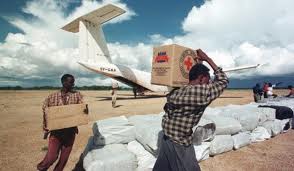
Despite all this, both governments and people in developed countries are failing to donate enough money for emergency food aid and many people are even calling for the starving to be left to starve as part of their ideological crusade against all foreign aid or a mistaken belief that they are being conned as they’ve given to famine relief for Somalia in the past and are being asked to again now (see e.g comments on this Independent newspaper article).

This has to change and change now. Whatever your views on development aid this is emergency aid which has to be delivered now to keep millions alive long enough for longer term solutions to be put in place.

There is a lot wrong with many governments’ and IMF and World Bank aid programmes and they need reformed, but pretending that Africans would be better off if we provided them with no foreign aid at all is the real con trick. Some people are conning themselves into believing what they want to believe, so they don’t have to feel any guilt for letting millions of adults and children starve, rather than contribute a small fraction of their own income and taxes to saving their lives.

The causes of the drought and civil war need to be addressed, but we can’t leave millions of people to die while we address them. They need emergency humanitarian food and water aid now – we know from past crises this will save lives.


What you can do

If you’re in the UK you can donate to the Disasters Emergency Committee (an umbrella group of all the major aid agencies and charities) donate in the UK to the Disasters Emergency Committee on this link .

You can donate from anywhere in the world to the UN World Food Programme on this link or to the International Red Cross on this link

You can also contact your MP or members of congress and the ministry that deals with foreign aid in your country (e.g US Aid in the US or the Department for International Development in the UK) to ask them to donate more to the UN’s East Africa famine appeal and/or to ask them to increase foreign aid to the poorest countries ;  and ensure any contracts funded with foreign aid go to companies based in the recipient country rather than the donor country wherever possible – and to recommend they read Ha Joon Chang’s book ‘Bad Samaritans’ and adopt aid policies that permit poorer countries to protect and subsidise their economy and public services from foreign competition so they can develop.


Sources


(1) = Oxfam 21 Jun 2011 ‘Famine in Somalia: Causes and solutions’, http://www.oxfamamerica.org/articles/famine-in-somalia-causes-and-solutions

(2) = Independent 21 Jul 2011 ‘Millions could die of hunger as drought grips Horn of Africa’,http://www.independent.co.uk/news/world/africa/millions-could-die-of-hunger-as-drought-grips-horn-of-africa-2317831.html

(3) = Ha Joon Chang (2007) ‘Bad Samaritans’, Random House, London, 2008


Sources on Drought and possible link with climate change

(4) = See (2) above

(5) = The Economist 24 Sep 2009 ‘East Africa's drought - A catastrophe is looming’,http://www.economist.com/node/14506436 ; ‘The drought cycle in east Africa has been contracting sharply. Rains used to fail every nine or ten years. Then the cycle seemed to go down to five years. Now, it seems, the region faces drought every two or three years. The time for recovery—for rebuilding stocks of food and cattle—is ever shorter. And if the rains fail before the end of this year, an unimaginably dreadful catastrophe could ensue.’

(6) = US Geological Survey 28 Jan 2011 ‘More Frequent Drought Likely in Eastern Africa’,http://www.usgs.gov/newsroom/article_pf.asp?ID=2690

(7) = Independent 01 Jul 2011 ‘Extreme weather link 'can no longer be ignored'’,http://www.independent.co.uk/environment/climate-change/extreme-weather-link-can-no-longer-be-ignored-2305181.html

Sources on US involvement in keeping the civil war going

(8) = Independent 09 Feb 2008 ‘Somalia: The World's forgotten catastrophe’, http://www.independent.co.uk/news/world/africa/somalia-the-worlds-forgotten-catastrophe-778225.html

(9) = Wikipedia entry for ‘Somali civil war’,http://en.wikipedia.org/wiki/Somali_Civil_War#Rise_and_fall_of_the_ICU.2C_Ethiopian_intervention.2C_and_the_TFG_.282006.E2.80.932009.29

(10) = New York Times 06 Jun 2006 ‘Somali Islamists Declare Victory; Warlords on Run’,http://www.nytimes.com/2006/06/06/world/africa/06somalia.html (says Bush administration funded Somalian secular warlords with around $100,000 to $150,000 a month)

(11) = USA Today 08 Jan 2007 ‘U.S. support key to Ethiopia's invasion’,http://www.usatoday.com/news/world/2007-01-07-ethiopia_x.htm

(12) = Guardian 13 Jan 2007 ‘How US forged an alliance with Ethiopia over invasion’,http://www.guardian.co.uk/world/2007/jan/13/alqaida.usa

(13) = Amnesty International UK 06 Jan 2008 ‘Somalia: Troops killing people 'like goats' by slitting throats-new Amnesty report’, http://www.amnesty.org.uk/news_details.asp?NewsID=17747

(14) = Independent 22 Nov 2007 ‘Somalia war-refugee crisis surpasses Darfur in its horror’,http://www.independent.co.uk/news/world/africa/somalia-warrefugee-crisis-surpasses-darfur-in-its-horror-759034.html

(15) = Washington Post 25 Jun 2009 ‘U.S. Sends Weapons to Help Somali Government Repel Rebels Tied to Al-Qaeda’,http://www.washingtonpost.com/wp-dyn/content/article/2009/06/24/AR2009062403495.html

(16) = AP 25 Jun 2009 ‘U.S. to give Somali government guns, training’,http://www.msnbc.msn.com/id/31549172/ns/world_news-africa/t/us-give-somali-government-guns-training/

(17) = CBC radio 20 jul 2011 ‘Somalia: Jeremy Scahill’, http://www.cbc.ca/thecurrent/interviews/2011/07/20/somalia-jeremy-scahill/ (covers US support for warlords who they previously said were the worst and their main targets)

(18) = The Nation 12 Jul 2011 ‘The CIA’s secret sites in Somalia’ , http://www.thenation.com/article/161936/cias-secret-sites-somalia

(19) = Time 18 Sep 2009 ‘After a U.S. Air Strike, Somali Peacekeepers Pay’,http://www.time.com/time/world/article/0,8599,1924902,00.html

(20) = Guardian 30 Jun 2011 ‘US extends drone strikes to Somalia’,http://www.guardian.co.uk/world/2011/jun/30/us-drone-strikes-somalia

(21) = BBC News 14 Jul 2011 ‘Horn of Africa drought: Why is Somalia worst affected?’, http://www.bbc.co.uk/news/world-africa-14143562

Sources on Al Shabab and to what extent it’s preventing aid getting in

(22) = Channel 4 News (UK) 07 Jul 2011 ‘Somali rebels lift ban on food-aid’, http://www.channel4.com/news/somali-rebels-lift-ban-on-food-aid

(23) = guardian.co.uk 22 Jul 2011 ‘Somali rebels deny lifting ban on foreign aid groups’, http://www.guardian.co.uk/world/2011/jul/22/somali-rebels-deny-lifting-ban

(24) = BBC News Africa 24 Jul 2011 ‘Solving Africa’s aid conundrum’, by Andrew Harding, http://www.bbc.co.uk/news/world-africa-14269987

(25) = See (24) above

(26) = BBC News 22 Jul 2011 ‘Somali Islamists maintain aid ban and deny famine’, http://www.bbc.co.uk/news/world-africa-14246764 ; Agencies banned by al-Shabab – Care, International Medical Corps, UNDevelopment programme (UNDP), UN World Food Programme (WFP)

(27) = See (24) above

(28) = BBC News Africa 24 Jul 2011 ‘Solving Africa’s aid conundrum’, by Andrew Harding, http://www.bbc.co.uk/news/world-africa-14269987 (see  article and first comment by BBC reporter Andrew Harding)


(29) = Reuters 22 Jul 2011 ‘Somali rebels say U.N. food agency still banned’,http://www.reuters.com/article/2011/07/22/us-somalia-famine-idUSTRE76L2HK20110722; ‘"The approach is to test the ground, to probe and see how far we get," WFP spokesman, David Orr, told Reuters…The WFP delivers its food in Somalia through local aid groups and not directly, Orr said.’

(30) = BBC News 22 Jul 2011 ‘Q&A: East Africa hunger crisis’, http://www.bbc.co.uk/news/world-africa-14249733 ; It is very difficult to get aid to Somalia - even before al-Shabab banned aid groups, some food deliveries were looted by gunmen and others were held for ransom by pirates…..Agencies banned by al-Shabab – Care, International Medical Corps, UNDevelopment programme (UNDP), UN World Food Programme (WFP)

(31) = Wall Street Journal 21 Jul 2011 ‘Somalia Famine Threatens to Spread’, http://online.wsj.com/article/SB10001424053111903554904576457721297830248.html ; ‘Aid group Oxfam said $1 billion is needed for famine relief. On Wednesday, the U.S. announced an additional $28 million in emergency funding atop $431 million in assistance already given this year. Most importantly, those new U.S. funds won't be placed under restrictions implemented in 2009 to keep food and money from being stolen by Islamic militants. Aid groups have called for the restrictions to be lifted entirely and said the rules have severely limited their operations. U.S. humanitarian contributions in Somalia fell from $237 million in 2008 to $29 million last year

(32) = Pamela Geller’s Atlas Shrugs blog 17 Jul 2011 ‘Somalia: UN Humanitarian Aid Going to Jihadist Groups’, http://atlasshrugs2000.typepad.com/atlas_shrugs/2011/07/somalia-un-humanitarian-aid-going-to-jihadist-groups.html#comment-6a00d8341c60bf53ef0154341092e9970c

(33) = BBC News 17 Jul 2011 ‘Somalia drought: Aid for camps under Islamists’, http://www.bbc.co.uk/news/world-africa-14178953

(34) = Pamela Geller’s Atlas Shrugs blog 22 Jul 2011 ‘"Long Peaceful Norway" ....... Not’, http://atlasshrugs2000.typepad.com/atlas_shrugs/2011/07/long-peaceful-norway-not-.html

Sources on land being bought up for commercial farming as a cause of famine in the Horn of Africa

(35) = Guardian.co.uk 20 Jul 2011 ‘Food aid is needed desperately - but ultimately it is not the answer’, http://www.guardian.co.uk/global/2011/jul/20/famine-africa-result-modern-parctice

(36) = Guardian.co.uk 08 Jun 2011 ‘US universities in Africa 'land grab' - Institutions including Harvard and Vanderbilt reportedly use hedge funds to buy land in deals that may force farmers out’,http://www.guardian.co.uk/world/2011/jun/08/us-universities-africa-land-grab

(37) = Observer 07 Mar 2010 ‘How food and water are driving a 21st-century African land grab’, http://www.guardian.co.uk/environment/2010/mar/07/food-water-africa-land-grab

(38) = Observer 07 Mar 2010 ‘Deals can be good news when not made behind closed doors’, http://www.guardian.co.uk/environment/2010/mar/07/africa-land-grab-food-water 

(39) =  See (35) above

(40) = See (35) – (38) above

(41) = guardian.co.uk 22 April 2011 ‘This will be the Arab world's next battle’, http://www.guardian.co.uk/commentisfree/2011/apr/22/water-the-next-arab-battle

(42) = U.S Geological Survey Fact Sheet 103-03, November 2003, ‘Ground-Water Depletion Across the Nation’, http://pubs.usgs.gov/fs/fs-103-03/

(43) = Reuters 14 Dec 2009 ‘California aquifers seen rapidly losing water’, http://www.reuters.com/article/2009/12/15/us-water-california-idUSTRE5BE0FP20091215

(44) = Guardian.co.uk 08 Jun 2011 ‘US universities in Africa 'land grab' - Institutions including Harvard and Vanderbilt reportedly use hedge funds to buy land in deals that may force farmers out’, http://www.guardian.co.uk/world/2011/jun/08/us-universities-africa-land-grab

(45) = Observer 07 Mar 2010 ‘How food and water are driving a 21st-century African land grab’, http://www.guardian.co.uk/environment/2010/mar/07/food-water-africa-land-grab

(46) = Guardian 05 Apr 2008 ‘UN chief calls for review of biofuels policy’, http://www.guardian.co.uk/environment/2008/apr/05/biofuels.food

(47) = guardian.co.uk 23 Feb 2010 ‘China's soil deterioration may become growing food crisis, adviser claims’ – ‘China faces struggle to feed population as pollution and urbanisation threaten supply, says government expert’, http://www.guardian.co.uk/environment/2010/feb/23/china-soil-deterioration-food-supply

(48) = guardian.co.uk 28 Jun 2011 ‘China told to reduce food production or face 'dire' water levels’ – ‘Food must be imported and water use tightly regulated to protect dwindling supply, a leading groundwater expert has warned’, http://www.guardian.co.uk/environment/2011/jun/28/china-food-water

(49) = Observer 07 Mar 2010 ‘How food and water are driving a 21st-century African land grab’, http://www.guardian.co.uk/environment/2010/mar/07/food-water-africa-land-grab

Sources on futures trading in food driving up food prices

(50) = Guardian 19 Jul 2010 ‘Hedge funds accused of gambling with lives of the poorest as food prices soar’, http://www.guardian.co.uk/business/2010/jul/19/speculators-commodities-food-price-rises

(51) = Guardian Poverty Matters blog 16 May 2011 ‘Rising food prices: the role of pension funds’, http://www.guardian.co.uk/global-development/poverty-matters/2011/may/16/christian-aid-hunger-report-commodities-food-prices

(52) = Observer 25 Jan 2011 ‘Food speculation: 'People die from hunger while banks make a killing on food'’, http://www.guardian.co.uk/global-development/2011/jan/23/food-speculation-banks-hunger-poverty

Sources on over-population

(53) = UNFPA 2009 Fact Sheet, http://www.unfpa.org/public/home/factsheets/pid/3856#facts

(54) = See (53) above

(55) = Paulina Makinwa-Adebusoye (2001) ‘Socio-cultural factors affecting fertility in Sub-Saharan Africa’ UN, New York, 2001, http://www.un.org/esa/population/publications/prospectsdecline/makinwa.pdf

(56) = The Economist 27 Apr 2009 ‘Africa's population - The baby bonanza - Is Africa an exception to the rule that countries reap a “demographic dividend” as they grow richer? ‘, http://www.economist.com/node/14302837

(57) = UNFPA (2007) ‘State of the World Population 2007’, Chapter 5, http://www.unfpa.org/swp/2007/english/chapter_5/index.html

(58) = See (56) above

(59) = BBC News 26 Jul 2011 ‘'Top 10 culprits' of Horn of Africa famine’, http://www.bbc.co.uk/news/world-africa-14291581

Tuesday, June 01, 2010

The Israeli military’s attack on Gaza aid ships makes Somali pirates look like Saints

A member of the Gaza aid flotilla killed by Israeli commandoes - source - Turkish TV's 'World Bulletin' website

The Israeli military’s attack on ships carrying aid to Gaza makes Somali pirates look like saints by comparison.

Somali pirates come from one of the poorest countries on earth, take hostages for money and it’s unknown for them to kill them. Israeli forces, from one of the richest countries in the world, killed at least ten people to prevent them bringing food and medicines to people short of both.

Israeli military claims that they were attacked first with iron bars, knives, axes and gun-fire are contradicted by Turkish television videos which seem to show only fists and pieces of wood being used to resist boarding, though neither this video nor Israeli military ones are all that clear (1), (2).

A journalist on board one of the ships also reported that Israeli forces opened fire on the ship he was on before they even boarded it, casting further doubt on IDF claims, which are probably more propaganda, like their past claims that UN ambulances which they fired on were carrying Qassam rockets; which turned out to be stretchers (3) – (5).

The military assault on unarmed civilians and vessels sailing under the Greek and Turkish flags in international waters is a serious breach of both international law and Greek and Turkish sovereignty and will probably lead to a deterioration in Turkish-Israeli trade deals and intelligence co-operation.

As Craig Murray, an expert on maritime law from his time in the British foreign office, points out, in terms of international law Israeli forces have invaded Turkish territory and may have killed civilians who are Turkish nationals, which is both an act of war and a war crime.

The Israeli government and military stories have varied from claiming that Israeli forces were fired on with guns before they returned fire, to claims that people on board the ship stole the side-arms of Israelis who had boarded and began firing on them.

One Israeli cabinet minister then told the BBC’s News 24 that the Israeli commandos who boarded the ships were only armed with paintball guns. An Israeli military source told the Israeli newspaper Haaretz marines had both paintball guns and lethal pistols, while an Israeli commando told them “They jumped me, hit me with clubs and bottles and stole my rifle...I pulled out my pistol and had no choice but to shoot.” (6).

Which version of events is accurate is hard to say. What is obvious is that the various Israeli claims are not consistent with each other – and that the Turkish TV video shows Israeli soldiers with rifles, helmets and body armour fighting with people armed with some kind of bars, sticks or clubs (7).

What’s also certain is that Israeli forces are holding around 600 of the surviving passengers from the ships prisoner and preventing the media from talking to any of them before they’re deported –all are in jail without trial, potentially indefinitely, under military law, suggesting Israeli forces have something to hide here and may be trying to throw out enough random claims to conceal the truth, while preventing the media getting to talk to most (non-Israeli military) eye-witnesses (8) – (11).

The flotilla and the siege of Gaza

Like the Israeli military’s repeated attacks on UN aid trucks and clearly marked UN buildings during the Gaza war in late 2008 to early 2009, this latest atrocity highlights how wrong the blockade, which denies all the people of Gaza enough food, fuel and medical supplies, is. Fuel is blockaded on the grounds that it can be used to make rockets, yet there is no blockade on fuel or ammunition from the US and Europe to Israeli tanks, helicopters, aircraft or artillery, which kill around 10 times as many civilians each year as are killed by all attacks by Palestinian groups on Israeli civilians combined . Israel’s “Gaza War” or “Operation Cast Lead” alone killed around 1,400 Palestinians, the majority civilians, in three weeks. The killings included indiscriminate bombing and artillery fire, deliberate targeting of UN vehicles, buildings and staff ; and many incidents of Israeli troops on the ground shooting unarmed men, women and children carrying white flags (12), (13).

(In fact military aid money from the US has continued to flow in by the billion under Obama and US arms sales to Israel continue.)

.It’s not only the Israeli government which was responsible for establishing the blockade of Gaza but also “the Quartet” – the EU, the UN, Russia and the US. So the British government are involved in this blockade too, though they, the EU and the UN have since called for the blockade to be lifted ; mostly as a result of the media coverage generated by volunteers organising aid convoys like the flotilla to Gaza.

The supposedly “moderate” dictatorship of President Mubarak in Egypt has been Israel’s partner in the blockade, closing Gaza’s borders with Egypt.

The Israeli government argue that they allow some food and medicines into Gaza. This is true, but the UN say the amounts allowed in are around a quarter of what the population requires (14). Anyone who’s read Primo Levi’s account of his time in Auschwitz concentration camp will know that during the Holocaust the Jewish prisoners were allowed some food too, just not nearly enough (15).

The World Health Organisation had already found by April of last year that the blockade of Gaza, which began in January 2006, was causing rapidly increasing rates of malnutrition among children in Gaza and resultant increases in anaemia due to protein deficiency and stunted growth (16).

Gaza today is a giant concentration camp with the whole population imprisoned and punished by the Israeli military and government. Israeli forces don’t systematically exterminate the people of Gaza with poison gas, so it’s not as bad as Auschwitz was. They do however routinely indiscriminately bomb and shell Gaza, killing civilians and destroying thousands of houses and hundreds of factories – including flour mills and cement factories in the last Gaza “war” (which was more of a one-sided massacre by Israeli forces) – and they have even often randomly shot Palestinian civilians, including many children, in the head with sniper rifles, on the orders of superiors. They also ensure the entire population are short of food and medicine (17), (18).

The Gaza flotilla embarrassed the Israeli government by highlighting the blockade – and was punished for it.

Israeli deputy Prime Minister Danny Ayalon called it “an armada of hate” which was guilty of “provocation” and attempting to “delegitimise Israel”, while the deputy Speaker of the Israeli Knesset (parliament) claimed that most of those on board the ships were “terrorists” (19).

The only thing preventing even worse hunger in Gaza is smuggling through tunnels to Egypt, which the Israeli and Egyptian governments are trying to find and close entirely on the grounds that they allow smuggling of weapons to Hamas. They may, but most of what’s smuggled through them is food or consumer goods, not weapons (20)

The blockade also prevents such “terrorist” items as cement, shoes, clothes and crayons entering Gaza most of the time (21).

The Gaza flotilla wanted to ensure these kind of items reached Gaza. The Israeli government claims it wanted to ensure no arms were reaching Hamas, but it’s clear the blockade goes far beyond preventing arms into Gaza and aims to overthrow the elected government entirely by a long running siege combining restricted supplies with periodic bombing and ground raids.

The bravery of the people on board it has opened at least a temporary lifting of the blockade, with Egypt having opened it’s border with Gaza for food and medical supplies and to allow those needing medical treatment to leave.

So Gaza is somewhere between the original “concentration camps” in which millions of black South Africans and Dutch boer colonists were held and left to starve by the British in the 19th century; and the Warsaw ghetto uprising during the second world war when many Poles, including Jews, tried to fight off the occupying German forces; except, that it’s in slow motion – the ghetto is not destroyed in weeks but over decades.

The aims of the Siege –

Over-throwing the elected Palestinian government,

Dividing and Conquering Palestinians,

Distracting attention from killings in and annexation of the West Bank

The Israeli government and military’s aim in enforcing the blockade is simple – to starve and bomb the entire population of Gaza, including many children, in order to try to force the elected Palestinian government out of power (22) – (23). This also helps keep Hamas and Fatah divided, weakening Palestinian opposition to Israel – and it distracts attention from Israel’s continuing annexation of West Bank land and Israeli forces and settlers’ constant killings of Palestinians there – more than half civilians, as in Gaza. (“left wing” Labor Party governments, “centrist” Kadima, “right wing” Likud governments and coalition governments all operate the same policy in Israel)

Israel’s Deputy Prime Minister mucked up during ‘Operation Cast Lead’ when he openly admitted that ““What I think we need to do is to reach a situation in which we do not allow Hamas to govern.” (24)

Hamas won the January 2006 Palestinian legislative elections and offered negotiations with Israel, at first with the precondition of Israel withdrawing back to it’s pre-1967 war borders; then later without preconditions. The Israeli government refused, placed pointless preconditions on negotiations; and had sanctions imposed on the West Bank and Gaza.

The Israeli government has never recognised the right of a sovereign, independent Palestinian state to exist alongside it – and annexes more Palestinian land every month.

Israelis including Professor Yossi Alpher and former Israeli Foreign Minister Shlomo Ben Ami point out these preconditions were not placed on past, successful, peace negotiations with Jordan or Egypt – and call for the preconditions on negotiations to be dropped (25), (26).

The former heads of Mossad and Shin Bet (Israeli intelligence and military intelligence)  Efraim Halevy and Shlomo Gazit, have also called for negotiations with Hamas. Gazit called the Israeli government’s preconditions “ridiculous, or an excuse not to negotiate” (27), (28).

A poll in March 2008 showed 72% of Israelis wanted negotiations with Hamas (29).

Instead of negotiating the Egyptian, Israeli and US governmentsco-operated to arm and train the armed wing of Hamas’ rival Fatah. Fatah is the largest party in the PLO and was formerly headed by Yasser Arafat and now headed by Mahmoud Abbas. In 2007 Fatah, desperate to escape sanctions imposed by Israel and the Quartet on both the West Bank and Gaza at the time; and encouraged to fight Hamas by the Israeli and US governments   ,  attempted to overthrow Hamas by force. They succeeded in the West Bank, but failed in Gaza. Both sides,  Hamas and Fatah, then began murdering anyone suspected of supporting the other party, armed or unarmed, civilian or combatant, in the territory they held. (This episode is generally misleadingly described in the Western media as Hamas “seizing power by force in Gaza”, probably because that’s how our governments’ press officers have briefed them to say it in order to avoid embarrassment to their allies in the Israeli government).

The sanctions on the West Bank were then lifted (though occupation and settlement there continues), but those on Gaza remain.

Mahmoud Abbas of Fatah  is certainly the democratically elected Palestinian, but Ismael Haniyeh of Hamas is equally the democratically elected Palestinian Prime Minister – and Abbas has gone far beyond the powers granted to the President under the Palestinian constitution.. For instance he’s appointed his own Prime Minister and cabinet. Under the Palestinian constitution he has no power to do so ; only parliament does – and Hamas won a a majority in parliament.

Don’t be fooled by Israeli propaganda about “peace” in the West Bank, where Fatah is now in control, either. The occupation continues there, with more Palestinian homes bull-dozed and more Palestinians killed by settlers and Israeli soldiers every week. Children and teenagers throwing stones at Israeli watch towers are still shot dead with live ammunition in “self-defence” by Israeli troops in the West Bank the same way the civilians on board the Gaza flotilla were shot. So are Palestinian demonstrators in the West Bank, protesting against the bombing of Gaza or the annexation of their farmland, or for an end to the civil war between Fatah and Hamas.  Some are entirely peaceful, others are throwing stones at Israeli watch towers, armoured vehicles or troops in body armour with helmets. The stones are always described as “rocks” in Israeli military versions of events, though it’s unlikely that 9 year olds or 14 year old Palestinian boys could throw stones large enough to qualify as “rocks” before they’re shot.  Even Palestinians who are just going about their work on their farms or walking home are often shot. (Israeli Arabs demonstrating against the Gaza war got similar treatment from Israeli police, much like Israeli Arab protesters (and bystanders) during the Intifada in 2000 – many have already been arrested for protesting against the attack on the Gaza flotilla) (30) – (37).

A new Israeli military directive in the West Bank will also allow Palestinians to be summarily deported, clearing the way for more settlers (38). While Israel’s government claims it has no room for Palestinian refugees driven out by Israeli forces in the 1947 and 1967 wars, or their descendants, it welcomes settlers from anywhere in the world who have one Jewish grandparent or a Jewish partner under a 1970 amendment to Israel’s “Law of Return” (39). While they’re still talking about ‘Judenrein’ areas the reality now is apartheid between Jews and Arabs much like South African Apartheid between blacks and whites in the past.

Israeli governments, while condemning Hamas’ religious extremism, refer to the West Bank as ‘Judaea and Samaria’ – biblical names; and many Israelis – including high ranking former Military judges - believe this land was granted to the Jews by God (40) – (41).

Israeli governments say they will not allow a government hostile to them to exist in Gaza or the West Bank. Where do they get the right to have a veto on who is democratically elected to government in another country? Their only claim to that right is by force of arms, which is no more legitimate than the Chinese “right” to occupy Tibet is now, or the German “right” to occupy Poland was in the Second World War.

Israeli governments and politicians object that Hamas’ armed wing are terrorists, killing civilians on the orders of Hamas leaders. Yet Israeli military forces are also war criminals, killing ten times the number of civilians every year on the orders of the Israeli government. Palestinians were given no veto when Ariel Sharon, the architect of the Sabra and Shatila massacres, was elected Prime Minister of Israel and allowed to order new war crimes against Palestinian civilians. They did not get to starve all Israelis until they replaced this war criminal. Nor did they get support from other governments for getting rid of the Olmert government after the Gaza war crimes last year; nor are they likely to get it to replace the war criminal Benjamin Netanyahu, who ordered attacks with live ammunition on unarmed civilians on ships travelling to Gaza.

The Only Solution

There is only one solution to the Israeli-Palestinian “problem” and that is for the democratically elected war criminals to be forced to sit down with the democratically elected terrorists and negotiate a peace deal that creates either a viable Palestinian state; or else a single state with equal rights for Jewish and non-Jewish people, for Arabs and non-Arabs, for all to live as equals ; rather than the current system – an Israeli mixture of apartheid and occupation which can only produce more extremism and violence by both sides.

What you can do

Don’t expect much from the British or American governments unless they get a lot of hassle from their electorate about this though. The Obama administration merely said it was “concerned” and “regretted the loss of life”, while one of the new British government’s priorities, announced the day before the attack on the Gaza flotilla, is to change the law eliminate any chance that Israeli politicians involved in ordering the war crimes against civilians in Gaza in 2008 to 2009 might be arrested and made to stand trial for it if they visit Britain (42) – (43). Then Britain can be a safe haven for war criminals from all over the world - whether from the Israeli government, Hamas' armed wing, Afghan Taliban - whatever.

What you can do:

  • Email your MP and ask them to speak out against the blockade of Gaza and the attack on the aid flotilla. and to demand the immediate release of all the people from the flotilla who are being held without trial in Israel. You can this through www.writetothem.com by typing in your postcode.
  • Boycott Israeli produce – if it’s made or grown in Israel, don’t buy it.
  • Sign the Avaaz international petition for an independent investigation into the causes of the killings on the Gaza aid ships
  • Write to newspapers condemning the attack on the convoy and the Israeli blockade of Gaza and call for the release of the 600 people held without trial by Israel. Newspapers vary in what length of letters they’ll publish, but most won’t publish letters longer than 200 words. They’re much more likely to publish letters on a particular topic if they get a lot of letters on that subject though.


List of Sources

(1) = Times 31 May 2010 ‘Deadly clashes at sea as Israel intercepts Gaza-bound aid ships’,http://www.timesonline.co.uk/tol/news/world/middle_east/article7140957.ece (mentions Turkish TV video showing “melee” with “sticks and fists”)

(2)  = guardian.co.uk 31 May 2010 ‘Israel attacks Gaza flotilla - live coverage’,
http://www.guardian.co.uk/world/blog/2010/may/31/israel-troops-gaza-ships (scroll down to video posted at 11.19 am on 31st May)

(3) = See (1) above

(4) = Haaretz 31 May 2010 ‘Israel tows Gaza aid ships to Ashdod after 10 activists killed in clashes with navy’, http://www.haaretz.com/news/diplomacy-defense/israel-tows-gaza-aid-ships-to-ashdod-after-10-activists-killed-in-clashes-with-navy-1.293089

(5) = Haaretz 10 Dec 2004 ‘IDF admits Qassam was not transported in UN ambulance’,
http://www.haaretz.com/news/idf-admits-qassam-was-not-transported-in-un-ambulance-1.137189

(6) = Haaretz 31 May 2010 ‘Israel Navy commandos: Gaza flotilla activists tried to lynch us’,
http://www.haaretz.com/news/diplomacy-defense/israel-navy-commandos-gaza-flotilla-activists-tried-to-lynch-us-1.293089

(7) = BBC News 31 May 2010 ‘Deaths as Israeli forces storm Gaza aid ship’,
http://news.bbc.co.uk/1/hi/world/middle_east/10195838.stm

(8) = BBC News 01 Jun 2010 ‘UN urges inquiry into Israel convoy raid’,
http://news.bbc.co.uk/1/mobile/world/middle_east/10201165.stm, “Of the 679 surviving activists, who were brought to the Israeli port of Ashdod, only 50 agreed to be voluntarily deported and more than 30 are being treated in hospital for their injuries, reports the BBC's Wyre Davies in Jerusalem...That means that almost 600 people, from several countries, are still being held in detention centres across Israel and are being questioned by the authorities. ...Israel has imposed an information blackout, making it difficult to gather first-hand accounts from the campaigners.”

(9) = Jerusalem Post 01 Jun 2010 ‘600 activists held in Beersheba jail’,
http://www.jpost.com/Israel/Article.aspx?id=177091

(10) = Haaretz 31 May 2010 ‘Israel clearing passengers from Gaza flotilla now docked in Ashdod port’,http://www.haaretz.com/news/diplomacy-defense/israel-clearing-passengers-from-gaza-flotilla-now-docked-in-ashdod-port-1.293339

(11) = Times 31 May 2010 ‘Fears grow for Britons on board Gaza ship’,
http://www.timesonline.co.uk/tol/news/world/middle_east/article7141223.ece

(12) = Human Rights Watch 13 Aug 2009 ‘White Flag Deaths’
http://www.hrw.org/en/reports/2009/08/13/white-flag-deaths

(13) = Amnesty International 02 July 2009 ‘Israel/Gaza: Operation "Cast Lead": 22 days of death and destruction’, http://www.amnesty.org/en/library/info/MDE15/015/2009/en

 (14) = See (7) above

(15) = Primo Levi ‘If This is a Man’

(16) = UNocHA IRIN news 21 Apr 2009 ‘OPT: Signs of worsening malnutrition among children’,
 http://www.irinnews.org/Report.aspx?ReportId=84018

(17) = guardian.co.uk 01 Feb 2010 ‘UN find challenges Israeli version of attack on civilian building in Gaza war’, http://www.guardian.co.uk/world/2010/feb/01/gaza-war-report-accuses-israel (cites UN investigation which found Israeli forces targeted and destroyed hundreds of factories including Gaza’s largest flour mill during the 2008-2009 ‘Operation Cast Lead’ attacks)

(18) = See http://www.duncanmcfarlane.org/Israel-Palestine/notdemocratsversusterrorists/#_ftn1 for full list of sources on Israeli military snipers targeting Israeli children, and links to the online ones

(19) = BBC News 31 May 2010 ‘Deaths as Israeli forces storm Gaza aid ship’,
http://news.bbc.co.uk/1/hi/world/middle_east/10195838.stm

(20) = Guardian blog ‘No gourmets in Gaza’, http://www.guardian.co.uk/lifeandstyle/wordofmouth/2009/jun/16/gaza-blockade-israel-food ,
(links to many sources on the tunnels into Gaza and the effects of the blockade)

 (21) = Independent 30 Mar 2010 ‘Israel allows first shipment in three years’,
http://www.independent.co.uk/news/world/middle-east/israel-allows-first-shipment-in-three-years-1930677.html

(22) = New York Times 03 Jan 2009 ‘Is the Real Target Hamas Rule?’,http://www.nytimes.com/2009/01/04/world/middleeast/04assess.html

(23) = Guardian 06 Jan 2009 ‘Israel looks to drive out Hamas’,http://www.guardian.co.uk/world/2009/jan/06/gaza-israel-hamas

(24) = See (23) above

(25) = Forward 20 Oct 2006 ‘Preconditions for a Problematic Partner’,http://www.forward.com/articles/5948/

(26) = Times 26 Feb 2009 ‘Peace will be achieved only by talking to Hamas’,http://www.timesonline.co.uk/tol/comment/letters/article5804266.ece

(27) = Forward 09 Feb 2007 ‘Experts Question Wisdom of Boycotting Hamas’,http://www.forward.com/articles/10055/

(28) = Interview with Efraim Halevy in Mother Jones Magazine 10 Feb 2008 ‘Israel's Mossad, Out of the Shadows’, http://www.motherjones.com/politics/2008/02/israels-mossad-out-shadows

(29) = Newsweek 07 Mar 2008 ‘‘We’ll Have to Talk’’, http://www.newsweek.com/2008/03/06/we-ll-have-to-talk.html#

(30) = Times 29 Jul 2008 ‘Palestinian child shot dead by Israeli soldiers’,http://www.timesonline.co.uk/tol/news/world/middle_east/article4425395.ece

(31) = AP 14 Feb 2009 ‘Long-term truce for Gaza near agreement, says Hamas’,http://www.heraldscotland.com/long-term-truce-for-gaza-near-agreement-says-hamas-1.902709 ; “In the West Bank city of Hebron, staff at a local hospital said a teenage boy was killed by Israeli army fire during a clash between troops and stone-throwing Palestinian youths. Doctors at Alia hospital named the dead boy as Izzadine Jamal, 14. They did not know if he was among those attacking the Israelis. The army said dozens of Palestinians hurled stones at a military guard tower next to an Israeli settlement and a soldier shot the ringleader.”

(32) = guardian.co.uk 27 Apr 2009 ‘Non-violent protests against West Bank barrier turn increasingly dangerous’http://www.guardian.co.uk/world/2009/apr/27/israel-security-barrier-protests

(33) = Independent 12 Mar 2010 ‘West Bank rises up in a new 'white' intifada’,
http://www.independent.co.uk/news/world/middle-east/west-bank-rises-up-in-a-new-white-intifada-1920120.html

(34) = BBC News 22 Mar 2010 ‘B'tselem says live bullets may have killed Palestinians’,http://news.bbc.co.uk/1/hi/8580150.stm

(35) = AFP 30 Mar 2010 ‘Palestinian teen killed as Israelis fire on Gaza protests’,http://www.google.com/hostednews/afp/article/ALeqM5gnJHlk7vviX8bcc0-vb85dwEyASw

(36) = Haaretz 28 Dec 2008 ‘Israeli Arabs protesting Gaza campaign clash with police’,http://www.haaretz.com/news/israeli-arabs-protesting-gaza-campaign-clash-with-police-1.285539

(37) = Cook, Jonathan (2006) ‘Blood and Religion – The Unmasking of the Jewish and Democratic State’ , Pluto Press, London, 2006 , pages 34, 38-40, 43-44, 51-54, 66-70

(38) = Haaretz 31 May 2010 ‘Several Israeli Arab protesters arrested in mass rallies over Gaza flotilla deaths’, http://www.haaretz.com/several-israeli-arab-protesters-arrested-in-mass-rallies-over-gaza-flotilla-deaths-1.293199

(39) = Guardian.co.uk 11 Apr 2010 ‘Israeli groups fight orders allowing army to jail West Bank residents’http://www.guardian.co.uk/world/2010/apr/11/israeli-groups-attack

(40) = Israeli Ministry of Foreign Affairs (MFA) ‘Law of Return’,http://www.mfa.gov.il/MFA/MFAArchive/1950_1959/Law%20of%20Return%205710-1950

(41) See 38 above ‘The Israeli military said the purpose of the orders was "the extradition of those residing illegally in Judea and Samaria," an Israeli term for the West Bank.’

(42) = guardian.co.uk 26 Oct 2009 ‘West Bank land belongs to Jews, says Israeli army judge’http://www.guardian.co.uk/world/2009/oct/26/west-bank-jews-army-judge

(43) = AP 31 May 2010 ‘Obama administration concerned about Gaza incident’,
http://www.guardian.co.uk/world/feedarticle/9104666

(44) = Guardian 30 May 2010 ‘Ministers move to change universal jurisdiction law’,
http://www.guardian.co.uk/uk/2010/may/30/change-universal-jurisdiction-law


Saturday, February 13, 2010

Haitians need the countries aiding them now to stop starving them through unfair trade and coups in future

A 15-year-old girl shot dead by Haitian police after the earthquake for stealing paintings ; Photograph: Carlos Garcia Rawlins/Reuters


The earthquake in Haiti called the world’s attention to a country whose people have been suffering for centuries – but much of their current suffering started before the earthquake and is caused not by a lack of outside intervention but by too much of it, with the wrong motives. Of course Haitians need all the emergency aid they can get, but the causes of their suffering – including the lack of earthquake proof buildings like those found in California – have a lot to do with the French and US governments and firms profiting from reducing most of them to poverty and starvation – and not just in the past.


Haitians – dying as slaves of France and America then and now

In the 18th century they were slaves whose lives were treated as worthless by owners whose fear of rebellion led to incredible cruelty. Their rebellion was crushed first by the French. Haiti then had to pay an ‘indemnity’ for the costs to the French of crushing the rebels and reduce taxes on French imports and exports. By the early 20th century American forces arrived and occupied the country, taking control of its finances and getting a puppet leader to grant the US the ‘right’ to ‘develop’ Haiti’s ‘natural resources’.

The US has became the dominant foreign power in Haiti, though the French government still believes that Haiti is in it’s ‘sphere of influence’. ‘Papa Doc’ Francois Duvalier went from saving thousands of lives as a doctor to having thousands killed as a US-backed dictator. Under Carter’s Presidency in the US the ‘Baby Doc’ Jean Charles Duvalier dictatorship in Haiti briefly felt the need to restrain itself from murdering too many of its critics and opponents in case it lost some foreign aid, but on the night of Reagan’s election Duvalier’s ‘tonton macoutes’ (hired thugs with machetes and guns) poured into the streets of the Haitian capital Port Au Prince shouting ‘The Cowboys are in power – human rights are over’. Once Reagan took office in January 1980 the killing began again in earnest (1).

While there is a great deal of controversy over the past Presidency of Jean Bertrand Aristide, a former Catholic priest in Port Au Prince, there is no doubt about one thing – US policy under both Republican and Democratic Presidents and congresses has been to demand ‘free trade’ in Haiti – privatisation, cuts in public services and access to Haiti for US based firms. In 1980 Haiti produced enough food to feed it’s own population. Pressure from the US and European governments through the IMF got import tariffs on rice imports to Haiti slashed. While demanding Haiti end all subsidies and protection for Haitian farmers the US government increased subsidies to American farmers.

So while in the past Haiti produced 80% of the rice eaten there, now it imports 80%. Under IMF conditions on loans run up under US backed dictatorships in the past Haiti also began exporting cash crops to the US while having to import Us-subsidised American rice, putting its own farmers out of business. The wages paid in Haitian factories, mostly by American based multinationals, had fallen to 20% of their 1981 levels by 2000, partly due to the US trained military targeting trade unionists and governments banning trade unions (see the Oxfam website and Professor Peter Hallward’s book ‘Damming the Flood’ on this) (2), (3).

This has had everything to do with benefitting investors from the US, France and their allies and little or nothing to do with helping the majority of Haitians, who, reduced to an income of under 50 pence a day, couldn’t afford food and were buying ‘mud cakes’ made of mud mixed with salt to fill their own and their children’s stomachs as they starved by July 2008 (4). This was before the hugely exaggerated ‘credit crisis’ or the earthquake.

Aristide came to prominence as a critic of the Duvalier dictatorships – and continued to criticise the military government of General Namphy which replaced the younger Duvalier. On September 11th 1988 tontons macoute burst into his church at San Jean Bosco during a sermon in which he as usual denounced the dictatorship for its repression, its corruption and for doing nothing for the poor majority. The attackers shot and hacked the congregation and set fire to the church, killing dozens. This echoed the US-backed military and death squads in El Salvador and their assassination of Bishop Oscar Romero in March 1980 and the murder of many of his supporters before and after his death. Aristide, unlike Romero, survived the attempt on his life – and several attempts before and after it. Both Aristide and Romero were outspoken on behalf of the poor. The Haitian military, like the Salvadoran, was (and is) US-trained.


Aristide – Liberator or corrupted by power?

However Aristide refused to call for reconciliation with his enemies. Instead he told his supporters that they were weak alone, but strong together, that together they were Lavalas (the flood). He is accused by his critics of encouraging violence against his political enemies with public speeches that included lines like "do not forget to give them what they deserve" and "a machete is a useful tool in many situations". However Aristide feared his enemies were preparing to kill him and his supporters. Pre-empting this may have been morally wrong or unwise or paranoid, but he had every reason to feel paranoid. If Aristide is not a saint it’s hard to know how any of us would have reacted when people close to us had been killed and we feared for both our own lives and those of our families and allies. Haitian politics is very different to American or European politics in which the losers know losing doesn’t mean possible death for them, their families and those who supported them. His defenders also say he only approved of violence in self-defence against the tonton macoutes and the army – and that his movement is primarily non-violent as it could never hope to beat the automatic weapons of his enemies.

The US government was critical of the Namphy regime over the San Jean Bosco massacre and cut aid to it as a result. In 1990 Aristide was elected President and began to carry out major reforms to benefit the poorest, including increasing the minimum wage

The French government was greatly displeased by Aristide's government taking it to court, demanding that it repay the $21 billion he estimated France owed Haiti between the 'indemnity' (which was only paid off by Haiti in 1947) and its use of Haitians as slave labour.

He was soon overthrown in a military coup in 1991 in which the US-trained military massacred hundreds of people (and thousands over the next three years), but restored to office by an American invasion of Haiti in 1994 under President Clinton, towards the end of his first term. However there were plenty of conditions placed by the Clinton administration on his restoration apart from reconciliation with his enemies. They included adopting IMF imposed ‘economic reforms’ – the usual privatisations, cuts in public services and welfare payments and access to Haiti for foreign firms, along with a cut in the minimum wage - and Aristide not standing in the next Presidential election, meaning he would actually have been in office for less than two of the five years of his term.

On being restored to office (but barely to power) Aristide began policies to benefit the poor majority again and filled his government with community organisers and charity workers, angering both the traditional Haitian elite and US firms, who benefited from low wages ; as well as career politicians who had expected lucrative ministerial posts in his government.

Aristide also dismantled the US-trained Haitian military, given the long history of most of it in backing dictators and overthrowing elected governments (not least his own in 1991). The Clinton and Bush administrations now moved to backing right-wing paramilitary groups, the FRAPH and FADH, as a means of maintaining their influence by force in Haiti. Many politicians denied a place in Aristide's government were funded with US aid to set up 'civil society' groups to try to discredit Aristide

Aristide and his OPL (party of the Lavalas or ‘flood’) subsequently split, with Aristide forming the ‘Fanmi Lavals’ (family of the flood) while many politicians denied a place in Aristide's government formed a separate OPL (with the L now standing for ‘Lutte’ or ‘struggle’ rather than Lavalas).

Aristide was forced stand down in the next election by the Clinton administration and US congress making US aid conditional on this action. His ally Rene Preval took over for a term, before Aristide was re-elected with a big majority as President in the 2000 Haitian Presidential elections, which, despite much US and French government propaganda, were declared largely free and fair by international observers.

The version of events given from here on continues to vary according to the views of the writer , with some casting Aristide as the hero, resisting American backed villains; others (like Michael Diebert in his book ‘Notes on the Last Testament’) casting him as the villain – a paranoid, ruthless or power crazed man who had lost his way and become corrupt.

What is certain is that in 2004 the Bush administration and the French government backed another military coup against Aristide and he was flown into exile in the Central African Republic, whose French backed dictatorship banned him from criticising the US or French governments or their role in the coup in the media (5), (6).

I’ll leave it up to others to read for themselves and decide which version they believe and whether Aristide was corrupted by power or fear or simply had his character assassinated by the US and French governments when they realised he wasn’t meeting their demands (though my own view is that a great deal of character assassination and propaganda against Aristide is involved). The important point to make is that no US government has ever criticised a government much for being undemocratic or ruthless or dictatorial unless that government was either hostile to the US or else restricting profits for American investors and firms by running it’s country for the benefit of the majority of the population, rather than for foreign investors in alliance with a small indigenous elite collaborating with them. The Saudi monarchy has never yet held a free election or many fair trials. President Uribe of Colombia and his government have had plenty of dissidents and trade unionists murdered using right-wing paramilitaries that work hand in glove with the US funded military. President Mubarak of Egypt has banned the main opposition party, rigs elections and has opposition activists –whether Muslim, conservative or liberal – attacked by thugs. Yet they will never get the criticism that Chavez in Venezuela (repeatedly democratically elected) , Castro (an unelected dictator but with a broadly socialist economic policy until recently) or Aristide do. So if the US government is hostile to Aristide it’s more likely that that’s because he tried to run Haiti for the benefit of the majority of Haitians.

That may be why the US government had international aid coming from the Inter-American Development Bank and various other sources to Haiti blocked as long as Aristide was in power ( as pointed out by Professor Paul Farmer, who also runs a medical charity in Haiti and works for it there) (7).

The other point is that as a result Haitians have quietly starved to death in huge numbers so American and French investors can profit.


Invading Haiti to keep out the damn immigrants and control Haiti’s trade policy– 1994 and 2009

On the few occasions when the US government sends aid it also has mixed motives. In 1994 as today a key aim was to prevent refugees reaching Florida and upsetting the next election.

The Irish Independent newspaper reported in January that “As well as providing emergency supplies and medical aid, the USS Carl Vinson, along with a ring of other navy and coast guard vessels, will act as a deterrent to Haitians who might be driven to make the 681-mile sea crossing to Miami..."The goal is to interdict them at sea and repatriate them," said the US Coast Guard Commander Christopher O'Neil.’(8)

Haitian orphans are welcome. Haitian refugees and immigrants are sent home to suffer (other than CIA and US military intelligence ‘assets’ responsible for many political killings, many of whom retire to Florida).

Another aim has always been to use Haiti as a source of cheap labour for American multinationals – and more importantly to prevent Aristide’s example being followed by other countries.


Shooting the poor

So after the earthquake when Haitian police handed looters over to mobs to be burned alive there was little comment from the Obama administration or President Sarkozy; nor when Haitian policem shot a 15 year old girl dead for stealing paintings to try to get money to buy food - and that was no isolated incident (8) - (10).


How impoverishing Haitians caused earthquake deaths due to shoddy buildings

Another fact that’s given less prominence than it deserves is that according to seismologists the earthquake that hit Haiti wasn’t especially big in historical terms and only killed so many people because so many of Haiti’s buildings are not designed to resist earthquakes despite the capital of the country lying on a fault line. A larger earthquake – 7.0 on the Richter scale – in Los Angeles in 1994 killed less than 70 people because the buildings there were designed to withstand earthquakes. All the money taken in interest payments in debt, all the money never paid due to low minimum wages and reduced benefits, ensured that even among Haitians who realised the risk couldn’t afford to build earthquake resistant houses and buildings (11), (12).


They don’t owe us, We Owe them

Naomi Klein, the author of 'The Shock Doctrine' quotes Haitian economist Camille Chalmers.

'Debt cancellation is a good start, he told al-Jazeera English, but: "It's time to go much further. We have to talk about reparations and restitution for the devastating consequences of debt." In this telling, the whole idea that Haiti is a debtor needs to be abandoned. Haiti, he argues, is a creditor – and it is we, in the west, who are deeply in arrears.'

For decades one of the poorest countries in the world has been paying money to foreign debtors and much of it has been debt run up under dictatorships backed or tolerated by the US government, which in terms of international law is ‘odious debt’ which should be written off by the creditors – even more so when they had the power to end those dictatorships and chose not to.

The media coverage of Haiti since the earthquake has helped the campaign to cancel this debt and Prime Minister Gordon Brown of the UK has come out in favour of cancelling it – but unless the campaign continues beyond the media coverage, those successes may be reversed.

Unless things change from now on – unless the US and French and every other government are pressured by the people of their own countries to stop imposing economic policies that cause huge numbers of deaths through poverty on Haitians – and to stop seeking to rule Haiti by arming and funding the Haitian military, whose only war has been on it’s own people (which is why Aristide disbanded it in his first term in office – and why the US later helped to re-establish it). Of course Haiti needs investment – but on it’s people’s terms, not the terms of foreign governments, firms or those collaborators among the tiny wealthy Haitian elite (though some wealthy Haitians have taken the side of the majority).

Otherwise Haitians will keep dying like flies and watching their children die, just as they did before the earthquake, during it and since it; dying quickly - in political killings, in police shootings of desperate teenagers turning to petty theft to try to get enough to eat, in future earthquakes under the rubble of cheap buildings ; or dying slowly and quietly– of illness or of hunger , while eating mud cakes mixed with salt to try to fill their aching, empty stomachs. This is not because developed world governments haven’t done enough – but because they have done far too much to repress and exploit benefits for the profit of firms based in their own countries – and to prevent the “threat” posed by liberation theology like Aristide’s spreading.

Johan Hari points to one success :

‘The IMF announced a $100m loan, stapled on to an earlier loan, which requires Haiti to raise electricity prices, and freeze wages for the public-sector workers who are needed to rebuild the country...For the first time, the IMF was stopped from shafting a poor country – by a rebellion here in the rich world. Hours after the quake, a Facebook group called "No Shock Doctrine For Haiti" had tens of thousands of members, and orchestrated a petition to the IMF of over 150,000 signatures demanding the loan become a no-strings grant. After Naomi Klein's mega-selling exposé, there was a vigilant public who wanted to see that the money they were donating to charity was not going to be cancelled out by the IMF. ... The IMF backed down. It publicly renounced its conditions – and even said it would work to cancel Haiti's entire debt.’ (13)

That’s a real victory, but the pressure needs to be maintained. So far according to the UN donor governments have only delivered 6% of the aid they promised to feed Haitians even through the current emergency created by the earthquake. (14)


Sources :

(1) = Michael Deibert (2005) ‘Notes from the Last Testament’, Seven Stories Press, London & NY , 2005, Chapter 4, pages 80 – 81 of paperback edition (A Reuters correspondent in Haiti from 2001 till 2003, Deibert is highly critical of Aristide, seeing him as having been behind many political killings and having become a dictator)

(2) =Peter Hallward (2007) ‘Damming the Flood – Haiti, Aristide and the politics of containment’, Verso, London and New York, 2007 (Professor Hallward makes a convincing and well-sourced case that many of the claims about Aristide’s ‘dictatorship’ are a well orchestrated propaganda campaign aimed at legitimising US and French government backed military coups in alliance with some of the wealthiest businesspeople in Haiti and elements of the military and police trained in the US)

(3) = Oxfam – Hard Times in Haiti slide show - http://www.oxfam.org.uk/oxfam_in_action/issues/food_crisis/haiti_slideshow.html

(4) = Guardian 29 Jul 2008 ‘Haiti: Mud cakes become staple diet as cost of food soars beyond a family's reach’,
http://www.guardian.co.uk/world/2008/jul/29/food.internationalaidanddevelopment

(5) = Paul Farmer (2004) ‘Who removed Aristide?’ in London Review of Books Vol. 26, No. 8, 15 Apr 2004, pages 28-31,
http://www.lrb.co.uk/v26/n08/paul-farmer/who-removed-aristide

(6) = Democracy Now 17 Mar 2004 ‘Exclusive: Aristide Talks With Democracy Now! About the Leaders of the Coup and U.S. Funding of the Opposition in Haiti’,
http://www.democracynow.org/2004/3/17/exclusive_aristide_talks_with_democracy_now

(7) = Paul Farmer (2004) ‘What happened in Haiti? Where Past is Present’ in Noam Chomsky, Paul Farmer, Amy Goodman et al (2004) ‘ Getting Haiti Right this Time : The US and the Coup’, Common Courage, Monroe, Maine, US, 2004, Chapter 2 , (Professor Farmer, who also works for a medical charity he works for in Haiti comes to similar conclusions to Hallward’s)

(8) = Independent (Ireland) 20 Jan 2010 ‘US ships set up blockade to prevent a mass exodus -
Fleeing Haitians warned they will be sent back’, http://www.independent.ie/world-news/americas/us-ships-set-up-blockade-to-prevent-a-mass-exodus-2022667.html

(9) = guardian.co.uk 20 Jan 2010 ‘Haiti looting horror: Girl shot dead by police for taking paintings’, http://www.guardian.co.uk/world/2010/jan/20/haiti-earthquake-teenager-shot-police and guardian.co.uk 17 Jan 2010 ‘Retribution swift and brutal for Haiti's looters’,
http://www.guardian.co.uk/world/2010/jan/17/retribution-lynching-haiti-looters

(10) = ABC News 18 Jan 2010 ‘Police shoot at looters in struggle for survival’, http://www.abc.net.au/news/stories/2010/01/18/2794297.htm

(11) = ‘Haiti’s Killer Quake : Why It Happened’, 02 Feb 2010, 9pm GMT on Channel 4 (UK)
– watch at http://www.channel4.com/programmes/haitis-killer-quake-why-it-happened/4od#3030763 or at
http://www.youtube.com/watch?v=--mWQmIh_cQ

(12) = Newsweek 21 Jan 2010 ‘Why the Palace Fell - Lessons learned from the destruction of Haiti's presidential home’,
http://www.newsweek.com/id/231846

(13) = Independent 05 Feb 2010 ‘Johann Hari: There's real hope from Haiti and it's not what you expect’, http://www.independent.co.uk/opinion/commentators/johann-hari/johann-hari-theres-real-hope-from-haiti-and-its-not-what-you-expect-1889958.html

(14) = UNoCHA IRIN News 09 Feb 2010 ‘HAITI: Funding gap for nutrition’, http://www.irinnews.org/Report.aspx?ReportId=88049