Showing posts with label ideology. Show all posts

Monday, September 12, 2011

It's not extreme ideology that creates most Afghan or Iraqi insurgents or Al Qa'ida men, it’s killing members of their family, country or religion

Tony Blair is still pointing to Islamic “extreme ideologies” as “the threat” and the cause of all opposition to the US led “liberations” of Iraq and Afghanistan. Blair adds that it’s not about anything “we” do to “them” (1) – (2).

Yet one British reporter in Libya for Al Jazeera English the day the rebels took Tripoli recounted how Iraqis had come up to him in Baghdad the day Saddam was overthrown and told him they loved Americans, who were the greatest people in the world. A week later, one of the same people told him American troops had killed two members of his family – and that he would now kill as many Americans as he could.

This was not an unusual case. A CIA intelligence assessment in 2005 found the typical Iraqi insurgent was “motivated to fight because the United States is occupying his country” and “a family grievance, someone was hurt by coalition forces”, though adding that “There is also [in this Iraqi insurgent] religion and nationalism that results in a view he must fight on to get non-Muslims out of Muslim territory.” (3)

‘Hurt’ here is a nice vague word that papers over family members jailed without trial, tortured by Coalition forces or by US trained Iraqi government ‘police commandos’ or ‘counter-terrorist’ units using the same torture methods as under Saddam, or raped or killed by them. Blair’s claim that only insurgents and Al Qa’ida kill civilians in Iraq, with British , American and Iraqi government forces not responsible for killing any, is demonstrably and very false (4) – (8).

American journalist Thomas Ricks even found American forces often ‘arrested’ the wives and children of suspected insurgents – and often even if the suspect did give themselves up, US forces had ‘lost’ their families in the horrific prison torture network of which Abu Ghraib was the tip of the iceberg (9).

While Blair is probably right that terrorist attacks killed more civilians than Coalition forces did, due to truck, car and suicide bombings, even US military statistics showed that over 75% of insurgent and/or terrorist attacks targeted Coalition or Iraqi government armed forces (10).

So the insurgents’ motives include not just the religious ones that Blair sees as the only issue, but anger at foreign troops having killed, tortured or raped a member of their family; and opposition to foreign troops occupying their country. These are not examples of an alien ideology distorting reality, but reactions anyone can understand and empathise with.

Our enemies’ motives also include opposition to a new government that uses the same death and torture squad techniques on it’s people as the military government of El Salvador in the 80s, or Saddam Hussein himself (11).

Similarly, when many Iraqi insurgents turned from being allied to Al Qa’ida to accepting American money to fight it, the reason was not their ideology changing to one more similar to the British or American governments’, but disgust at Al Qa’ida killing Iraqi civilians (12) – (14).

Afghanistan : it’s mostly not about extreme Islamic ideology either
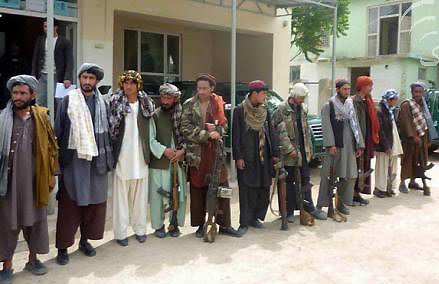
In Afghanistan the extremism of the Taliban is notorious. Yet US intelligence analysts found that 90% of the people NATO are fighting in Afghanistan are neither Taliban nor even “religiously motivated”, but fighting out of a cultural tradition of attacking foreign troops who are occupying their lands (which in Afghanistan may include for instance non-Pashtuns occupying Pashtun areas, or even soldiers from a tribe from another valley) (15) – (16).

A study by the US National Bureau of Economic Research also found that the number of attacks on NATO forces in each area of Afghanistan correlated closely with incidents in which NATO troops killed civilians in that area, with, on average, six extra attacks taking place each time civilians were killed (17).

There is also a fair amount of evidence of the ‘El Salvador option’ of US trained and led native ‘counter terrorist’ and ‘militia’ death squads being employed by the US in Afghanistan in summary executions in night raids (often of teenagers who turn out to be innocent). As in Iraq this allows the US military massive influence while denying any direct involvement – US officials for instance confirming that a raid had had US forces present but with the ‘trigger pullers’ being Afghan (18) – (20).

As with Al Qa’ida in Iraq most of the opposition to the Taliban among Afghans is due to Taliban killing civilians.

(US, UN and Afghan government sources show that Taliban and other opponents of NATO and the Karzai government have been responsible for the majority of civilian deaths for several years including 2011 so far. Given the Karzai government and the UN giving slightly higher figures for civilian casualties than NATO this can’t be discounted entirely as biased reporting of numbers.  However the total number of civilians killed has also been rising each year. (21) – (25).

NATO forces are also the body with the most security resources to collect enough statistics to make even a rough estimate of the total for each year across the whole country (21) – (26).

NATO figures for civilian casualties caused by their forces are also much lower than those of the Afghan Independent Human Rights Commission’s  figures in the minority of cases in which the AIHRC conducts it’s own investigation, though the UN may increase it’s figures in such cases. The AIHRC are all appointed by President Karzai and it’s head, Sima Samar, has had death threats from the Taliban and has said she’s in favour of NATO forces staying on to defeat the Taliban. This suggests NATO and UNAMA figures may understate the number of civilians killed by NATO and Afghan government forces. (26).

Even Al Qa’ida gets many recruits who want to protect Muslim civilians from being killed

Photo : The aftermath of the Madrid bombing

Al Qaeda was always a tiny minority of the people fighting the US and it’s allies and most Muslims want nothing to do with them, largely because they have often deliberately targeted civilians, which is not justified either morally or by anything in the Quran, but they have also repeatedly said they are killing our civilians because we are killing their (Muslim) civilians.

After 9-11 Bin Laden said “Every time they kill us, we kill them” (27). The Madrid bombers asked “Is it OK for you to kill our children, women, old people and youth in Afghanistan, Iraq, Palestine..? And is it forbidden to us to kill yours.” (28). Al Qa’ida in Europe said the July 7th bombings were revenge for the wars in Afghanistan and Iraq (29). In 2004 Bin Laden offered a truce to European countries if they withdrew their troops from Afghanistan and Iraq, saying “stop spilling our blood so we can stop spilling yours” (30).

This does not mean their murder of civilians was justified. Two wrongs cannot make a right. It is never justified to target civilians or take revenge on people not responsible for the acts you are taking revenge for. Taking revenge is usually pointless and counter-productive.

Al Qa'ida have also lost support among Muslims for targeting Muslim civilians as supposedly not 'true' Muslims.However these statements are more evidence that Al Qa’ida, like other Iraqi and Afghan insurgents, have motivations which are based at least partly on reality and which we can understand.

Only someone blinded by ideology could claim that the US and its allies have done nothing to turn any Afghans, Iraqis or Muslims against them

It’s hard to believe that Tony Blair can genuinely fail to see that if you kill members of the families of many thousands of people, or torture people by the thousand, many of them will hold it against you and some will seek revenge.

The fact that some Muslims, seeing themselves as part of a global community of Muslims, may also think they have a duty to fight to protect other Muslims in other countries, should not be surprising either. It’s not so different from Tony Blair, a British Prime Minister, deciding that we had a moral duty to stand ‘shoulder to shoulder’ with Americans due to ‘shared values’ after September 11th.

No doubt Blair is right that a minority of Muslims would be extreme in their views no matter what the US government and military and it’s allies did or didn’t do. Bin Laden for instance once claimed that “the crusaders” had allied with the Serbs against the Muslims in the former Yugoslavia.

To claim that nothing the US led alliance has done in terms of military action, torture, or supporting the dictatorships and occupations of others over mostly Muslim populations has turned anyone against us, or that anyone opposed to the US led alliance is only opposed due to ideology, is just him believing what he would like to believe though, blindly refusing to see the facts. That is deluded. You might even say that he clings so blindly to an ideology in which the US and it’s allies can do no wrong - and that this ideological belief is distorting his perception of reality.

Many converts to Islamic extremism may well be more symptoms of how some people react to having family members killed by foreign forces than a cause of them, just as the number of votes the BNP gets in the UK rises with the unemployment rate and rose after the London bombings. Blair and Bush and the neo-conservatives like to pretend that history began on September 11th – that it was what the Khmer Rouge called Year Zero, but in fact Israeli killings of Palestinian civilians and occupation of the West Bank and Gaza has been a motivating factor for Islamic extremist groups for decades, as have American and European support for torturing dictatorships in Muslim countries, along with civilians killed in wars on Muslim countries.


(1) = Independent 10 Sep 2011 War on terror 'not over' says Tony Blair,http://www.independent.co.uk/news/uk/politics/war-on-terror-not-over-says-tony-blair-2352499.html ; ‘Mr Blair warned the threat would only end when "we defeat the ideology". …"I think it will take a generation, but the way to defeat this ideology ultimately is by a better idea, and we have it, which is a way of life based on openness, democracy, freedom and the rule of law."’…my view is that actually this is a spectrum of which the terrorists are at one end but actually that spectrum of radical Islamism goes far, far deeper than we think…."It is profound, it is an ideology, it is a movement and it is still there, still with us.

(2) = BBC News 10 Sep 2011 ‘Tony Blair denies military action 'radicalised' Muslims’,http://www.bbc.co.uk/news/uk-politics-14858265 ; ‘The reason why these people are radicalised is not because of something we're doing to them. …There is this view, which I'm afraid I believe is deeply naive in the West, that somehow these people, you know, misunderstand our motives, that we've confused them, that that's why they've become radicalised. …And until we stop accepting that somehow we, by our actions, are provoking these people to be as they are, we will carry on with this problem….Mr Blair said that military force should be considered to stop Iran developing a military nuclear programme. "I don't think it would include invasion but I think you cannot rule out the use of military force against Iran if they continue to develop nuclear weapons in breach of the international community's obligations on them."’

 (3) = Washington Post 06 Feb 2005 ‘CIA Studies Provide Glimpse of Insurgents in Iraq’,http://www.washingtonpost.com/ac2/wp-dyn/A1508-2005Feb5?language=printer

(4) = NYT magazine 01 May 2005 ‘The Way of the Commandos’,http://www.nytimes.com/2005/05/01/magazine/01ARMY.html

(5) = New York Times Magazine 01 May 2005 ‘The Way of the Commandos’, http://www.nytimes.com/2005/05/01/magazine/01ARMY.html?pagewanted=1&_r=1

(6) = Nation 06 Jun 2009 ‘Iraq’s new death squad’, http://www.thenation.com/doc/20090622/bauer

(7) = Amnesty International World Report 2010 (covering 2009) – Country Report Iraq,http://report2010.amnesty.org/sites/default/files/AIR2010_AZ_EN.pdf#page=123 ;(once pdf loads, scroll down to page 125 (by PDF page number) or 178 (number marked on page)

(8) = On US and British forces in Iraq killing civilians see this link and sources listed on it and also this one

(9) = Thomas E. Ricks (2006) ‘FIASCO – the American military adventure in Iraq’, Penguin, London, Chapter 11 - pages 236-238 of paperback edition & chapter 12, pages 283-284 of paperback edition

(10) = Brookings Institution (July 2008) – Iraq Index, Page 8 – Enemy-Initiated Attacks against the Coalition and it’s partners, source MNF (multinational forces) Iraq, see Page 8, http://www.brookings.edu/fp/saban/iraq/index.pdf

(11) = See the part of the blog post on this link with the sub-heading ‘Killing and torturing Iraqis - supposedly to save them from Saddam doing it’ and the sources for it

(12) = NPR 31 Mar 2005 ‘Profile of an Iraqi Insurgent’, http://www.npr.org/templates/story/story.php?storyId=4568785, He says he grew disillusioned with the insurgency, which he says has been "hijacked by foreigners" and directs its attacks against Iraqis, not Americans.

(13) = Christian Science Monitor 06 Feb 2006 ‘Sunni tribes turn against jihadis’,http://www.csmonitor.com/2006/0206/p01s01-woiq.html ; ‘Sheikh Osama al-Jadaan, head of the influential Karabila tribe… He's also turned away from supporting Abu Mussab al-Zarqawi and other foreign fighters in Iraq. "We realized that these foreign terrorists…claim to be striking at the US occupation, but the reality is they are killing innocent Iraqis in the markets, in mosques, in churches, and in our schools."

(14) = Time 31 Jan 2011 ‘The Insurgent's Tale: Rolling Stone's 2005 Profile of a Soldier Reconsidering Jihad’,http://www.rollingstone.com/politics/news/the-insurgents-tale-rolling-stones-2005-profile-of-a-soldier-reconsidering-jihad-20110131 ; ‘At thirty-two, Khalid was beginning to have serious reservations about the course of the insurgency in Iraq. They are over-killing there. Fighting foreign soldiers was one thing — he had been doing it all of his adult life. But did his faith really sanction killing civilians in their own country? The blood of people is too cheap.’

(15) = Boston Globe 09 Oct 2009 ‘Taliban not main Afghan enemy - Few militants driven by religion, reports say’,http://www.boston.com/news/world/middleeast/articles/2009/10/09/most_insurgents_in_afghanistan_not_religiously_motivated_military_reports_say/

(16) = Washington Post 27 Oct 2009  ‘U.S. official resigns over Afghan war’, http://www.washingtonpost.com/wp-dyn/content/article/2009/10/26/AR2009102603394_3.html?hpid=topnews&sid=ST2009102603447

(17) = AP 02 Aug 2010 ‘Study ties civilian deaths to attacks on U.S. forces’, http://www.msnbc.msn.com/id/38530360/ns/world_news-south_and_central_asia/t/study-ties-civilian-deaths-attacks-us-forces/#.Tm1FuOxZ-So ; for full report see Luke N. Condra, Joseph H. Felter, Radha K. Iyengar, Jacob N. Shapiro (2010) ‘The Effect of Civilian Casualties in Afghanistan and Iraq’  , National Bureau of Economic Research, NBER Working Paper No. 16152, July 2010, http://www.nber.org/papers/w16152 ; The fact that no correlation was found in Iraq may well be due to a greater degree of nationalism in Iraq, with most Iraqis seeing themselves as Iraqi first, compared to what one American officer called ‘valleyism’ in Afghanistan, with community loyalties often limited to one valley (see (16) above)

(18) = Guardian 22 Nov 2009 'US pours millions into anti-Taliban militias in Afghanistan', http://www.guardian.co.uk/world/2009/nov/22/us-anti-taliban-militias-afghanistan

(19) = On the ‘El Salvador option’ of US trained and/or led native death squads from El Salvador to Pakistan, Afghanistan and Iraq to Colombia see the blog post on this link and sources for it

(20) = On summary executions of people who are often later found to be innocent and teenage boys see the blog post on this link – scroll down to the sub-heading ‘Night Raids and the El Salvador Option moving from Iraq to Afghanistan’ or to see sources for it to ‘Sources for Night raids etc’. Some links may have changed but you should be able to find the original articles by googling the newspaper name and the headline

(21) = Afghanistan Conflict Monitor ( of simon Fraser University, Canada) – Facts and Figures – Civilian Casualties http://www.conflictmonitors.org/countries/afghanistan/facts-and-figures/casualties/civilians (tables using UN statistics for 2007-2010 showing civilian casualties and whether they were caused by NATO or Afghan government forces or their allies (PGF =Pro-Government Forces) or their enemies (AGF = Anti-Government Forces)

(22) = Casualty Monitor – Civilian Casualties: Afghanistan – more tables showing the same things and again based on UNAMA figures, http://www.casualty-monitor.org/p/civilian-casualties-afghanistan.html

(23) = Afghan Independent Human Rights Commission AIHRC (2010) ‘Afghanistan Annual Report on the Protection of Civilians in Armed Conflict’, http://www.aihrc.org.af/2010_eng/Eng_pages/Reports/Thematic/Executive_Summary_Final.pdf

(24) = guardian.co.uk 19 Jul 2010 ‘Afghanistan civilian death toll has risen sharply, says United Nations’,http://www.guardian.co.uk/world/2011/jul/19/afghanistan-civilian-deaths-rise-un

(25) = USA Today 22 Jun 2011 ‘Taliban behind most Afghan civilian casualties’,http://www.usatoday.com/news/world/afghanistan/2011-06-22-afghan-civilian-casualties_n.htm

(26) = On problems with and likely biases in Afghan civilian casualty statistics in general; and on US civilian casualty counts on NATO airstrikes being far lower than AIHRC counts see the blog post on this link and sources for it

(27) = Guardian 12 Nov 2001 , ‘Bin Laden denies anthrax attacks’, http://www.guardian.co.uk/world/2001/nov/12/afghanistan.anthrax

(28) = Guardian 12 Mar 2004, ‘The clues that point towards al-Qaida’, http://www.guardian.co.uk/world/2004/mar/12/alqaida.spain2

(29) = Guardian Unlimited 17th July 2005 , 2.15p.m update ‘Al-Qaida in Europe claims responsibility for blasts’ http://www.guardian.co.uk/uk/2005/jul/07/terrorism.july7

(30) = Reuters / guardian.co.uk 15 Apr 2004 ‘Excerpts from 'Bin Laden' tape’, http://www.guardian.co.uk/world/2004/apr/15/alqaida.usa

Sunday, February 20, 2011

Being shot, tortured or jailed without trial doesn't become better or worse depending on the ideology used to justify it


The continuing protests for democracy and jobs across the Middle East and North Africa show that undemocratic governments of different ideologies and forms of government are all more similar than any of them would like to think.

They may vary the rhetoric they use to justify their rule and their actions, but they’ve all been jailing their own people without fair trial for decades, torturing and murdering them – and they all send their police or soldiers to shoot unarmed demonstrators in the street the moment it looks like their power might be threatened.

Which ideology you’re being jailed, tortured or shot for makes far less difference to those on the receiving end than those trying to justify it might think.

This holds whether it’s supposedly to defend the Revolution and the Republic in Libya and Egypt, to defend the Islamic revolution in the semi-theocratic Islamic Republic of Iran, or to defend the monarchy in the Kingdom of Bahrain (and held for Iraqis tortured in the name of democracy too – because democracy, as George Orwell said, is more often an undefined word used to justify unjustifiable actions than a reality).

Democracy does exist in a very real sense for the protesters who see it as fair elections, the right not to be jailed without trial, tortured or murdered by the government – and – though this gets less press – the right to a job and a living wage (most of the demonstrations having  included demands for jobs and better pay from the start).

The hypocrisy of democratically elected governments who back many of these dictatorships (the only exceptions being Syria and Iran) continues, with bans on sales of arms and “crowd control” devices, just a bit late and - on their past records - unlikely to last long.

Friday, March 05, 2010

The Real Michael Foot


“We are not in this world to find elegant solutions, pregnant with initiative, or to serve the ways and modes of profitable progress.

No, we are here to provide for all those who are weaker and hungrier, more battered and more crippled than ourselves.”

Michael Foot MP, 1983


Michael Foot has been caricatured as having been an ineffective leader, as having been responsible for Labour’s election defeat in 1983 and as senile, ‘loony left’ and too naive and weak to oppose real threats. He was none of these things. He was the only leader who all the fragments of a divided party would accept at a time when all parties were divided because none had any working solution to "stagflation"; and both main parties were divided on Europe. He was intelligent, honest, blended principle with pragmatism and was as much a democrat as he was a socialist. Unlike his successors he accepted that Labour party policies were decided by votes by its' membership. He was against the appeasement of Franco’s fascists and Hitler’s Nazis when Churchill and Roosevelt were still backing the fascists as the supposed "lesser of two evils" - and he volunteered to serve in the Second World War, but he was also against wars that didn’t have to be fought. Some of the policies of the 1983 Labour manifesto were controversial - on unilateral nuclear disarmament and leaving the EU for instance - but overall it certainly wasn't any more extreme or 'ideological' than Thatcherism with its blindly ideological monetarism, but because the Murdoch press were allied to Thatcher they painted a very one sided picture which too many people accepted as fact. Thatcher would also have lost the 1983 election if it hadn't been for the Falklands war, because monetarism failed - it cut inflation but increased unemployment by 50% from 2 million to 3 million. That war was entirely avoidable (and Callaghan had avoided it in a similar situation a few years earlier) yet many voters rewarded Thatcher for her failure to avoid it, despite the many deaths and destroyed lives involved.


Foot was not to blame for the divisions in and splitting of the Labour Party, which were due to Stagflation which began under Heath

The 1983 election has been presented as a failure which was supposedly all down to Michael Foot’s leadership failures. This is hugely unfair and simplistic. The Labour party was deeply divided before Foot became leader. These divisions were the result of ‘stagflation’ (unemployment combined with inflation) which was first seen in the 1960s but became much worse under Heath’s Conservative government in 1973 after the Arab members of OPEC increased oil prices to put pressure on ‘western’ governments who backed Israel after the Arab defeat in the 1973 Israeli-Arab war. The causes of stagflation are still debated by economists. One theory is that a sudden increase in the price of a vital commodity such as oil can cause inflation of the prices of other things which at the same time leads to reduced economic growth as profit margins are cut or wiped out by increased costs for businesses.

Another is that it may be due to a governments printing more money or providing more credit (causing the value of money to fall as the supply of it increases relative to the demand – one cause of inflation as the same amount of money is now worth less than it was before) while excessive government regulation and taxation of businesses can simultaneously cause ‘stagnation’ – reduced economic growth and increased unemployment.

( My own, very amateur and partial, explanation is that it may also be the result of rapid economic growth combined with very unequal distribution of the new wealth created by that growth, so that the majority have less money to spend, leading to inflation of prices due to the increased money supply produced by growth, combined with reduced spending by most consumers, reducing demand and so causing unemployment and reduced economic growth – the counter-argument being that the wealthy will invest their extra money, providing investment to new businesses)

Like the ‘credit crisis’ the ‘stagflation’ of the 1970s was a worldwide problem. Of course, like the credit crisis, the suffering caused by it in the ‘developed’ world was fairly minor compared to the constant hunger and illness of most of the population of the ‘developing’ world, but people struggling to pay the bills were still stressed and tired – and votes would go to whoever could present a convincing solution to the crisis.

The Wilson and Callaghan (both Labour) governments of 1974 -1979 faced stagflation and didn’t know what the causes of it were, nor what the solution to it was any more than anyone else did (previously there had been recessions or inflation, but never both at once). They adopted a watered down version of Milton Friedman’s right wing theories of complete free trade and monetarism (later adopted with greater enthusiasm and even more disastrous results by Pinochet in Chile and Thatcher in Britain).

In accordance with this theory they cut public spending and went to the IMF for a loan. The IMF, as usual, attached all kinds of monetarist conditions including more public spending cuts and tax cuts. Unemployment in the UK reached an unprecedented 2 million. Thatcher’s Conservative party promised in opposition to cut unemployment. In government it made further cuts, making more public sector workers unemployed, leading to them having less money to spend, leading to private sector sales and profits falling, leading to higher unemployment in the private sector too. Unemployment would soon reach over 3 million.

The right of the Labour party blamed the trade unions and the left wing of the party and it’s Keynesian economic views and idealism for losing the 1983 election. (Keynesianism is an economic theory calling for increasing public spending and cutting taxes during recessions to get out of them, while cutting public spending and increasing taxes during economic booms to prevent unrealistic expectations of infinite growth leading to a sudden panic and crisis. Labour had become too socialist and too idealistic in their view. Keynesianism had been developed as a solution to the Great Depression of the 1930s. It worked then, but stagflation was a new problem.)

The left blamed the right of the party under Callaghan for cutting public spending, accepting the IMF’s monetarist principles and so sacking public sector workers – and refusing to accept the demands of striking trade unionists - causing many of Labour’s traditional allies and supporters to stay at home and not vote. In their view Callaghan had lost the 1979 election by not being socialist enough.

Under the right of the Labour party (reluctant monetarists) and the right of the Conservative party under Thatcher (enthusiastic monetarists) monetarism was adopted in the hope that it would end stagflation. Monetarism provided a theory to explain and control stagflation. This was all about controlling the money supply through the amount of notes printed by central banks and the interest rates they set. Unfortunately when governments tried to put the theoretical solutions into practice to try to solve stagflation the results were terrible. Where inflation was reduced it was reduced only at the cost of massively increased unemployment and reduced economic growth. The inflation part of ‘stagflation’ had been cut to nothing, but the stagnation was through the roof. The wealthiest (and in the UK some middle income earners) got better off; for the wealthiest it was an ‘economic miracle’; but the percentage of people unemployed or in poverty rocketed.

Much of the left and the right of the Labour party were now bitterly opposed to each other. Michael Foot was the only person in the Labour party who was so universally respected that every faction in the party would accept him as leader. The worst split took place under Foot’s leadership, with much of the right of the party (social democrats rather than Socialists) forming the SDP and then the SDP-Liberal Alliance with the Liberal party. However it’s unlikely that any party leader could have prevented this. Despite this the Labour party got 27.6% of the vote in the 1983 election with another 25.4% going to the Alliance. Due to the First-Past-the-Post electoral system though the Alliance’s 25.4% share of the vote got it just 23 seats (3.5% of the MPs in parliament), while the Conservatives, with 42% of the vote got 397 seats (62% of the 650 seats in parliament). So if anyone’s assigning blame for Labour losing the 1983 election the Labour MPs who began the SDP – David Owen, Shirley Williams, William Rogers and Roy Jenkins and – must take a large part of the blame. They may point to Foot taking the party too far to the left as the cause of the split, or blame the unfairness of the electoral system – and both of those claims have some truth in them, especially the second one, but they knew the 1983 election would take place on a first-past-the-post electoral system. They may have thought that Labour was now doomed by factionalism and extremism and that a new party was the only hope of holding off Thatcherism. In the event a third party in the first-past-the-post election system failed almost totally. Under a proportional system the Alliance and Labour would have got over 50% of the seats between them to the Conservatives 42% and Thatcher’s government would have been a single term one.


How voters rewarded Thatcher for failing to avoid an easily avoidable war, hundreds of deaths and thousands of ruined lives

Thatcher’s key vote-winner in the 1983 election was a wave of nationalistic jingoism over Britain’s defeat of Argentina in the completely avoidable Falklands War. The Argentine military junta was looking for a ‘patriotic’ war to distract from mass unemployment and political murders. Thatcher, with the worst poll ratings of any Prime Minister to that point, may also have been looking for a patriotic war to distract from her government having increased unemployment to 3 million in its crusade to break the trade unions and the Labour party, after promising in opposition to reduce unemployment. When the junta had made noises about the Falklands under her predecessor Callaghan the Labour government was persuaded by the Chiefs of Staff to send some destroyers to show Britain would fight if the Argentines invaded. When the same problem came up under Thatcher her government decided to withdraw the last Royal Navy ship – the HMS Endurance – from the South Atlantic, giving the Argentine military the impression that Britain wouldn’t fight for the Falklands (1) , (2).

The motive may have been a patriotic war for votes, or it may have been Thatcher’s narrow-minded obsession with cutting public spending as being a good thing in itself (her Defence Minister being chosen for his enthusiasm for spending cuts) which led to HMS Endurance being recalled to save a mere £3 million from a budget of hundreds of billions a year. Either way the decision cost 907 lives – 255 of them British, left 907 families grieving and wounded 1,845 people. Some of the wounded, like Simon Weston, who suffered severe burns in an Argentine missile attack on a British destroyer, still bear the physical and emotional scars. After many years of facial reconstruction operations and mental illness caused by seeing many of his friends and comrades burning to death Simon has partially recovered and has written several successful books on his experiences (1), (2).

If the electorate had been thinking straight Thatcher should have lost a lot of votes for her government’s incompetence or cynicism in losing so many lives totally un-necessarily. Instead many of them rewarded her for winning a war that she could have prevented.


The false caricature of Foot as naive pacifist

Michael Foot as Labour leader decided to back the war on the basis that the people of the Falkland islands wanted to be under British rule and that the Argentine invasion was unprovoked aggression and a breach of the UN charter and international law. He also condemned Thatcher for her ‘betrayal’ of the Falkland islanders in failing to signal to the junta that British forces would defend the islands.

Despite this most of the press – especially Murdoch’s ‘Sun’ Tabloid – tried to present Foot as a senile, naive, old pacifist blinded by ideology using quotes from him like “I am an inveterate peace-monger”. Foot was certainly a peace-monger when it came to avoidable wars but he was no appeaser. Once the Argentine forces invaded the Falklands he backed military action. He condemned the Chamberlain government over it’s appeasement of Hitler after the German invasion of Czechoslovakia just as loudly as Churchill did. (He also volunteered to serve in the army after Britain declared war on Germany, but was turned down due to his severe asthma.) Unlike Churchill he had also campaigned against the Baldwin government’s appeasement of Franco’s fascists in the Spanish Civil War in the 1920s (in which British Conservatives from Chamberlain to Churchill had no criticism of the government policy of not arming the elected Republicans and anarchists while making no attempt to stop Hitler and Mussolini sending arms, troops and entire squadrons of bombers to fight for Franco’s monarchists, largely on the grounds that fascists were seen as preferable to communists. The results of the policy were to make the Republicans reliant on Stalin and the Soviet Union for arms, dividing the Republicans and ensuring a fascist victory.) At that time Roosevelt was still referring to Mussolini as "that admirable Italian gentleman" (3), (4).

Foot was also opposed to the Iraq war, though he didn’t stop supporting the Labour party over it.

Foot, like Churchill, was prepared to fight when the alternative was to appease fascist regimes bent on world conquest and with the militaries to carry their threats out; Unlike Churchill he never backed wars of choice and Empire like the Boer war though.


The false caricature of Foot as ‘loony left’ - and the reality of a principled, reasonable, educated democrat

The Murdoch press also tried to paint Foot and the Labour party under him as ‘loony left’ using invented stories, like the ones about Labour controlled councils banning singing ‘baa baa black sheep’ as racist.

On nuclear weapons he took an uncompromising position of unilateral disarmament which not even his former hero Aneurin Bevan had adopted – but with the ‘Gang of Four’ and their supporters having left the party the majority of the party supported this position. I’m one of many people who disagree with this policy (in fact it's one of the few issues that i'm closer to Thatcher's views on), but Foot never forced this policy on his party in the 1983 Labour Election Manifesto. Under his leadership all decisions on party policy were decided democratically by a majority of the members. Critics may point out that union block votes compromised internal party democracy here - and they have a point - but today under 'one member, one vote' (which, in fact, still doesn't give equal votes to all members in conference or leadership elections) votes are irrelevant, because if the party leadership dislike the result, they ignore it. The last Labour leadership election was almost Soviet style, with only one candidate - Gordon Brown - on the ballot, with party members denied the right to vote for other candidates because too few MPs supported other candidates - most MPs being largely selected due to the influence of party leaders.

Since Foot never took the power to decide party policy himself he can’t be blamed for adopting policies supported by the majority of party members, whether they lost the party votes or not (and they may actually have increased the turn-out of Labour's core voters). Nor did Foot ever lie to get support for a policy he supported, the way Blair did on Iraq.

After Kinnock replaced Foot as leader democracy died in the Labour party. Under Kinnock, Blair and Brown votes by party conference are taken as ‘non-binding’ on the party leadership – in other words if they don’t like the result of a vote they ignore it and write their own policy instead. From Kinnock on if the party leader dislikes a candidate selected by a constituency party the leader or the National Executive Committee vetoes their candidacy and imposes a candidate they chose themselves – sometimes suspending or expelling the entire constituency party if it objects. The Conservative party is barely an more democratic internally. As a result the membership of the three largest parties in the UK has fallen steadily.

There have been a lot of crocodile tears since from party leaders about ‘public apathy’ and phony ‘attempts to reconnect with the voters’, but the truth is that party leaders have centralised all decision making in their own hands. While telling party members they have a duty to campaign for the policies and principles the party stands for they completely ignore the views of their members on what policies the party should have and removed the power to choose candidates by democratic votes too; So party members have left in droves. When one of the main parties has been out of power for a long time there’s a short-lived rise in membership as people too young to know what it was like in power the last time join up, along with some degree of opportunism. After the reality that their views are not wanted where they conflict with the latest u-turn by the leadership sink in they leave again. So Labour membership rose rapidly in 1997, but is now lower than ever before.

If you have an electoral system designed to hugely over-represent two large established parties and under-represent (or not represent) anyone else - and you then combine that with the members of the big parties having no say in what the parties’ policies are – the sad but obvious result is that a large minority of people are discouraged and give up on trying to influence their country’s government or politics at all.

Under Tony Blair billionaires like Lord Sainsbury made donations to party funds, were made Lords and then cabinet ministers – just as under Cameron the Conservatives have made Lord Ashcroft a Lord for making big donations to party funds – and if they win the next election they’ll make him a government minister too. Michael Foot never let big donations from billionaires influence party policy, nor did he ignore democratic votes by the majority of party members on policy.

Foot was a pragmatist on many issues. For instance he supported the Blair and Brown governments on their introduction of a national minimum wage and successful peace negotiations in Northern Ireland.

While I concede those two things were real achievements of ‘New Labour’ in government i can’t support them. I admit that the Conservatives would be even worse than Blair or Brown have been, but Blair and Brown continued and expanded the worst policies of the Conservatives under Major . They expanded the PFIs and PPPs begun under Major (resulting in increased taxes but cuts in the number of fully trained staff in the NHS and in schools), increased public subsidies to privatised rail firms (while they pushed rail fares up at several times the rate of inflation), continued arming and backing dictatorships and human rights abusers; and lied in order to take us into a war which could only cost more lives than it saved – and increase terrorism rather than reduce it.

That only underlines the fact that Foot was far more of a pragmatist and far less of an idealist or extremist than some of his critics said he was though. The one exception was his support for unilateral nuclear disarmament, but that was understandable in someone who heard live reports of the effects of the Hiroshima and Nagasaki bombings.

Having said that he never abandoned his principles – and his principles were not idle intellectualism, they were about helping those who needed the help.

Foot said that “We are not in this world to find elegant solutions, pregnant with initiative, or to serve the ways and modes of profitable progress. No, we are here to provide for all those who are weaker and hungrier, more battered and more crippled than ourselves. That is our only certain good and great purpose on earth..”

Thatcher meanwhile missed the entire point of the parable of the Good Samaritan by saying “No one would remember the Good Samaritan if he only had good intentions. He had money as well.”.

Margaret Thatcher was far more extreme and ideological in most of her policy positions than Foot ever was, but because her policies involved cutting taxes on the wealthiest, breaking the trade unions using anti-union laws and allowing Murdoch’s News International to avoid taxes in return for his newspapers’ support in elections much of the media shone a kindly light on Margaret Thatcher. Someone who wore the right clothes was forgiven for destroying the lives of thousands through an avoidable war and through a calculated policy of creating mass unemployment to drive down wages and break the trade unions and the main opposition party. Meanwhile Michael Foot, an honest, intelligent, principled, democrat was presented as if he was a senile lunatic because he wore a warm coat over his suit and black tie at the Cenotaph. Thatcher, responsible for so many needless deaths and so much suffering by the unemployed, the homeless and the opposition to Apartheid in South Africa (who she refused to help in any way and denounced as “terrorists”) was seen as a great heroine. Foot, who served both his country and the causes of democracy and equality worldwide, was looked down on as inferior for his sartorial inelegance. That is a measure of how shallow, how trivial and how confused our view of things can become when we allow manipulative alliances between media barons and politicians to distort our judgement and draw our eyes away from what’s really important. Michael Foot may have looked like he was wearing a “donkey jacket” at the cenotaph, but looking at his record and Margaret Thatcher’s there’s little doubt about which one often wore ideological blinkers that brought disaster and which one always fought to reduce the suffering of others.


Sources

(1) = Lawrence Freedman ‘The Official history of the Falklands War’

(2) = Anthony Seldon & Daniel Collings ‘Britain Under Thatcher’ , Chapter 2, page 20

(3) = Anthony Beevor ‘The Spanish Civil War’ , Chapter XI

(4) = Wolfgang Schivelbusch 'Three New Deals : Reflections on Roosevelt's America, Mussolini's Italy, and Hitler's Germany, 1933-1939' p. 31