Showing posts with label Libyan. Show all posts

Saturday, December 22, 2012

Obama is right to tighten gun laws in the US - but wrong to send more weapons to Syria :US stepping up arming of Syrian rebels will only intensify civil war and chaos that lets terrorists like Al Qa'ida and Sunni extremists like Al Nusrah get more recruits and operate more freely ; and makes an Islamic state or a second civil war more likely than democracy

There can’t be anyone who doesn’t feel for the parents who lost their children in the senseless events in America; and President Obama is right to propose tightening gun ownership laws. He could save many Syrian children and adults from equally avoidable deaths if his administration stopped doing the opposite in Syria. The Obama administration has been “co-ordinating” the supply of arms to rebel groups in Syria and is also covertly supplying them with arms bought in Libya since Gadaffi’s overthrow. US and British Special forces are also active in Syria and more military “advisers” are to be sent – with advisers having been a euphemism for combatants since Vietnam at the latest. (1) – (2).

NATO governments claim this helps Syrian rebels protect civilians from Assad’s forces, but in reality some on both sides are targeting civilians – and the more intense the civil war gets the more easily terrorist groups including Al Qa’ida can operate in Syria, so arming the rebels gets civilians killed just as much as Russia arming Assad’s forces does.

Human Rights Watch have reported some armed opponents of Assad are targeting and killing civilians including employees of Syrian state television (3) – (4). Channel 4 News reporter Alex Thomson recently reported multiple consistent accounts from survivors and witnesses of Sunni Jihadists, opposed to Assad, massacring Alawite civilians in the town of Aqrab (5).

Many Syrian Christian refugees have also fled attacks by Sunni Jihadists allied to the rebels (6)

Terrorist car bombings are also common, each killing between several and dozens of civilians as collateral damage by targeting government buildings and even the family homes of member of the military or Assad supporters (7) – (9). Two such rebel attacks, one with a mortar and the other with a car bomb, each killed several schoolchildren in the last month (10) – (13).

The government, with it’s artillery, tanks and jets, kills more civilians, again many deliberately and many others by not worrying about “collateral damage” deaths when using bombings by air forces, artillery and tanks, due to it’s greater firepower and equal brutality, but though thousands of civilians have been killed by government forces, the opposition figures on this are exaggerated, with fighters killed in combat reported as civilians by many opposition groups (14) – (16).

While some FSA fighters have tortured and killed captured government soldiers and militia-men, most of the car bombing atrocities and the massacres of civilians committed by anti-Assad forces are not committed by the Free Syrian Army but more extreme groups like the Syrian Al Nusrah and international Jihadists including Al Qa’ida, many Iraqis recruited after Al Qa’ida took advantage of the chaos created in Iraq (17) – (19).

The Obama administration claims it’s “co-ordination” is to ensure that only moderates get weapons, funding and arms (20). If that’s true, it’s failing. The FSA say the Jihadist groups are the ones getting the most arms and money (21).

It’s possible this is because the Saudis and Qatari dictators favour Islamists over a democracy that might embarrass them (as some Syrian exile opposition leaders suggest), but equally possible that the US government actually favours arming Sunni extremists as they will be the most uncompromising against Assad (an Alawite) and his Iranian Shia allies – the same reason they “co-ordinated” with the Saudis and Pakistanis to arm, fund and train the Mujahedin in the 80s and the Taliban in the early 90s. Al Qa’ida and Al Nusrah, like the Taliban, consider Alawites and Shia to be “false Muslims” (22) – (24).

The peaceful part of the Syrian opposition to Assad oppose foreign interference and violence which is causing civil war and sectarianism. For instance exiled Syrian opposition leader Haytham Manna of the National Co-ordination Body for Democratic Change Abroad issued Three No’s – to violence, to sectarianism and to foreign intervention (25).

According to Haytham the US backed political leadership of the FSA, the Syrian National Council, also refuse to denounce Al Nusrah and continue to work along with them in the civil war (26).

As in Iraq, Lebanon, Palestine and Afghanistan, the chaos created by foreign powers each arming their own proxies is providing an environment that terrorist and sectarian groups can thrive in. The phony threat that Assad might use WMD is also brought up. In fact as the BBC’s Defence correspondent reported, the evidence suggests Assad’s government is trying to secure WMD so there’s no risk of it being captured by terrorist groups like Al Qa’ida, as it’s done before in the past (27) – (28).

We’re given the impression that Assad has refused to make any significant democratic reforms. Despite the atrocities committed by his forces as much as the Jihadists, this is not true.

Assad changed the constitution last year to end the one party state in Syria, legalising opposition parties and held multi-party elections in which over 51% of Syrians voted (29).

That is a much more major reform – and supported by more of the population – than the fig leaves for reform, like powerless elected local councillors in Saudi, and powerless parliaments in Bahrain, Yemen and Kuwait, which the US and British governments welcome (30) – (33).

The Free Syrian Army rebels say they will get rid of the Jihadists once they’ve overthrown Assad, but if the Jihadists are the best armed and funded and trained rebel groups, how would they manage to? NATO governments will argue this is why they need to arm the FSA better – but the FSA is torturing and killing POWs – and the more the civil war intensifies the stronger the sectarian militias and Jihadist terrorist groups on both sides get.

Negotiation and opposing Assad’s regime through elections, rather than calling for it’s overthrow by force, would be a much more effective way to get real democracy in Syria, in the long run, than intensifying a civil war in which more people die each day and in which the only real winners are Al Qa’ida and their allies.


(1) = Washington Post 06 May 2012 ‘Syrian rebels get influx of arms with gulf neighbors’ money, U.S. coordination’,  http://www.washingtonpost.com/world/national-security/syrian-rebels-get-influx-of-arms-with-gulf-neighbors-money-us-coordination/2012/05/15/gIQAds2TSU_story.html

(2) = Sunday Times 09 Dec 2012 ‘Covert US plan to arm rebels’,
http://www.thesundaytimes.co.uk/sto/news/uk_news/National/article1173125.ece ; 1st to 3rd , 5th and 9th paragraphs ‘THE United States is launching a covert operation to send weapons to Syrian rebels for the first time as it ramps up military efforts to oust President Bashar al-Assad. Mortars, rocket-propelled grenades and anti-tank missiles will be sent through friendly Middle Eastern countries already supplying the rebels, according to well-placed diplomatic sources. The Americans have bought some of the weapons from the stockpiles of Muammar Gadaffi, the Libyan dictator killed last year. They include SA-7 missiles, which can be used to shoot down aircraft…President Barack Obama authorised clandestine CIA support earlier this year and both the US and Britain have had special forces and intelligence officers on the ground for some time…The US will send in more advisers to help with tactics and manage weapons supplies. British advisers are also expected to be sent. America and Britain are already training Jordanian and Turkish advisers to support the rebels.’

(3) = Human Rights Watch 20 Mar 2012 'Syria: Armed Opposition Groups Committing Abuses', http://www.hrw.org/news/2012/03/20/syria-armed-opposition-groups-committing-abuses ‘Armed opposition elements have carried out serious human rights abuses, Human Rights Watch said today in a public letter to the Syrian National Council (SNC) and other leading Syrian opposition groups. Abuses include kidnapping, detention, and torture of security force members, government supporters, and people identified as members of pro-government militias, called shabeeha." as well as "executions by armed opposition groups of security force members and civilians."’

(4) = BBC News 27 Jun 2012 ‘Gunmen 'kill seven' at Syrian pro-Assad Ikhbariya TV’,
http://www.bbc.co.uk/news/world-middle-east-18606341

(5) = Channel 4 News 14 Dec 2012 ‘Was there a massacre in the Syrian town of Aqaba’, http://blogs.channel4.com/alex-thomsons-view/happened-syrian-town-aqrab/3426

(6) = Independent 02 Nov 2012 ‘The plight of Syria's Christians: 'We left Homs because they were trying to kill us'’, http://www.independent.co.uk/news/world/middle-east/the-plight-of-syrias-christians-we-left-homs-because-they-were-trying-to-kill-us-8274710.html

(7) = Reuters 23 Dec 2011 'Analysis: Syria bombings signal deadlier phase of revolt', http://www.reuters.com/article/2011/12/23/us-syria-bombings-idUSTRE7BM18T20111223 , 'Beirut-based commentator Rami Khouri said he doubted the government would have hit its own security targets, suggesting that the bombings could have been the work of armed rebels, who he said include hardline Salafi Islamists in their ranks....Hilal Khashan, political science professor at the American University of Beirut, also said he did not believe that the Syrian government was behind the bombings.'

(8) = New York Times 10 May 2012 'Dozens Killed in Large Explosions in Syrian Capital', http://www.nytimes.com/2012/05/11/world/middleeast/damascus-syria-explosions-intelligence-headquarters.html?pagewanted=all ; 'Twin suicide car bombs that targeted a notorious military intelligence compound shook the Syrian capital, Damascus, on Thursday, killing and wounding hundreds of people ...It was the largest such terrorist attack since the uprising began 14 months ago, with the Health Ministry putting the toll at 55 dead and nearly 400 wounded — civilians and soldiers. '

(9) = Guardian 26 Oct 2012 ‘Syrian car bomb breaks Eid al-Adha ceasefire’,
http://www.guardian.co.uk/world/2012/oct/26/syrian-carm-bomb-breaks-ceasefire

(10) = A.P 04 Dec 2012 ‘Syria says 30 killed in mortar attack on school’,
http://news.yahoo.com/syria-says-30-killed-mortar-attack-school-172156089.html

(11) = AP 13 Dec 2012 ‘Syria State Media: Blast near Damascus Kills 16’,
http://world.time.com/2012/12/13/bomb-explodes-near-syrian-capital/

(12) = Al Jazeera 13 Dec 2012 ‘Dozens killed in Syria bomb attacks’,
http://www.aljazeera.com/news/middleeast/2012/12/2012121310920586422.html

(13) = BBC News 13 Dec 2012 ‘Syria crisis: Bombs 'kill 24' in Damascus suburbs’,
http://www.bbc.co.uk/news/world-middle-east-20710556

(14) = Amnesty International Annual Report 2012 , http://www.amnesty.org/en/region/syria/report-2012#section-12-3

(15) = BBC News 14 Oct 2012 ‘Human Rights Watch says Syria using cluster bombs’, http://www.bbc.co.uk/news/world-middle-east-19942318

(16) Al Jazeera 13 Feb 2012 ‘Q&A: Nir Rosen on Syria's armed opposition’,
http://www.aljazeera.com/indepth/features/2012/02/201221315020166516.html (13th Question and answer ‘AJ: Who is being killed? NR: Every day the opposition gives a death toll, usually without any explanation of the cause of the deaths. Many of those reported killed are in fact dead opposition fighters, but the cause of their death is hidden and they are described in reports as innocent civilians killed by security forces, as if they were all merely protesting or sitting in their homes. Of course, those deaths still happen regularly as well.’

(17) = HRW 17 Sep 2012 ‘Syria: End Opposition Use of Torture, Executions’, http://www.hrw.org/news/2012/09/17/syria-end-opposition-use-torture-executions

(18) = Guardian 30 Jul 2012 ‘Al-Qaida turns tide for rebels in battle for eastern Syria’,
http://www.guardian.co.uk/world/2012/jul/30/al-qaida-rebels-battle-syria

(19) = BBC News 02 Aug 2012 ‘Syria conflict: Jihadists' role growing’,
http://www.bbc.co.uk/news/world-middle-east-19091400

(20) = Washington Post 16 May 2012 ‘Syrian rebels get influx of arms with gulf neighbors’ money, U.S. coordination’, http://www.washingtonpost.com/world/national-security/syrian-rebels-get-influx-of-arms-with-gulf-neighbors-money-us-coordination/2012/05/15/gIQAds2TSU_story.html

(21) = Observer 03 Nov 2012 ‘Execution of Assad troops widens split among rebel fighter factions in Syria’, http://www.guardian.co.uk/world/2012/nov/03/syria-military-council-aleppo-rebels ; paragraphs 5 to 8 , 15 to 16 and final paragraph ; ‘Syrian Islamist groups…are not able to match the better-armed and funded global jihadist units, who are increasingly taking centre stage in the war for the north of the country…"This will soon mean that Jabhat al-Nusraf (an al-Qaida-aligned group) will be the only group capable of mounting the lethal operations on bases and security headquarters," said a leader of Liwat al-Tawheed, which has been a key player in the fighting in Aleppo. "It already means that we can't win without them."…Islamist groups in Aleppo say that they aim to do no more than oust the Assad regime. Most of their clerics and leaders reject the ideology of the jihadists, who openly view the battle in Syria as a vital phase of a global sectarian war….Another Liwat al-Tawheed commander said…"Compare what we have to what al-Nusraf are getting. They are not getting weapons from outside, but they are buying them in Syria with large amounts of cash. They are very well supplied and they are not saying where they are getting the money from."

(22) = Guardian 18 Dec 2012 ‘Syria: after Assad falls, what then?’, http://www.guardian.co.uk/commentisfree/2012/dec/18/after-assad-falls-what-then

(23) = Steve Coll (2004) , 'Ghost Wars : The secret History of the CIA, Afghanistan and Bin Laden' , Penguin , London , Chapters 16 to 18

(24) = Ahmed Rashid (2000) 'Taliban', Pan MacMillan, London, 2011, Chapters 10 to 12

(25) = Guardian 22 Jun 2012 ‘Syria's opposition has been led astray by violence’,
http://www.guardian.co.uk/commentisfree/2012/jun/22/syria-opposition-led-astray-by-violence

(26) = Guardian 18 Dec 2012 ‘Syria: after Assad falls, what then?’,
http://www.guardian.co.uk/commentisfree/2012/dec/18/after-assad-falls-what-then

(27) = Media Lens 12 Dec 2012 ‘Won't Get Fooled Again? Hyping Syria's WMD 'Threat'’,
http://www.medialens.org/index.php?option=com_content&view=article&id=712:wont-get-fooled-again-hyping-syrias-wmd-threat&catid=25:alerts-2012&Itemid=69

(28) = BBC News 05 Dec 2012 ‘Fears grow for fate of Syria's chemical weapons’, http://www.bbc.co.uk/news/world-middle-east-18483788

(29) = BBC News 16 May 2012 ‘Syria election results show support for reforms, says Assad’, http://www.bbc.co.uk/news/world-middle-east-18084827  3rd paragraph ‘The election commission said on Tuesday that turnout was 51% for the polls, which the opposition said were a farce.’ 18th paragraph…The polls were the first held under a new constitution adopted in February, which dropped an article giving the Baath Party unique status as the "leader of the state and society" in Syria. It also allowed new parties to be formed, albeit those not based on religious, tribal, regional, denominational or professional affiliation, nor those based abroad.

(30) = City Mayors Feb 2005 ‘First local election underway in Saudi Arabia but women voters will have to wait until 2009’, http://www.citymayors.com/report/saudi_elections.html

(31) = Gulf News (UAE) 31 Mar 2008 ‘Frustrated council members prepared to quit’, http://archive.gulfnews.com/news/gulf/saudi_arabia/10201694.html

(32) = BBC News 23 Nov 2012 ‘Bahrain reconciliation distant amid slow reform pace’, http://www.bbc.co.uk/news/world-middle-east-20449587

(33) = See the blog post on this link and sources 25 to 30 at the bottom of it on the lack of democracy and powerlessness of parliament in Kuwait

Thursday, August 02, 2012

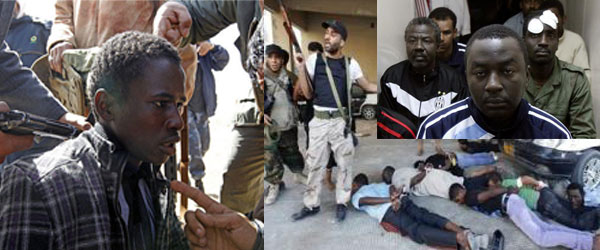
Libya : The former rebel militias are as bad as Gadaffi's dictatorship at it's worst

The NATO governments who armed and provided air support to the armed rebellion against Gadaffi's dictatorship have quietly ignored the aftermath of Gadaffi's overthrow, perhaps because it involves militias running riot torturing, threatening and killing people (apparently with the approval of the National Transitional Council), looting; and even ethnically cleansing entire towns for the crime of being black.

Many people paint Libya as entirely worse or entirely better than it was under Gadaffi, but it isn't as clear cut as that. While the rebels were committing some atrocities themselves even before the military balance swung in their favour, Gadaffi's forces were killing people suspected of not supporting Gadaffi or supporting the rebels on a much larger scale and almost randomly, even when abandoning cities to the rebel advance (1) - (2).

For white or brown skinned Libyans not suspected of supporting Gadaffi, things are better for many of them. For Islamists, many of whom were jailed and tortured under Gadaffi, things are better too. For black Libyans and black immigrant workers from other countries - and anyone suspected of having supported Gadaffi (whether they actually did or not) things are much, much worse. Over all that seems like no real improvement.

Amnesty Internationalreports that 'Militias continue to arrest people and hold them in secret and unofficial detention facilities...it is estimated that 4,000 remain in centres outside the reach of the central authorities. Some have been held without charge for a year.

An Amnesty International fact-finding team found evidence of recent beatings and other abuse - in some cases amounting to torture - in 12 of the 15 detention centres where it was able to interview detainees in private during its most recent visit.

Common methods of torture reported to the organization include suspension in contorted positions and prolonged beatings with various objects including metal bars and chains, electric cables, wooden sticks, plastic hoses, water pipes, and rifle-butts; and electric shocks.

Amnesty International has detailed information on at least 20 cases of death in custody as a result of torture by militias since late August 2011.'

It adds that 'In May the transitional authorities adopted legislation which grants immunity from prosecution to thuwwar (revolutionaries) for military and civilian acts committed with the “purpose of rendering successful or protecting the 17 February Revolution.”

In a June meeting with Amnesty International, Libya’s General Prosecutor was unable to provide any details of thuwwar being brought to justice for torturing detainees or committing other human rights abuses. ' (3)

This sounds a lot like even the central government in Libya is giving former rebel militia-men a blank cheque to do anything to anyone to "protect the revolution", with a law which could as easily have been one of those allowing Gadaffi's forces to do anything to anyone to protect his 1969 revolution against the monarchy. Unless this changes then it's just going to be history repeating itself.

The French medical charity Medicines Sans Frontieres (doctors without borders) suspended some of its operations in Libya in January after multiple cases of rebel militia-men bringing in prisoners who they had tortured for treatment just to keep them alive to torture them some more (4).

James Hider of the Times newspaper reports that 'In Mshashia, once a town of 15,000 outside Zintan, not a single person can be seen. Entry roads are blocked with burnt-out lorries. Signs read: “Closed military zone. No entry.”

The emptying of Tawerga, just outside Misrata, is even more disturbing. A town of 30,000 people, many of them black, the mass expulsion was tinged with the racial overtones that marked much of the revolution, when Gaddafi was accused of using African mercenaries to do his killing. ...

...Ramzi al-Muntar, a jobless former rebel ....whose home was destroyed in the siege of Misrata...

“They are not allowed to come back. If they do, someone will kill them,” he said. “...Anyway, they are not really Libyans. They are descended from a slave ship that ran aground once off the coast.” (5).

Amnesty was already reporting in September last year that many black Tawerghan men had never been heard of again after being taken away at gunpoint by armed militia-men from the Misrata brigades (6).

Human Rights Watch has reported that the militias have also tortured Tawerghans to death and looted their homes and businesses, which has parallells with ethnic cleansing by militias in Bosnia , which was similarly motivated partly by getting loot in a country under sanctions and in which 'economic reforms' demanded by the US in return for providing new loans to Yugoslavia (having called in the old ones) had pushed up unemployment (7) - (9).

The militias aren't even content with having forced Tawerghans out of their homes, having continued to attack and kill Tawerghan men, women and children in refugee camps near Tripoli for instance (10).

Libyans who aren't black aren't safe either if they annoy or criticise the militias in any way.

Just complaining about Misrata militia-men firing their guns in the air was enough for them to beat one hotel owner unconscious and destroy his hotel with rocket propelled grenades, while another man who had some unknown argument with militia-men at a checkpoint was later found by his family dead in a morgue, supposedly of natural causes, though his body was covered in bruises and a second autopsy paid for by his family showed he had died of kidney failure and internal bleeding (11).

This sounds a lot like the days of Gadaffi's dictatorship when anyone who criticised Gadaffi or his regime could end up disappeared, only more chaotic, because rather than being at risk if you criticise one lot of rulers, Libyans are at risk if they criticise or argue with any of over 100 militias, if their skin is considered to dark, or if they are suspected (rightly or wrongly) of having supported Gadaffi.

The way the supposedly 'democratic' armed revolutionaries, who supposedly only wanted "freedom" are behaving - just like the forces of the dictatorship they overthrew - makes me regret having supported arming the rebels and half regret ever having backed a NATO intervention to protect Benghazi (though i never supported using it for a war of regime change due to the risks of civil war and revenge killings by victorious rebels). It also makes me even more opposed to supporting armed rebellion in Syria, as the resulting sectarian civil war is likely to make Libya look peaceful by comparison.

If freedom from dictatorship just means the freedom for different people to torture and murder and loot the possessions of others, then it is not worth the loss of life required to overthrow the dictatorship and we should wait for it to fall peacefully the way the Soviet bloc dictatorships did instead.

The election victory of a relatively secular coalition in Libya is less bad than if hardline Islamists had won, but it remains to be seen whether all the militias in control of different parts of the country will accept the authority of the central government or not.

With torture and murder by armed former rebel militias replacing that by Gadaffi's forces - and no trials involved, suspicion being enough, so far things are not that much better than under Gadaffi - the only change being who is doing the torture and killing and who the victims of it are, with the likelihood that just as under Gadaffi many of those suffering violence are not responsible for the crimes they are accused of. (I don't mean that this would excuse torture or execution or jail without trial even of those who are guilty - none of these things are justifiable).

Whether Libyans end up better or worse off overall depends on how the elected government behaves and whether it is willing and able to disarm and disband the militias. If it can't or won't, things are unlikely to improve.

Sources

PHOTO at top of blog from this Black Presence blog post

(1) = Amnesty International 13 Sep 2011 'Libya: The battle for Libya: Killings, disappearances and torture',http://www.amnesty.org/en/library/info/MDE19/025/2011/en

(2) = Amnesty International 13 Sep 2011 'Libya: No place of safety: Civilians in Libya under attack', http://www.amnesty.org/en/library/info/MDE19/027/2011/en

(3) = Amnesty International 04 Jul 2012 'Libya: Militia stranglehold corrosive for rule of law ', http://www.amnesty.org/en/news/libya-militia-stranglehold-corrosive-rule-law-2012-07-04

(4) = Medicines Sans Frontieres 26 Jan 2012 'Libya: detainees tortured and denied medical care',http://www.msf.org.uk/libyaprison360112_20120126.news

(5) = Times 12 July 2012 'Hate and fear: the legacy of Gaddafi', http://www.thetimes.co.uk/tto/news/world/middleeast/article3472720.ece

(6) = Amnesty International UK 07 Sep 2011 'Libya: Tawarghas being targeted in reprisal beatings and arrests',http://www.amnesty.org.uk/news_details.asp?NewsID=19674

(7) = Human Rights Watch 30 Oct 2011 'Libya: Militias Terrorizing Residents of ‘Loyalist’ Town', http://www.hrw.org/news/2011/10/30/libya-militias-terrorizing-residents-loyalist-town

(8) = Mary Kaldor (1999) ‘New and Old Wars: Organized Violence in a Global Era’, Polity Press, 1999

(9) = Woodward , Susan L.(1995) Balkan Tragedy - Chaos and dissolution after the Cold war The Brookings Institution , Washington D.C , 1995

(10) = New York Times 02 Mar 2012 'U.N. Faults NATO and Libyan Authorities in Report',http://www.nytimes.com/2012/03/03/world/africa/united-nations-report-faults-nato-over-civilian-deaths-in-libya.html?_r=1 ; 'Certain revenge attacks have continued unabated, particularly the campaign by the militiamen of Misurata to wipe a neighboring town, Tawergha, off the map; the fighters accuse its residents of collaborating with a government siege.

Such attacks have been documented before, but the report stressed that despite previous criticism, the militiamen were continuing to hunt down the residents of the neighboring town no matter where they had fled across Libya. As recently as Feb. 6, militiamen from Misurata attacked a camp in Tripoli where residents of Tawergha had fled, killing an elderly man, a woman and three children, the report said. '

(11) = Independent on Sunday 08 July 2012 'Patrick Cockburn: Libyans have voted, but will the new rulers be able to curb violent militias?', http://www.independent.co.uk/opinion/commentators/patrick-cockburn-libyans-have-voted-but-will-the-new-rulers-be-able-to-curb-violent-militias-7922358.html

Wednesday, November 23, 2011

Saif Al Gaddafi & Megrahi Vs Moussa Koussa - Patsies vs Real Criminal aided and abetted by the US government?

(the latter a proven torturer and Gaddafi’s intelligence chief at the time of the Lockerbie bombing but “free to travel to and from the UK as he wishes”)

The propagandists tell us that Saif Al Gaddafi is a war criminal who must be brought to justice for the torture and killing of civilians. Yet Gaddafi’s torturer in chief Moussa Koussa, who has been identified by survivors as having personally tortured them himself, faces no ICC charges after he defected from the Gaddafi regime once he realised the writing was on the wall for it. British government spokespeople told the BBC that Koussa is “a free individual, who can travel to and from the UK as he wishes” and allowed him to go into exile in Qatar, another US allied dictatorship which refuses to extradite him (1) – (3).

Koussa had a parallel in Omar Suleiman, Mubarak’s Vice President and torturer in chief, who was the favoured candidate of the US government and it’s allies to take over from Mubarak. He, like Koussa, was one of the people that the CIA and MI6 contract out to for torture of prisoners kidnapped illegally under “extra-ordinary rendition” procedures (really just a vaguely legalistic sounding term to cover up illegal kidnapping and torture).

Muammar Gaddafi was certainly guilty of ordering massacres of civilians and torture, but the brutal, sickening, way he was killed did not suggest those who replace him will be any better. The Libyan rebels respond that ‘Gaddafi was a monster’.

Well, if you’re looking for a definition of a monster, a sadist who stabs an unarmed prisoner in the anus with a knife or metal rod to torture them before killing them, as one of the men who captured Gaddafi did, is a pretty good definition. One monster behaving like a monster to another is not justice, it’s just another atrocity (4).

Amnesty International and Human Rights Watch confirm that the rebels have already been involved in torturing and killing prisoners and suspected Gaddafi supporters, though so far not nearly as many as were killed or tortured by Gaddafi’s forces. The way Gaddafi was treated does not suggest this will become a smaller problem (5).

If Saif Al Gaddafi is tortured and is not given a fair trial it will be another sign to the world that the Libyan rebels are at least as bad as Gaddafi’s killers were – and if at the same time Koussa, who co-operated with the US and its allies in torturing people based on mere suspicion is allowed to go free, the US government and it’s allies will look like total hypocrites with no moral standing, desperate to have people like Saif, who might reveal it’s involvement in these crimes, silenced, not for his crimes, but to cover up theirs and Koussa’s.

There are plenty of people who knew Saif who say he was attempting to make reforms which his father and hardliners in the regime refused to implement (6).

Then he was forced to make a choice between turning on his own father and helping people who were trying to kill him, or else backing a dictatorship that was killing it’s own people. Can anyone pretend that that would be an easy choice to make if they were put in the same position?

If there is evidence that Saif was involved in ordering torture and murders of civilians then by all means give him a fair trial with witnesses for the defence and prosecution and if he’s found guilty, jail him for it.

Incidentally Koussa, who claims Gaddafi ordered Lockerbie, was Gaddafi’s head of intelligence at the time of Lockerbie – so if the US and British governments believe him, why are they letting him go free, since he would be guilty of that atrocity? Too many people are tripping over their own lies here.

There are many reasons to doubt that another US and British scapegoat – Abdul Baset Al Megrahi – was ever involved in the Lockerbie bombing. His trial was a sham with bribed witnesses, no jury and evidence tampered with according to Scots Law Professor Robert Black, UN Observer Dr. Hans Koechler and Dr. Jim Swire, whose daughter died in the bombing.

Is Saif a real war criminal or just another patsy set up by the US and it’s allies?  Unless he gets a fair trial, I’d have to suspect it could be the latter.


(1) = BBC News 26 Oct 2011 ‘Gaddafi spy chief Koussa 'tortured' Libya prisoners’, http://www.bbc.co.uk/news/world-middle-east-15415793

(2) = BBC News 13 Apr 2011 ‘Moussa Koussa, ex-Gaddafi aide, leaves for Doha talks’, http://www.bbc.co.uk/news/world-africa-13049308 ‘The most high-profile minister to flee Libya, Moussa Koussa, has left the UK for Qatar, the Foreign Office has said. The former foreign minister had been staying at an undisclosed location in the UK after travelling from Tunisia.

An FCO spokesman said it was understood he would meet the Qatari government and a range of other Libyan representatives in the capital city Doha. A spokesman said Moussa Koussa was "a free individual, who can travel to and from the UK as he wishes".’

(3) = BBC News 23 Oct 2011 ‘Libyan spy chief tracked to Qatar’, http://www.bbc.co.uk/news/world-africa-15417947

(4) = ‘Libyan rebels 'guilty of torture' says Amnesty’ http://www.independent.co.uk/news/world/africa/libyan-rebels-guilty-of-torture-says-amnesty-2353988.html , ‘Rebels fighting to topple Muammar Gaddafi carried out unlawful killings and torture, human rights group Amnesty International has said….A report based on three months of investigation in Libya, said the crimes of Gaddafi loyalists were far worse than those of the former rebels, who now hold power in Tripoli:….But it said the crimes of the rebels were not insignificant…."Members and supporters of the opposition, loosely structured under the leadership of the National Transitional Council (NTC) ... have also committed human rights abuses, in some cases amounting to war crimes, albeit on a smaller scale," the Amnesty report said.’

(5) = Channel 4 News 25 Oct 2011 ‘Gaddafi buried at dawn in ‘secret’ location’, http://www.channel4.com/news/gaddafi-buried-at-dawn-in-secret-location (scroll down to video and then see under sub-heading ‘Concerns over human rights abuses)

(6) = Time 19 Nov 2011 ‘The Capture of Gaddafi's Son: The Reformer Who Refused to Reform’, http://www.time.com/time/world/article/0,8599,2099890,00.html?xid=gonewsedit , ‘Sawani, who has a political-science doctorate from the University of Canterbury, had been hired by Saif in 2007 to oversee sweeping political reforms in Libya — changes that Saif has long claimed were blocked by his father's hard-liners. In interviews in February 2010 and in March this year, Saif told me that his strong efforts to bring democracy to Libya had been stymied by the Gaddafi regime.’

Thursday, August 25, 2011

Libya - rebels lynchings of black people and real or suspected Gaddafi supporters - NATO should use it's influence to try to end them

Lynchings of real or suspected Gaddafi fighters and supporters by rebels have happened throughout the war and have included racist lynchings and even beheadings of black Libyans and migrant workers. They may be continuing now they’ve taken Tripoli, even though NATO special forces and the CIA are on the ground with the rebels there.

Human Rights Watch reported in July that rebel forces lynched many black migrant workers as suspected mercenaries and dragged 20 Gaddafi officials from their homes and hung them in Al Baida, a town near Misrata (1). (Gaddafi’s forces are similarly reported to have continued to kill pro-rebel and anti-Gaddafi demonstrators.(2))

More recent reports from western journalists in Tripoli show the same is happening to black men found by rebel forces there, some of whom may have been fighting for Gaddafi, others probably just being migrant workers (The ICRC reports that Libyan hospitals have been understaffed since the fighting broke out as they were mainly staffed by migrant workers, many of whom have since fled (3)).

The Independent recently published the following from Kim Semgupta in Tripoli

‘At the Maghrabi Arab Village, built for expatriates working in the petroleum industry, two young black men squatted on the ground, terrified, their hands tied behind their backs, guns held to their heads. I was told by one of the rebels that they were Mohammed Salou Mohammed, and Zait Abidan Ali, from Chad. Both had confessed to being snipers working for Colonel Gaddafi. Did they really admit to that? The fighter, looking uncomfortable, insisted that was indeed the case. Zait Abidan Ali started to say they just worked at the place. He was kicked in the chest by a fat man in torn British Army fatigues who said he was a commander and ordered me to leave.

The repeated cases of men from sub-Saharan Africa being lynched by rebels on the pretext that they were regime mercenaries has been one of the most disturbing aspects of the revolution. My colleagues and I had witnessed some of these killings while with the rebel forces in eastern Libya. Human-rights groups had protested and the opposition administration, the Transitional National Council (TNC), had promised action. As the men were led away, another fighter, Nasr Al-Sabri, said: "I am sorry about this, but this is a difficult time and people are angry. We have lost people to snipers in the last few days. But I will try to make sure that these men are dealt with properly. This is unusual, you can see how glad the people of Tripoli are to see us."’ (4)

Racist killings of black people - both migrant workers black Libyans - have been common in Libya for a long time. In 2000 Libyans attacked migrant workers on a large scale, killing at least 135 of them (5).

The Grendel report’ blog has posted apparent evidence from Dutch TV reports and other videos of rebels in Benghazi beating and even beheading black men.

Rebels from the Shabab rebel youth movement also told Semgupta that “We shall hang all of them together when we catch him.” (them meaning either Gaddafi and his sons or possibly all Gaddafi supporters, as happened in Al Baida). When Semgupta pointed out that there was no death penalty by law in Libya the rebel answered “there is man’s law and then there is God’s law” suggesting summary execution under some rebels’ interpretation of Sharia law (6).

The fact that the rebels include many defectors from the regime might mean their influence reduces revenge killings of real and suspected Gaddafi supporters or it might not.

We know for certain that NATO has CIA along with British SAS and other intelligence agents and military special forces advising and training the rebels and identifying targets for airstrikes, along with Egyptian as well as Qatari and UAE special forces who may even be fighting (as they will look Arab or Libyan to foreign journalists) (7) – (14).

 Historically from Nicaragua to Afghanistan such “advisers” have often fought in combat or given the orders to native units they were commanding in reality. That – and NATO airstrikes supporting rebel forces during combat - mean NATO governments and militaries are so heavily involved in the ground war that they have a responsibility to ensure the rebels do not continue to summarily execute real or suspected Gaddafi supporters.

In Afghanistan, as in Iraq, the US frequently operates units of native paramilitary special forces or militias trained and led by American officers, who carry out summary executions in night raids. This allows them to say that “the trigger pullers” were not American. (15) ( also see this blog post – scrolling down to sub-heading ‘Night Raids , the El Salvador Option from Iraq to Afghanistan and Bagram as the new Guantanamo’ – for sources scroll down to Sources under same sub-heading lower down the post. Some links to Times articles may not work since the Times has introduced payments system. )

Using mercenaries (euphemistically termed ‘private security contractors’) who are former special forces from their own militaries to train and give orders from a higher level to UAE, Qatari and Egyptian special forces leading units of Libyan rebels, may be giving NATO three levels of ‘plausible deniability’ on their involvement on the ground in Libya (16) – (18).

NATO governments have tried to pretend that the only threat to civilians comes from Gaddafi’s forces, but NATO airstrikes and rebel lynchings are killing civilians and prisoners of war too.

Of course NATO can't have complete control over rebel forces who have sometimes ignored the orders of their own leaders, but they could try to use their influence.


(1) = Independent 16 Jul 2011 ‘Opposition fighters are losing battles – but winning the war’,http://www.independent.co.uk/news/world/africa/opposition-fighters-are-losing-battles-ndash-but-winning-the-war-2314575.html ; After the uprising there were repeated instances of lynchings of black men. The excuse at the time was that the men were mercenaries hired by Colonel Gaddafi. But many were innocent migrant workers from sub-Saharan Africa. Extra-judicial killings of regime officials also followed the revolution. At al-Baida, near Tobruk, for instance, 20 officials were dragged from their homes and hanged….The cases of abuse had been listed belatedly in a report published by Human Rights Watch. But no one has been investigated or prosecuted in opposition-held areas. And members of the provisional administration admit this is extremely unlikely to happen. There has been no demand from Western countries for an inquiry. 

(2) = HRW 18 Aug 2011 ‘Libya: 10 Protesters Apparently Executed’,http://www.hrw.org/news/2011/08/18/libya-10-protesters-apparently-executed ; Libyan government forces appear to have executed 10 protesters following an anti-government demonstration in the town of Bani Walid on May 28, 2011

(3) = Reuters 10 Aug 2011 ‘Hospitals, medical staff targeted in wars, ICRC says’,http://www.reuters.com/article/2011/08/10/us-violence-idUSTRE7791F620110810

(4) = Independent 23 Aug 2011 ‘'He called us rats, but he is the one hiding. We shall hang them all together…'’, http://www.independent.co.uk/news/world/africa/he-called-us-rats-but-he-is-the-one-hiding-we-shall-hang-them-all-together-2342147.html

(5) = Independent 24 Feb 2011 ‘Is Al-Jazeera TV complicit in the latest vilification of Libya’s Blacks?’, http://blogs.independent.co.uk/2011/02/24/is-al-jazeerah-tv-complicit-in-the-latest-vilification-of-libyas-blacks/ ; ‘In 2000 about 5,200 Ghanaians fled Libya after racist violence against blacks that left more than 135 dead and many more seriously injured. George Auther, one of the victims, was quoted as saying, “The problem is, the Libyans don’t like blacks.”……….There have since been many reported cases of racist violence against black Africans in Libya. On 16 February 2010 the UN Human Rights Council issued a written statement asking Libya to “end its practices of racial discrimination against black Africans, particularly its racial persecution of two million black African migrant workers.”

(6) = See (4) above

(7) = BBC News 06 Mar 2011 ‘Libya unrest: SAS members 'captured near Benghazi'’,http://www.bbc.co.uk/news/world-middle-east-12658054

(8) = NYT 30 Mar 2011 ‘C.I.A. Agents in Libya Aid Airstrikes and Meet Rebels’,http://www.nytimes.com/2011/03/31/world/africa/31intel.html

(9) = Guardian 31 Mar 2011 ‘Libya: SAS veterans helping Nato identify Gaddafi targets in Misrata’,http://www.guardian.co.uk/world/2011/may/31/libya-sas-veterans-misrata-rebels ; Former SAS soldiers and other western employees of private security companies are helping Nato identify targets in the Libyan port city of Misrata, the scene of heavy fighting between Muammar Gaddafi's forces and rebels, well-placed sources have told the Guardian.

(10) = Al Jazeera 03 Apr 2011 ‘Libyan rebels 'receive foreign training'’,http://english.aljazeera.net/news/africa/2011/04/201142172443133798.html ; US and Egyptian special forces have reportedly been providing covert training to rebel fighters in the battle for Libya, Al Jazeera has been told….An unnamed rebel source related how he had undergone training in military techniques at a "secret facility" in eastern Libya.

(11) = Bloomberg Businessweek 03 Apr 2011 ‘NATO Escalates Libya Campaign After Rebels Criticize Mission’,http://www.businessweek.com/news/2011-04-06/nato-escalates-libya-campaign-after-rebels-criticize-mission.html

(12) = Washington Post 22 Aug 2011 ‘Allies guided rebel ‘pincer’ assault on Tripoli’,http://www.washingtonpost.com/world/national-security/allies-guided-rebel-pincer-assault-on-tripoli/2011/08/22/gIQAeAMaWJ_story.html; British, French and Qatari Special Forces have been operating on the ground in Libya for some time and helped the rebels develop and coordinate the pincer strategy, officials said. At the same time, CIA operatives inside the country — along with intercepted communications between Libyan government officials — provided a deeper understanding of how badly Gaddafi’s command structure had crumbled, according to U.S. officials.

(13) = Independent 23 Aug 2011 ‘Rebels claim the victory – but did the Brits win it?’,http://www.independent.co.uk/news/world/africa/rebels-claim-the-victory-ndash-but-did-the-brits-win-it-2342152.html

(14) = Guardian.co.uk 23 Aug 2011 ‘Libya: battle for Tripoli – live blog – 5.50pm’,http://www.guardian.co.uk/world/middle-east-live/2011/aug/23/libya-battle-for-tripoli-live-blog#block-11 ; ‘Defence expert Robert Fox is telling the BBC special forces from Qatar and the UAE, with US, British and French training, are responsible for the successful attack on Tripoli. "It has been a genuine Arab coalition ... I think it was the Qataris that led them through the breach." He said William Hague was "dissembling" in his comments just now.’

(15) = Times 26 Feb 2010 ‘Hunt down the spy behind deaths of our children, say Afghan night raid survivors’,http://www.thetimes.co.uk/tto/news/world/asia/afghanistan/article1843938.ece

(16) = Guardian 23 Aug 2011 ‘SAS troopers help co-ordinate rebel attacks in Libya’, http://www.guardian.co.uk/world/2011/aug/23/sas-troopers-help-coordinate-rebels

(17) = See (10) above

(18) = See (14) above

Wednesday, August 24, 2011

Libya – Even rebels fear civil war between them or chaos - add the risk of an Iraq style insurgency or a Somalia like civil war

Some of the coverage of the war in Libya makes it sound as though a rapid collapse of Gaddafi’s forces followed by a rapid transition to a democracy is a foregone conclusion. Unfortunately this is being very optimistic.

Rebel claims that Gaddafi’s forces would all surrender as soon as they took Tripoli as they were “cowards” or only fighting for Gaddafi out of fear have been proven wrong proven wrong by so far three days of resistance by Gaddafi loyalists in Tripoli. Many are fighting on because they fear what the rebels may do to them – and even some rebels fear there may be bloody chaos or civil war between rebel factions if Gaddafi is defeated.

The Independent reported that:

‘Adem Husseini, 40, also from Manchester, foresaw a period of turbulence after Colonel Gaddafi and his regime are driven from power. "I am going to go back to the UK after the job is done, but I am not going to bring my family for the next three years. There are too many men with guns – a lot of them very young. I am talking about heavy weapons. Some people even have their own private tanks. We are fighting for freedom. History will record we were on the right side. But we are going to go through a very risky time.’ (1)

In April Hillary Clinton and Libyan defector Moussa Koussa warned of the risks of Libya descending into a long civil war and turning into another Somalia and becoming a haven for Al Qa’ida as a result of the chaos (2)

The rebels are split on regional, religious (moderate vs hardline fundamentalist Muslims) and tribal lines ;and there are rivalries among different military commanders and politicians for leadership, plus divisions between those who have opposed Gaddafi for decades and those (like TNC head Jalil) who recently defected.

Patrick Cockburn writes that ‘The rebel fighters in Misrata, who fought so long to defend their city, say privately that they have no intention of obeying orders from the TNC.’ (the rebel Transitional National Council).(3)

Guardian reporter Chris Stephen in Misrata reports ‘with the still unexplained murder of army commander Abdul Fatah Younis seeing units loyal to him coming back to the front and threatening violence against NTC officials they blame for the killing. Their anger was assuaged only with the appointment of a new army commander, Suleiman Obedi, who is from the same Obedi tribe as Younis. Another split has been between Misrata and Benghazi. After the assassination, Misrata rebel army spokesman Ibrahim Betalmal underlined to the Guardian that Misratan units did not accept orders from NTC military command, while continuing to remain on paper loyal to the NTC.’ (4)

(Even the imminent defeat of Gaddafi’s forces in Tripoli is uncertain, with rebel reports (also “confirmed” by the ICC) that Saif Gaddafi had been captured turning out to have been untrue or premature and fighting having continued even after rebels got to the centre of the city. (5) – (7)

Saif claimed the rebels had been defeated in ‘a trap’, which has happened several times when rebel forces took the centre of towns before being attacked from all sides by Gaddafi’s forces – though these claims could be propaganda too.)

The many different, unlikely and inconsistent stories told by the rebels about the killing of General Younis (a defector from Gaddafi to the rebels) and the subsequent dismissal of the entire Transitional National Council by it’s head Mustafa Abdul Jalil also shows serious divisions among the rebels. Some rebel stories said Younis was killed by Gaddafi’s forces (who strangely killed him and his bodyguard without killing any of the rebel troops ‘escorting’ or arresting Younes and his men to take them before the rebel council to answer charges of disloyalty). Other accounts by different TNC spokespeople said an Islamist rebel faction (8) – (13)

Photo: General Younes

Fighting between rival Islamist factions among the rebels has already  happened long before they even reached Tripoli (14).

This and the attempted kidnapping of an Australian freelance journalist in rebel held Benghazi by two armed men in military fatigues suggests the TNC either isn’t in control of all the rebels, or else is behavihttp://www.blogger.com/img/blank.gifng similarly to Gaddafi’s forces (15). It’s especially suspicious as Shelton was reporting on Younis’ death (16).

Personal rivalries are also a problem. In earlier stages of the war rebel officers sometimes refused even to talk to one another to co-ordinate offensives on towns held by Gaddafi (17).

Islamic factions are a big part of rebel military forces.

A French newspaper reported in April that one rebel Islamist faction is led by Hakim Al Sadi, who was previously with the Taliban in Afghanistan and says his aim is to “kill Gaddafi and establish an Islamic state in Libya.” (18)

The same report says that ‘Iman Bugaighis, the spokesman for the National Transition Council’ admitted that “We have twenty-five fighters on the front that were linked to al-Qaida… But they have done their prison, and they now only fight for the liberation of Libya.”(19)

So while Gaddafi’s claims that all the rebels are Al Qa’ida are not true, he seems to be right that some of them are.

So there is a serious risk of a Somalia or Afghanistan style civil war with the winners of each round splitting and fighting among one another – and of Libya splitting up like Somalia into two or three separate countries in practice (Somalia currently has Puntland and Somaliland as effectively separate states). The most likely split would be between the three main Italian colonies that made up Libya at independence, which correspond to the three main rebel factions – Cyrenaica in the East (the Benghazi rebels), Tripolitania in the North-west centred on Tripoli (the rebels who defected from Gaddafi) and Fezzan in the South-West(the western Berber and mountain Arab rebels) (20) -(21).

Many people have pointed out that Libya does not have the religious, ethnic or cultural diversity of Iraq - but Somalia is overwhelmingly made up of Sunni Muslims from the same nomadic herding culture, but has been in a decades long civil war between different clans and leaders and more recently between those Islamists willing to co-operate with the US against Al Qa'ida and those who refuse to. So civil war in Libya is still a serious risk.

NATO's involvement could make this more or less likely. If it aims to keep the rebels unified it could reduce the risk, but in Iraq the US and Coalition forces tended to play on divisions among Iraqis and try to get them fighting and distrusting each other in order to secure the oil laws and contracts wanted by US and other coalition oil companies (see Greg Muttitt's book 'Fuel on the Fire' on this). There is a serious risk of NATO governments doing the same in Libya.

There is also the risk of an in Iraq style insurgency either by armed Islamic fundamentalist groups at odds with the other rebels, Gaddafi supporters, or Libyans who don’t support Gaddafi but distrust the rebels due to their close links with foreign governments with ulterior motives (primarily oil contracts and prices more favourable to their firms; increased oil production and exports to benefit NATO countries’ oil importing economies; and control of air bases and ports – the US and Britain having had control of the Wheelus Field air base near Tripoli under Gaddafi’s predecessor King Idris) (22). The insurgency in Iraq lasted long after Saddam’s overthrow and his capture, with more insurgents having been opponents of Saddam than supporters.

NATO seem to have managed to organise and co-ordinate the rebel forces far more effectively than in the earlier stages of the war – probably because many NATO special forces, CIA men and French Foreign Legion troops are on the ground advising rebel units – as are NATO ‘private security contractors’ – their usual euphemism for mercenaries – who include former SAS men. Many reports from journalists on the ground in Libya talk of western men who were not keen to be filmed or interviewed – and the Obama administration told congress that CIA operations in Libya could not be overseen by them as they were not military forces (23) – (29) .

The "advisers" may actually be fighting - as tens of thousands of American 'military advisers' did in Nicaragua in the 80s on the side of the Contras who backed Somoza, the former dictator. Defence expert Robert Fox has suggested that UAE and Qatari Special forces trained by NATO special forces may have been leading the attack on Tripoli.

Whether NATO will be able to prevent rebel factions turning on one another if Gaddafi’s forces are entirely defeated is another matter.

It's possible that by making funding and trade deals conditional on rebels staying part of a single TNC NATO governments or the UN might be able to reduce the risk of civil war, but it's not guaranteed to work, especially as other countries such as Russia and China may be backing their own preferred candidates or groups to try to ensure they get oil contracts in Libya too. The civil wars in Afghanistan and Somalia have lasted as long as they have partly due to many different neighbouring governments and world powers backing different factions there.

So it’s far too early to be hanging up the Mission Accomplished banner in Libya – and there’s no guarantee that it will lead to democracy, peace and human rights even if NATO achieves it’s aims.


(1) = Independent 20 Aug 2011 ‘Next stop Tripoli – Libya's rebels sense victory is within reach’, http://www.independent.co.uk/news/world/africa/next-stop-tripoli-ndash-libyas-rebels-sense-victory-is-within-reach-2340837.html

(2) = Bloomberg 13 Apr 2011 ‘Clinton’s ‘Failed State’ Warning Hangs Over Libya as NATO Officials Meet’, http://www.bloomberg.com/news/2011-04-12/clinton-s-failed-state-warning-hangs-over-libya-as-nato-can-t-stem-chaos.html

(3) =  Independent 22 Aug 2011 ‘Despite the euphoria, the rebels are divided’, http://www.independent.co.uk/news/world/africa/despite-the-euphoria-the-rebels-are-divided-2341792.html

(4) = guardian.co.uk 22 Aug 2011 ‘Libya: rebel forces reach heart of Tripoli - live updates’,

http://www.guardian.co.uk/world/middle-east-live/2011/aug/22/libya-middle-east-unrest-live#block-45

(5) = guardian.co.uk 22 Aug 2011 ‘Libya: rebel forces reach heart of Tripoli - live updates’, http://www.guardian.co.uk/world/middle-east-live/2011/aug/22/libya-middle-east-unrest-live#block-66

(6) = Hague Justice Portal 22 Aug 2011 ‘ICC confirms that Saif Al-Islam Gaddafi has been arrested in Libya’, http://www.haguejusticeportal.net/eCache/DEF/12/892.TGFuZz1FTg.html

(7) = Guardian.co.uk 22 Aug 2011 ‘Libya: rebel forces reach heart of Tripoli - live updates’,http://www.guardian.co.uk/world/middle-east-live/2011/aug/22/libya-middle-east-unrest-live

(8) = Guardian 29 Jul 2011 ‘Abdul Fatah Younis ambush killing blamed on pro-Gaddafi forces’,http://www.guardian.co.uk/world/2011/jul/29/abdul-fatah-younis-killed-libya

(9) = Guardian.co.uk 29 Jul 2011 ‘Libyan rebels fear rift after death of Abdel Fatah Younis’,

http://www.guardian.co.uk/world/2011/jul/29/libyan-rebels-rift-death-younis ; Before the announcement of his death, armed men declaring their support for Younis appeared on the streets of Benghazi claiming they would use force to free him from NTC custody….Minutes after Jalil's statement at a chaotic late-night press conference at a hotel in Benghazi, gunfire broke out in the street outside. Members of Younis's tribe, the Obeidi, one of the largest in the east, fired machine guns and smashed windows, forcing security guards and hotel guests to duck for cover.

(10) = Guardian.co.uk 30 Jul 2011 ‘Libyan rebel soldiers killed Younis’, http://www.guardian.co.uk/world/2011/jul/30/libyan-rebel-soldiers-killed-younis ; General Abdel Fattah Younis shot dead by Islamist-linked militia within the anti-Gaddafi forces, says senior opposition minister……. Younis was killed in mysterious circumstances on Thursday. Initially, Mustafa Abdul Jalil, president of the National Transitional Council, the rebel's government, claimed the murder had been carried out by Gaddafi-linked forces…..That was starkly contradicted by oil minister Ali Tarhouni who confirmed Younis had been killed by members of the Obaida Ibn Jarrah Brigade, a group linked to the rebels……Tarhouni told reporters Younis was being brought back to Benghazi when he was shot. A militia leader who had gone to fetch him from the front line had been arrested and confessed that his subordinates had carried out the killing.

(11) = Independent 30 Jul 2011 ‘Rebel feud puts UK's Libya policy in jeopardy’,http://www.independent.co.uk/news/world/africa/rebel-feud-puts-uks-libya-policy-in-jeopardy-2328626.html ;

Increasing evidence has begun to emerge that the savage killings of General Abdel Fatah Younes and two other senior officers – who were shot and whose bodies were burnt – may have been carried out by their own side….Gen Younes, who had himself served as interior minister in the regime, had been accused of holding secret talks with Tripoli officials and leaking military secrets. The news of his arrest led to men from the Obeidi tribe gathering outside the Tibesti Hotel on Thursday evening, where the rebels were due to hold a press conference, threatening to take action to free the commander unless he was released….. Mr Jalil held that Gen Younes had merely been "summoned" for questioning and been released on his own recognisance before being killed in an attack by an "armed gang". Rebel security forces, he maintained, were still trying to find the bodies, but the TNC leader refused to answer questions on how, in that case, he could know that the men were already dead…..  Meanwhile Mr Jalil's version of events was contradicted by the TNC's military spokesman, Mohammed al-Rijali, who stated that Gen Younes had been detained at the oil port of Brega and brought to Benghazi for interrogation prior to his death. A third rebel official, a senior security officer, Fadlallah Haroun, maintained that three corpses had already been found before Mr Jalil had made his announcement. He could not explain why the TNC leader had failed to mention this at the press conference.

(12) = NPR 03 Aug 2011 ‘Rebel Leader’s Death Puts Eastern Libya On Edge’,

http://feb17.info/news/rebel-leaders-death-puts-eastern-libya-on-edge/ ; At the tribal gathering, Younis’ sons — who didn’t want their names used — say that if the rebel leadership couldn’t bring their father’s killers to justice then they hoped the tribe would….“The way he was killed looks like a betrayal,” says one son, adding that no one is above suspicion….Another son says he believes the rebel council was involved.

(13) = guardian.co.uk 09 Aug 2011 ‘Libyan rebel leader sacks entire cabinet’ http://www.guardian.co.uk/world/2011/aug/09/libyan-rebel-leader-sacks-cabinet

(14) = guardian.co.uk 31 Jul 2011 ‘Younis assassination magnifies divisions among Libyan rebels’, http://www.guardian.co.uk/world/2011/jul/31/libya-younis-rebels-ramadan-analysis ; ‘News of fighting involving rival Islamist factions came as yet another worrying sign of internal division at a time when western political and military support for the rebels has reached the point of no return.’

(15) = Committee to Protect Journalists 22 Aug 2011 ‘Australian journalist attacked by assailants in Benghazi’, http://cpj.org/2011/08/australian-journalist-attacked-by-assailants-in-be.php

(16) = The National 31 Jul 2011 ‘The death of General Younis makes us stronger, Libya rebels say’, http://www.thenational.ae/news/worldwide/middle-east/the-death-of-general-younis-makes-us-stronger-libya-rebels-say

(17) = Independent 24 Mar 2011 ‘ Kim Sengupta: The resistance has foundered on its own indiscipline and farcical ineptitude’, http://www.independent.co.uk/opinion/commentators/kim-sengupta-the-resistance-has-foundered-on-its-own-indiscipline-and-farcical-ineptitude-2251298.html ;The rebels' operations are further undermined by an absence of command and control. On Monday two men standing within a hundred yards of each other, "Captain" Jalal Idrisi and "Major" Adil Hassi, claimed to be in charge of the fighters who were meant to be attacking Ajdabiya. A brief advance soon turned into a chaotic retreat. Major Hassi then claimed that the misjudgement in going forward had been Captain Idris's idea. But why didn't they liaise? "We haven't got communications equipment" he responded. But the Captain is standing just over there, journalists pointed out. "I don't talk to him," said Major Hassi.

(18) = Le Journal de dimanche 02 April 2011 ‘En Libye, les djihadistes montent au front’,

http://www.lejdd.fr/International/Afrique/Actualite/Al-Qaida-s-implique-en-Libye-293649/?from=headlines ; English translation at http://translate.google.co.uk/translate?js=n&prev=_t&hl=en&ie=UTF-8&layout=2&eotf=1&sl=fr&tl=en&u=http%3A%2F%2Fwww.lejdd.fr%2FInternational%2FAfrique%2FActualite%2FAl-Qaida-s-implique-en-Libye-293649%2F%3Ffrom%3Dheadlines

(19) = See (18) above

(20) = Bloomberg 13 Apr 2011 ‘Clinton’s ‘Failed State’ Warning Hangs Over Libya as NATO Officials Meet’, http://www.bloomberg.com/news/2011-04-12/clinton-s-failed-state-warning-hangs-over-libya-as-nato-can-t-stem-chaos.html; '“It looks like a very untenable situation,” Geoff Porter, an analyst at North African Risk Consulting, said in an interview from New York. “Where we are heading is a de facto partition, between Tripolitania and Cyrenaica,” the historic names for western and eastern Libya.'

(21) = Ronald Bruce St. John (2008) ‘Libya From Colony to Independence’,  Oneworld Paperback/Oxford, Chapters 3 -4 (on the colonial divisions of Libya under Italy and later France and Britain - Tripolitania, Cyrenaica and Fezzan)

(22) = Ronald Bruce St. John (2008) ‘Libya From Colony to Independence’,  Oneworld Paperback/Oxford, pages 97-8, 105-106, 116, 141-142(on Wheelus Field air base and the US under Idris, plus Gaddafi telling US forces to leave)

(23) = BBC News 06 Mar 2011 ‘Libya unrest: SAS members 'captured near Benghazi'’,http://www.bbc.co.uk/news/world-middle-east-12658054

(24) = NYT 30 Mar 2011 ‘C.I.A. Agents in Libya Aid Airstrikes and Meet Rebels’,http://www.nytimes.com/2011/03/31/world/africa/31intel.html

(25) = Guardian 31 Mar 2011 ‘Libya: SAS veterans helping Nato identify Gaddafi targets in Misrata’,http://www.guardian.co.uk/world/2011/may/31/libya-sas-veterans-misrata-rebels ; Former SAS soldiers and other western employees of private security companies are helping Nato identify targets in the Libyan port city of Misrata, the scene of heavy fighting between Muammar Gaddafi's forces and rebels, well-placed sources have told the Guardian.

(26) = Al Jazeera 03 Apr 2011 ‘Libyan rebels 'receive foreign training'’,http://english.aljazeera.net/news/africa/2011/04/201142172443133798.html ; US and Egyptian special forces have reportedly been providing covert training to rebel fighters in the battle for Libya, Al Jazeera has been told….An unnamed rebel source related how he had undergone training in military techniques at a "secret facility" in eastern Libya.

(27) = Bloomberg Businessweek 03 Apr 2011 ‘NATO Escalates Libya Campaign After Rebels Criticize Mission’,http://www.businessweek.com/news/2011-04-06/nato-escalates-libya-campaign-after-rebels-criticize-mission.html

(28) = Washington Post 22 Aug 2011 ‘Allies guided rebel ‘pincer’ assault on Tripoli’http://www.washingtonpost.com/world/national-security/allies-guided-rebel-pincer-assault-on-tripoli/2011/08/22/gIQAeAMaWJ_story.html; British, French and Qatari Special Forces have been operating on the ground in Libya for some time and helped the rebels develop and coordinate the pincer strategy, officials said. At the same time, CIA operatives inside the country — along with intercepted communications between Libyan government officials — provided a deeper understanding of how badly Gaddafi’s command structure had crumbled, according to U.S. officials.

(29) = Independent 23 Aug 2011 ‘Rebels claim the victory – but did the Brits win it?’,http://www.independent.co.uk/news/world/africa/rebels-claim-the-victory-ndash-but-did-the-brits-win-it-2342152.html