Showing posts with label Somalia. Show all posts

Wednesday, August 24, 2011

Libya – Even rebels fear civil war between them or chaos - add the risk of an Iraq style insurgency or a Somalia like civil war

Some of the coverage of the war in Libya makes it sound as though a rapid collapse of Gaddafi’s forces followed by a rapid transition to a democracy is a foregone conclusion. Unfortunately this is being very optimistic.

Rebel claims that Gaddafi’s forces would all surrender as soon as they took Tripoli as they were “cowards” or only fighting for Gaddafi out of fear have been proven wrong proven wrong by so far three days of resistance by Gaddafi loyalists in Tripoli. Many are fighting on because they fear what the rebels may do to them – and even some rebels fear there may be bloody chaos or civil war between rebel factions if Gaddafi is defeated.

The Independent reported that:

‘Adem Husseini, 40, also from Manchester, foresaw a period of turbulence after Colonel Gaddafi and his regime are driven from power. "I am going to go back to the UK after the job is done, but I am not going to bring my family for the next three years. There are too many men with guns – a lot of them very young. I am talking about heavy weapons. Some people even have their own private tanks. We are fighting for freedom. History will record we were on the right side. But we are going to go through a very risky time.’ (1)

In April Hillary Clinton and Libyan defector Moussa Koussa warned of the risks of Libya descending into a long civil war and turning into another Somalia and becoming a haven for Al Qa’ida as a result of the chaos (2)

The rebels are split on regional, religious (moderate vs hardline fundamentalist Muslims) and tribal lines ;and there are rivalries among different military commanders and politicians for leadership, plus divisions between those who have opposed Gaddafi for decades and those (like TNC head Jalil) who recently defected.

Patrick Cockburn writes that ‘The rebel fighters in Misrata, who fought so long to defend their city, say privately that they have no intention of obeying orders from the TNC.’ (the rebel Transitional National Council).(3)

Guardian reporter Chris Stephen in Misrata reports ‘with the still unexplained murder of army commander Abdul Fatah Younis seeing units loyal to him coming back to the front and threatening violence against NTC officials they blame for the killing. Their anger was assuaged only with the appointment of a new army commander, Suleiman Obedi, who is from the same Obedi tribe as Younis. Another split has been between Misrata and Benghazi. After the assassination, Misrata rebel army spokesman Ibrahim Betalmal underlined to the Guardian that Misratan units did not accept orders from NTC military command, while continuing to remain on paper loyal to the NTC.’ (4)

(Even the imminent defeat of Gaddafi’s forces in Tripoli is uncertain, with rebel reports (also “confirmed” by the ICC) that Saif Gaddafi had been captured turning out to have been untrue or premature and fighting having continued even after rebels got to the centre of the city. (5) – (7)

Saif claimed the rebels had been defeated in ‘a trap’, which has happened several times when rebel forces took the centre of towns before being attacked from all sides by Gaddafi’s forces – though these claims could be propaganda too.)

The many different, unlikely and inconsistent stories told by the rebels about the killing of General Younis (a defector from Gaddafi to the rebels) and the subsequent dismissal of the entire Transitional National Council by it’s head Mustafa Abdul Jalil also shows serious divisions among the rebels. Some rebel stories said Younis was killed by Gaddafi’s forces (who strangely killed him and his bodyguard without killing any of the rebel troops ‘escorting’ or arresting Younes and his men to take them before the rebel council to answer charges of disloyalty). Other accounts by different TNC spokespeople said an Islamist rebel faction (8) – (13)

Photo: General Younes

Fighting between rival Islamist factions among the rebels has already  happened long before they even reached Tripoli (14).

This and the attempted kidnapping of an Australian freelance journalist in rebel held Benghazi by two armed men in military fatigues suggests the TNC either isn’t in control of all the rebels, or else is behavihttp://www.blogger.com/img/blank.gifng similarly to Gaddafi’s forces (15). It’s especially suspicious as Shelton was reporting on Younis’ death (16).

Personal rivalries are also a problem. In earlier stages of the war rebel officers sometimes refused even to talk to one another to co-ordinate offensives on towns held by Gaddafi (17).

Islamic factions are a big part of rebel military forces.

A French newspaper reported in April that one rebel Islamist faction is led by Hakim Al Sadi, who was previously with the Taliban in Afghanistan and says his aim is to “kill Gaddafi and establish an Islamic state in Libya.” (18)

The same report says that ‘Iman Bugaighis, the spokesman for the National Transition Council’ admitted that “We have twenty-five fighters on the front that were linked to al-Qaida… But they have done their prison, and they now only fight for the liberation of Libya.”(19)

So while Gaddafi’s claims that all the rebels are Al Qa’ida are not true, he seems to be right that some of them are.

So there is a serious risk of a Somalia or Afghanistan style civil war with the winners of each round splitting and fighting among one another – and of Libya splitting up like Somalia into two or three separate countries in practice (Somalia currently has Puntland and Somaliland as effectively separate states). The most likely split would be between the three main Italian colonies that made up Libya at independence, which correspond to the three main rebel factions – Cyrenaica in the East (the Benghazi rebels), Tripolitania in the North-west centred on Tripoli (the rebels who defected from Gaddafi) and Fezzan in the South-West(the western Berber and mountain Arab rebels) (20) -(21).

Many people have pointed out that Libya does not have the religious, ethnic or cultural diversity of Iraq - but Somalia is overwhelmingly made up of Sunni Muslims from the same nomadic herding culture, but has been in a decades long civil war between different clans and leaders and more recently between those Islamists willing to co-operate with the US against Al Qa'ida and those who refuse to. So civil war in Libya is still a serious risk.

NATO's involvement could make this more or less likely. If it aims to keep the rebels unified it could reduce the risk, but in Iraq the US and Coalition forces tended to play on divisions among Iraqis and try to get them fighting and distrusting each other in order to secure the oil laws and contracts wanted by US and other coalition oil companies (see Greg Muttitt's book 'Fuel on the Fire' on this). There is a serious risk of NATO governments doing the same in Libya.

There is also the risk of an in Iraq style insurgency either by armed Islamic fundamentalist groups at odds with the other rebels, Gaddafi supporters, or Libyans who don’t support Gaddafi but distrust the rebels due to their close links with foreign governments with ulterior motives (primarily oil contracts and prices more favourable to their firms; increased oil production and exports to benefit NATO countries’ oil importing economies; and control of air bases and ports – the US and Britain having had control of the Wheelus Field air base near Tripoli under Gaddafi’s predecessor King Idris) (22). The insurgency in Iraq lasted long after Saddam’s overthrow and his capture, with more insurgents having been opponents of Saddam than supporters.

NATO seem to have managed to organise and co-ordinate the rebel forces far more effectively than in the earlier stages of the war – probably because many NATO special forces, CIA men and French Foreign Legion troops are on the ground advising rebel units – as are NATO ‘private security contractors’ – their usual euphemism for mercenaries – who include former SAS men. Many reports from journalists on the ground in Libya talk of western men who were not keen to be filmed or interviewed – and the Obama administration told congress that CIA operations in Libya could not be overseen by them as they were not military forces (23) – (29) .

The "advisers" may actually be fighting - as tens of thousands of American 'military advisers' did in Nicaragua in the 80s on the side of the Contras who backed Somoza, the former dictator. Defence expert Robert Fox has suggested that UAE and Qatari Special forces trained by NATO special forces may have been leading the attack on Tripoli.

Whether NATO will be able to prevent rebel factions turning on one another if Gaddafi’s forces are entirely defeated is another matter.

It's possible that by making funding and trade deals conditional on rebels staying part of a single TNC NATO governments or the UN might be able to reduce the risk of civil war, but it's not guaranteed to work, especially as other countries such as Russia and China may be backing their own preferred candidates or groups to try to ensure they get oil contracts in Libya too. The civil wars in Afghanistan and Somalia have lasted as long as they have partly due to many different neighbouring governments and world powers backing different factions there.

So it’s far too early to be hanging up the Mission Accomplished banner in Libya – and there’s no guarantee that it will lead to democracy, peace and human rights even if NATO achieves it’s aims.


(1) = Independent 20 Aug 2011 ‘Next stop Tripoli – Libya's rebels sense victory is within reach’, http://www.independent.co.uk/news/world/africa/next-stop-tripoli-ndash-libyas-rebels-sense-victory-is-within-reach-2340837.html

(2) = Bloomberg 13 Apr 2011 ‘Clinton’s ‘Failed State’ Warning Hangs Over Libya as NATO Officials Meet’, http://www.bloomberg.com/news/2011-04-12/clinton-s-failed-state-warning-hangs-over-libya-as-nato-can-t-stem-chaos.html

(3) =  Independent 22 Aug 2011 ‘Despite the euphoria, the rebels are divided’, http://www.independent.co.uk/news/world/africa/despite-the-euphoria-the-rebels-are-divided-2341792.html

(4) = guardian.co.uk 22 Aug 2011 ‘Libya: rebel forces reach heart of Tripoli - live updates’,

http://www.guardian.co.uk/world/middle-east-live/2011/aug/22/libya-middle-east-unrest-live#block-45

(5) = guardian.co.uk 22 Aug 2011 ‘Libya: rebel forces reach heart of Tripoli - live updates’, http://www.guardian.co.uk/world/middle-east-live/2011/aug/22/libya-middle-east-unrest-live#block-66

(6) = Hague Justice Portal 22 Aug 2011 ‘ICC confirms that Saif Al-Islam Gaddafi has been arrested in Libya’, http://www.haguejusticeportal.net/eCache/DEF/12/892.TGFuZz1FTg.html

(7) = Guardian.co.uk 22 Aug 2011 ‘Libya: rebel forces reach heart of Tripoli - live updates’,http://www.guardian.co.uk/world/middle-east-live/2011/aug/22/libya-middle-east-unrest-live

(8) = Guardian 29 Jul 2011 ‘Abdul Fatah Younis ambush killing blamed on pro-Gaddafi forces’,http://www.guardian.co.uk/world/2011/jul/29/abdul-fatah-younis-killed-libya

(9) = Guardian.co.uk 29 Jul 2011 ‘Libyan rebels fear rift after death of Abdel Fatah Younis’,

http://www.guardian.co.uk/world/2011/jul/29/libyan-rebels-rift-death-younis ; Before the announcement of his death, armed men declaring their support for Younis appeared on the streets of Benghazi claiming they would use force to free him from NTC custody….Minutes after Jalil's statement at a chaotic late-night press conference at a hotel in Benghazi, gunfire broke out in the street outside. Members of Younis's tribe, the Obeidi, one of the largest in the east, fired machine guns and smashed windows, forcing security guards and hotel guests to duck for cover.

(10) = Guardian.co.uk 30 Jul 2011 ‘Libyan rebel soldiers killed Younis’, http://www.guardian.co.uk/world/2011/jul/30/libyan-rebel-soldiers-killed-younis ; General Abdel Fattah Younis shot dead by Islamist-linked militia within the anti-Gaddafi forces, says senior opposition minister……. Younis was killed in mysterious circumstances on Thursday. Initially, Mustafa Abdul Jalil, president of the National Transitional Council, the rebel's government, claimed the murder had been carried out by Gaddafi-linked forces…..That was starkly contradicted by oil minister Ali Tarhouni who confirmed Younis had been killed by members of the Obaida Ibn Jarrah Brigade, a group linked to the rebels……Tarhouni told reporters Younis was being brought back to Benghazi when he was shot. A militia leader who had gone to fetch him from the front line had been arrested and confessed that his subordinates had carried out the killing.

(11) = Independent 30 Jul 2011 ‘Rebel feud puts UK's Libya policy in jeopardy’,http://www.independent.co.uk/news/world/africa/rebel-feud-puts-uks-libya-policy-in-jeopardy-2328626.html ;

Increasing evidence has begun to emerge that the savage killings of General Abdel Fatah Younes and two other senior officers – who were shot and whose bodies were burnt – may have been carried out by their own side….Gen Younes, who had himself served as interior minister in the regime, had been accused of holding secret talks with Tripoli officials and leaking military secrets. The news of his arrest led to men from the Obeidi tribe gathering outside the Tibesti Hotel on Thursday evening, where the rebels were due to hold a press conference, threatening to take action to free the commander unless he was released….. Mr Jalil held that Gen Younes had merely been "summoned" for questioning and been released on his own recognisance before being killed in an attack by an "armed gang". Rebel security forces, he maintained, were still trying to find the bodies, but the TNC leader refused to answer questions on how, in that case, he could know that the men were already dead…..  Meanwhile Mr Jalil's version of events was contradicted by the TNC's military spokesman, Mohammed al-Rijali, who stated that Gen Younes had been detained at the oil port of Brega and brought to Benghazi for interrogation prior to his death. A third rebel official, a senior security officer, Fadlallah Haroun, maintained that three corpses had already been found before Mr Jalil had made his announcement. He could not explain why the TNC leader had failed to mention this at the press conference.

(12) = NPR 03 Aug 2011 ‘Rebel Leader’s Death Puts Eastern Libya On Edge’,

http://feb17.info/news/rebel-leaders-death-puts-eastern-libya-on-edge/ ; At the tribal gathering, Younis’ sons — who didn’t want their names used — say that if the rebel leadership couldn’t bring their father’s killers to justice then they hoped the tribe would….“The way he was killed looks like a betrayal,” says one son, adding that no one is above suspicion….Another son says he believes the rebel council was involved.

(13) = guardian.co.uk 09 Aug 2011 ‘Libyan rebel leader sacks entire cabinet’ http://www.guardian.co.uk/world/2011/aug/09/libyan-rebel-leader-sacks-cabinet

(14) = guardian.co.uk 31 Jul 2011 ‘Younis assassination magnifies divisions among Libyan rebels’, http://www.guardian.co.uk/world/2011/jul/31/libya-younis-rebels-ramadan-analysis ; ‘News of fighting involving rival Islamist factions came as yet another worrying sign of internal division at a time when western political and military support for the rebels has reached the point of no return.’

(15) = Committee to Protect Journalists 22 Aug 2011 ‘Australian journalist attacked by assailants in Benghazi’, http://cpj.org/2011/08/australian-journalist-attacked-by-assailants-in-be.php

(16) = The National 31 Jul 2011 ‘The death of General Younis makes us stronger, Libya rebels say’, http://www.thenational.ae/news/worldwide/middle-east/the-death-of-general-younis-makes-us-stronger-libya-rebels-say

(17) = Independent 24 Mar 2011 ‘ Kim Sengupta: The resistance has foundered on its own indiscipline and farcical ineptitude’, http://www.independent.co.uk/opinion/commentators/kim-sengupta-the-resistance-has-foundered-on-its-own-indiscipline-and-farcical-ineptitude-2251298.html ;The rebels' operations are further undermined by an absence of command and control. On Monday two men standing within a hundred yards of each other, "Captain" Jalal Idrisi and "Major" Adil Hassi, claimed to be in charge of the fighters who were meant to be attacking Ajdabiya. A brief advance soon turned into a chaotic retreat. Major Hassi then claimed that the misjudgement in going forward had been Captain Idris's idea. But why didn't they liaise? "We haven't got communications equipment" he responded. But the Captain is standing just over there, journalists pointed out. "I don't talk to him," said Major Hassi.

(18) = Le Journal de dimanche 02 April 2011 ‘En Libye, les djihadistes montent au front’,

http://www.lejdd.fr/International/Afrique/Actualite/Al-Qaida-s-implique-en-Libye-293649/?from=headlines ; English translation at http://translate.google.co.uk/translate?js=n&prev=_t&hl=en&ie=UTF-8&layout=2&eotf=1&sl=fr&tl=en&u=http%3A%2F%2Fwww.lejdd.fr%2FInternational%2FAfrique%2FActualite%2FAl-Qaida-s-implique-en-Libye-293649%2F%3Ffrom%3Dheadlines

(19) = See (18) above

(20) = Bloomberg 13 Apr 2011 ‘Clinton’s ‘Failed State’ Warning Hangs Over Libya as NATO Officials Meet’, http://www.bloomberg.com/news/2011-04-12/clinton-s-failed-state-warning-hangs-over-libya-as-nato-can-t-stem-chaos.html; '“It looks like a very untenable situation,” Geoff Porter, an analyst at North African Risk Consulting, said in an interview from New York. “Where we are heading is a de facto partition, between Tripolitania and Cyrenaica,” the historic names for western and eastern Libya.'

(21) = Ronald Bruce St. John (2008) ‘Libya From Colony to Independence’,  Oneworld Paperback/Oxford, Chapters 3 -4 (on the colonial divisions of Libya under Italy and later France and Britain - Tripolitania, Cyrenaica and Fezzan)

(22) = Ronald Bruce St. John (2008) ‘Libya From Colony to Independence’,  Oneworld Paperback/Oxford, pages 97-8, 105-106, 116, 141-142(on Wheelus Field air base and the US under Idris, plus Gaddafi telling US forces to leave)

(23) = BBC News 06 Mar 2011 ‘Libya unrest: SAS members 'captured near Benghazi'’,http://www.bbc.co.uk/news/world-middle-east-12658054

(24) = NYT 30 Mar 2011 ‘C.I.A. Agents in Libya Aid Airstrikes and Meet Rebels’,http://www.nytimes.com/2011/03/31/world/africa/31intel.html

(25) = Guardian 31 Mar 2011 ‘Libya: SAS veterans helping Nato identify Gaddafi targets in Misrata’,http://www.guardian.co.uk/world/2011/may/31/libya-sas-veterans-misrata-rebels ; Former SAS soldiers and other western employees of private security companies are helping Nato identify targets in the Libyan port city of Misrata, the scene of heavy fighting between Muammar Gaddafi's forces and rebels, well-placed sources have told the Guardian.

(26) = Al Jazeera 03 Apr 2011 ‘Libyan rebels 'receive foreign training'’,http://english.aljazeera.net/news/africa/2011/04/201142172443133798.html ; US and Egyptian special forces have reportedly been providing covert training to rebel fighters in the battle for Libya, Al Jazeera has been told….An unnamed rebel source related how he had undergone training in military techniques at a "secret facility" in eastern Libya.

(27) = Bloomberg Businessweek 03 Apr 2011 ‘NATO Escalates Libya Campaign After Rebels Criticize Mission’,http://www.businessweek.com/news/2011-04-06/nato-escalates-libya-campaign-after-rebels-criticize-mission.html

(28) = Washington Post 22 Aug 2011 ‘Allies guided rebel ‘pincer’ assault on Tripoli’http://www.washingtonpost.com/world/national-security/allies-guided-rebel-pincer-assault-on-tripoli/2011/08/22/gIQAeAMaWJ_story.html; British, French and Qatari Special Forces have been operating on the ground in Libya for some time and helped the rebels develop and coordinate the pincer strategy, officials said. At the same time, CIA operatives inside the country — along with intercepted communications between Libyan government officials — provided a deeper understanding of how badly Gaddafi’s command structure had crumbled, according to U.S. officials.

(29) = Independent 23 Aug 2011 ‘Rebels claim the victory – but did the Brits win it?’,http://www.independent.co.uk/news/world/africa/rebels-claim-the-victory-ndash-but-did-the-brits-win-it-2342152.html

Friday, July 29, 2011

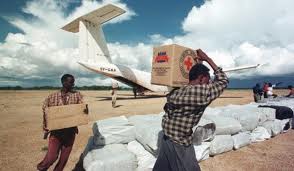
The causes of the famine in Somalia, Kenya and Ethiopia – and why donating aid to Africa does save lives

People in the Horn of Africa, especially Somalia, are starving in their millions due to a famine and the failure of developed country governments and people to donate enough money for food aid to feed them (1) – (2). The famine has five main causes – the worst drought in 60 years (possibly worsened worsened by climate change), civil war (lengthened by US and Ethiopian involvement), wealthy Africans and foreign investors buying up land and water for commercial farming, overpopulation; and some factions in the anti-American side in the civil war – Al Shabab –who target aid workers or refuse to let them in. Overpopulation is far from the only cause and would require increased aid (with very different conditions on it) to reverse it, not the end of aid which many are wrongly advocating.

Those who claim ‘foreign aid hasn’t worked’ as an excuse for not donating this time are confusing long-term  development aid with emergency humanitarian aid for famine victims, which definitely saves lives. Those who blame Somalians might as well be saying cancer victims must have done something wrong to deserve it (especially to starving children).

 Foreign aid has failed to produce enough development from the 1980s on because donor governments, the IMF and the World Bank have only given it on conditions that prevent development. It’s been based on a myth that developed countries became developed through total free trade, which has been used to make aid conditional on complete free trade policies by developing countries. In fact development economist Ha Joon Chang in his book ‘Bad Samaritans’ has shown that all developed countries developed their industries through government intervention, subsidies and protection – and that’s the only way developing countries can develop (3).

The idea that humanitarian aid organisations like the UN’s World Food Programme have failed, or that aid and development charities like Oxfam have failed, is simply false though. Their emergency aid has saved lives and so has their development aid, but the latter is not on a large enough scale to produce major economic development in the absence of similar government aid and fair trade.

If you want to just donate rather than read the rest you can donate in the UK to the Disasters Emergency Committee on this link or from anywhere in the world to the UN World Food Programme on this link or to the International Red Cross on this link.)

Otherwise read on for more details on the causes of the famine and solutions – the donation links and others are repeated at the end.


Drought

Even camels are dying in this drought

The most immediate cause is the worst drought in 60 years in the Horn of Africa (4) While there have been droughts in the Horn of Africa for centuries, their frequency has increased from a 10 year cycle to a 5 year one and then recently to one every 2 to 3 years (5).

Climate change caused by developed world CO2 emissions can’t be ruled out as one of the causes. The US Geological Survey predicted in January that droughts in East Africa would be more likely due to rising global temperatures, while climate scientists are coming to a concensus that extreme weather events have become so extreme and common that the link with climate change must be investigated (6) – (7).


Somalia's Civil War – and US government involvement in continuing it

Equally important as an immediate cause is the decades long civil war (kept going by the US government’s backing for warlords they say are fighting against others they allege are allied to Al Qa’ida, under both Bush and Obama ; and by a US backed Ethiopian invasion from 2007 to 2009, which re-started  the civil war after it had briefly ended in late 2006 ) . This is less straightforward than it sounds as  some of the warlords previously identified as the worst in by the US in the past are now being supported by it. Ethiopian soldiers who have been at war with Somalia many times due to a dispute over who owns the Ogaden region , slit Somalian villagers’ throats “like goats”, stabbed out teenagers’ eyes with bayonets and committed many rapes. The Ethiopian invasion (now ended) and US air and drone strikes targeting Al Shabab and Al Qa’ida leaders across the country, along with CIA detention and torture centers in Mogadishu, have increased support for the Al Shabab rebels (8) – (20).  

The war is definitely a primary cause of the famine - the worst famines in the region in the past came during the heaviest fighting in civil and international wars (21).


Al Shabab – why they aren’t all preventing all aid getting through – and they’re not getting UN aid money

Third is Al Shabab – the allegedly Al Qa’ida supporting side which the US opposes in the civil war, some of whom have said they’ve lifted their previous ban on western aid agencies operating in their territory (and killings of aid workers), while others say it will continue and deny there’s a famine. This seems to be bechttp://www.blogger.com/img/blank.gifause Al Shabab is more a loose alliance of groups than a single organisation (22) – (24).

This does not mean it will be impossible to get aid through. Some Shabab factions are letting aid in (25). The Al Shabab ban only applied to four foreign aid agencies – Care, the UN Development Programme, the UN’s World Food Programme and the International Medical Corps (26). Some villages and areas supposedly under Al Shabab control are letting aid agencies in. Some towns and villages in areas where Al Shabab factions have refused to let foreign aid in are also changing sides in order to get aid for their people (27) – (28). Many aid organisations, like the World Food Programme, were already delivering aid through local Somalian charities (29).

The factions among Al Shabab refusing to allow aid in are not an unprecedented problem. There have been problems of looting by criminal gunmen and pirates for decades (30).

In the last few years US funding for humanitarian aid in Somalia fell massively due to US government restrictions on funding for aid in Somalia, designed to prevent any money getting into Al Shabab’s hands , which have only recently been loosened (and not enough according to some aid workers) (31)

There have been many false claims made by extreme right bloggers like Pamela Geller (of the US Tea Party Republican faction) that UN aid money has gone to Al Shabab. In fact UN food and medical aid has been given to Al Shabab drought committees to distribute in some areas where it’s the only way to get aid to the people (32) – (33).

Geller asks ‘How much money is left over for food after buying weapons and qurans?’. No money – because it’s food and medical aid, Pamela - and there was no money involved

The reliability of Geller’s claims can be judged by some of her other blog posts in which she for instance implied  that the Norway terrorist shootings committed by Anders Behring Breivik were the result of an Islamist ‘Jihad’ and that all rapes in the past 5 years in Norway had been committed by Muslims (34). 


Land - Grazing land and water supplies bought up by US , European, Chinese and Saudi firms for commercial farming, leaving less for herders

Fourth, a major long term cause is land previously available for nomadic grazing being taken over for commercial farming for profit, much of it bought up by foreign firms and governments (35) – (38). 

A large proportion of the population of Kenya, Somalia and Ethiopia have survived for centuries (and probably thousands of years) as nomadic pastoralists or herders, with small flocks of goats and cattle (and more recently camels). In the past they survived periodic droughts by constantly moving their herds to where there was water and grazing, often across borders between modern countries (39).

However a wealthy minority of Africans and Big American, European and Chinese hedge funds and firms Saudi sheikhs and companies have been buying up large amounts of land in Africa (including Kenya and Ethiopia) for commercial agriculture for profit, much of it in the river valleys and estuaries the herders moved to during droughts in the past (40).

This is partly because much of the Middle East and the desert states of the US such as California, Texas and Arizona (along with Florida) have depleted their acquifers and are running out of water and having to import more food – and partly because foreign investors see profits to be made from producing food as prices rise due to population growth and land previously used for farming becoming desert or being used for bio-fuels (41) – (46).

Chinese government backed investors have been doing the same as it’s rising population, growing water shortages and building on and polluting of farmland is leaving it requiring more food imports (47) – (49)


Why Trading in Food ‘futures’ should be banned

Many hedge funds, pension funds, banks other investors have begun also trading in food ‘futures’ – bets on the price a commodity will reach by a certain date. This and the lack of any regulation preventing them buying and storing large amounts of food to drive up prices and make them more likely to win their bet and profit from it is also increasing food prices and making it harder for the poorest to afford food. Trading in food futures was illegal until the banks and hedge funds lobbied governments to legalise it – it should be banned again and forever. (50) – (52)


Overpopulation  – is as much caused by poverty as a cause of it, so requires aid to end it, but aid with very different conditions

Overpopulation in sub-Saharan Africa is a serious problem and caused largely by high birth rates, but it’s a problem which can only be solved by development. That development can only be brought about by increasing aid (and changing the conditions on it) to provide education, contraception, development, healthcare and unemployment benefit. That development has to be combined with fairer trade – meaning allowing African countries to protect their industries more than reducing limits on exports to the developed world. This is because high birth rates are as much a symptom of poverty and lack of development as a cause of it.

The poorest countries have a high infant mortality rate ( over 20 times as many children die before reaching their teens in Somalia as in the UK) and low life expectancy (average life expectancy in Somalia is 48 compared to 79 in the UK), both problems caused by food shortages and lack of clean water and healthcare, as well as inequality and poverty.

On top of this in countries with little or no welfare state the only way people in poverty can ensure they’ll be looked after if they become too ill or old to work or to farm their own land or look after their herd is to have enough children to do it. Since many will die as infants or adults, that means having more children.

The United Nations Population Fund has found that the poorest 20% of the population in developing countries has double the birth rate of the wealthiest 20% (53).

Even taking into account high infant mortality rates and low life expectancy population is still rising too fast due to high birth rates though, leading to shortages of clean water, food and jobs (54).

Other contributing causes include traditions of having big families to honour ancestors or for the prestige of the family or clan, low social status of women, lack of education and being unable to get access to contraceptives (55). Urbanisation is reducing birth rates by changing social norms and the status of women and giving women access to contraception and family planning (56) – (57).

Birth rates in Africa have also been falling rapidly due to higher income and education levels in towns and cities, though they seem to have stopped falling in the last few years in Kenya and in Ethiopia (58).

Birth rates only fell in the developed countries after people became wealthier, less dependent on agriculture and less dependent on human labour for it (due to mechanisation), urbanised (as industries other than agriculture developed, providing more employment in cities) and provided government funded education, healthcare and welfare for unemployment ,sickness, disability and pensions. The same has happened in the urban areas in some African countries, in towns and cities which have seen economic growth. The effects have been limited by overall economic decline in African countries from the 1980s on and the lack of government support – and remain higher in rural areas.  

There is a strong negative correlation between literacy rates and birth rates (i.e  the more people in a country can read and write the fewer children they have per adult), suggesting providing funding for education could be effective in reducing over-population.

Some UN experts say population in some parts of Kenya has doubled in the past decade (though herd sizes remain unchanged (59). The fact that herd sizes have not increased makes it unlikely that over-grazing has caused the drought, though human over-population means more people have less to live on.

Those claiming the famine is Somalians and Kenyans’ own fault as they should use contraception and become more educated to reduce birth rates also ignore the fact that condoms cost money, as does education. If they demand Somalis and Kenyans use contraception they need to donate more money to provide for this.

Development – in terms of economy, education and public services and welfare – is strongly correlated with falling birth rates, just as lower birth rates make development easier and higher ones make it harder. As UNFPA say though, lower birth rates do not guarantee development. This requires ending harmful absolute free trade conditions on aid, such as demands for privatisation of state industries and public services, welfare cuts and abolition of tariffs and other protections.

Even if all restrictions on trade between Africa and the developed world were abolished tomorrow African traders, farmers and businesses could not compete with companies and industries built up over centuries by protection and subsidy till they were world leaders. It would also be a levelling down process to African standards of living for the majority rather than a levelling up of African standards of living. That’s why allowing Africa to protect its farmers and industries and set up free trade areas only with countries at a similar level of development is better than total free trade.


Why there’s no excuse for not donating

Despite all this, both governments and people in developed countries are failing to donate enough money for emergency food aid and many people are even calling for the starving to be left to starve as part of their ideological crusade against all foreign aid or a mistaken belief that they are being conned as they’ve given to famine relief for Somalia in the past and are being asked to again now (see e.g comments on this Independent newspaper article).

This has to change and change now. Whatever your views on development aid this is emergency aid which has to be delivered now to keep millions alive long enough for longer term solutions to be put in place.

There is a lot wrong with many governments’ and IMF and World Bank aid programmes and they need reformed, but pretending that Africans would be better off if we provided them with no foreign aid at all is the real con trick. Some people are conning themselves into believing what they want to believe, so they don’t have to feel any guilt for letting millions of adults and children starve, rather than contribute a small fraction of their own income and taxes to saving their lives.

The causes of the drought and civil war need to be addressed, but we can’t leave millions of people to die while we address them. They need emergency humanitarian food and water aid now – we know from past crises this will save lives.


What you can do

If you’re in the UK you can donate to the Disasters Emergency Committee (an umbrella group of all the major aid agencies and charities) donate in the UK to the Disasters Emergency Committee on this link .

You can donate from anywhere in the world to the UN World Food Programme on this link or to the International Red Cross on this link

You can also contact your MP or members of congress and the ministry that deals with foreign aid in your country (e.g US Aid in the US or the Department for International Development in the UK) to ask them to donate more to the UN’s East Africa famine appeal and/or to ask them to increase foreign aid to the poorest countries ;  and ensure any contracts funded with foreign aid go to companies based in the recipient country rather than the donor country wherever possible – and to recommend they read Ha Joon Chang’s book ‘Bad Samaritans’ and adopt aid policies that permit poorer countries to protect and subsidise their economy and public services from foreign competition so they can develop.


Sources


(1) = Oxfam 21 Jun 2011 ‘Famine in Somalia: Causes and solutions’, http://www.oxfamamerica.org/articles/famine-in-somalia-causes-and-solutions

(2) = Independent 21 Jul 2011 ‘Millions could die of hunger as drought grips Horn of Africa’,http://www.independent.co.uk/news/world/africa/millions-could-die-of-hunger-as-drought-grips-horn-of-africa-2317831.html

(3) = Ha Joon Chang (2007) ‘Bad Samaritans’, Random House, London, 2008


Sources on Drought and possible link with climate change

(4) = See (2) above

(5) = The Economist 24 Sep 2009 ‘East Africa's drought - A catastrophe is looming’,http://www.economist.com/node/14506436 ; ‘The drought cycle in east Africa has been contracting sharply. Rains used to fail every nine or ten years. Then the cycle seemed to go down to five years. Now, it seems, the region faces drought every two or three years. The time for recovery—for rebuilding stocks of food and cattle—is ever shorter. And if the rains fail before the end of this year, an unimaginably dreadful catastrophe could ensue.’

(6) = US Geological Survey 28 Jan 2011 ‘More Frequent Drought Likely in Eastern Africa’,http://www.usgs.gov/newsroom/article_pf.asp?ID=2690

(7) = Independent 01 Jul 2011 ‘Extreme weather link 'can no longer be ignored'’,http://www.independent.co.uk/environment/climate-change/extreme-weather-link-can-no-longer-be-ignored-2305181.html

Sources on US involvement in keeping the civil war going

(8) = Independent 09 Feb 2008 ‘Somalia: The World's forgotten catastrophe’, http://www.independent.co.uk/news/world/africa/somalia-the-worlds-forgotten-catastrophe-778225.html

(9) = Wikipedia entry for ‘Somali civil war’,http://en.wikipedia.org/wiki/Somali_Civil_War#Rise_and_fall_of_the_ICU.2C_Ethiopian_intervention.2C_and_the_TFG_.282006.E2.80.932009.29

(10) = New York Times 06 Jun 2006 ‘Somali Islamists Declare Victory; Warlords on Run’,http://www.nytimes.com/2006/06/06/world/africa/06somalia.html (says Bush administration funded Somalian secular warlords with around $100,000 to $150,000 a month)

(11) = USA Today 08 Jan 2007 ‘U.S. support key to Ethiopia's invasion’,http://www.usatoday.com/news/world/2007-01-07-ethiopia_x.htm

(12) = Guardian 13 Jan 2007 ‘How US forged an alliance with Ethiopia over invasion’,http://www.guardian.co.uk/world/2007/jan/13/alqaida.usa

(13) = Amnesty International UK 06 Jan 2008 ‘Somalia: Troops killing people 'like goats' by slitting throats-new Amnesty report’, http://www.amnesty.org.uk/news_details.asp?NewsID=17747

(14) = Independent 22 Nov 2007 ‘Somalia war-refugee crisis surpasses Darfur in its horror’,http://www.independent.co.uk/news/world/africa/somalia-warrefugee-crisis-surpasses-darfur-in-its-horror-759034.html

(15) = Washington Post 25 Jun 2009 ‘U.S. Sends Weapons to Help Somali Government Repel Rebels Tied to Al-Qaeda’,http://www.washingtonpost.com/wp-dyn/content/article/2009/06/24/AR2009062403495.html

(16) = AP 25 Jun 2009 ‘U.S. to give Somali government guns, training’,http://www.msnbc.msn.com/id/31549172/ns/world_news-africa/t/us-give-somali-government-guns-training/

(17) = CBC radio 20 jul 2011 ‘Somalia: Jeremy Scahill’, http://www.cbc.ca/thecurrent/interviews/2011/07/20/somalia-jeremy-scahill/ (covers US support for warlords who they previously said were the worst and their main targets)

(18) = The Nation 12 Jul 2011 ‘The CIA’s secret sites in Somalia’ , http://www.thenation.com/article/161936/cias-secret-sites-somalia

(19) = Time 18 Sep 2009 ‘After a U.S. Air Strike, Somali Peacekeepers Pay’,http://www.time.com/time/world/article/0,8599,1924902,00.html

(20) = Guardian 30 Jun 2011 ‘US extends drone strikes to Somalia’,http://www.guardian.co.uk/world/2011/jun/30/us-drone-strikes-somalia

(21) = BBC News 14 Jul 2011 ‘Horn of Africa drought: Why is Somalia worst affected?’, http://www.bbc.co.uk/news/world-africa-14143562

Sources on Al Shabab and to what extent it’s preventing aid getting in

(22) = Channel 4 News (UK) 07 Jul 2011 ‘Somali rebels lift ban on food-aid’, http://www.channel4.com/news/somali-rebels-lift-ban-on-food-aid

(23) = guardian.co.uk 22 Jul 2011 ‘Somali rebels deny lifting ban on foreign aid groups’, http://www.guardian.co.uk/world/2011/jul/22/somali-rebels-deny-lifting-ban

(24) = BBC News Africa 24 Jul 2011 ‘Solving Africa’s aid conundrum’, by Andrew Harding, http://www.bbc.co.uk/news/world-africa-14269987

(25) = See (24) above

(26) = BBC News 22 Jul 2011 ‘Somali Islamists maintain aid ban and deny famine’, http://www.bbc.co.uk/news/world-africa-14246764 ; Agencies banned by al-Shabab – Care, International Medical Corps, UNDevelopment programme (UNDP), UN World Food Programme (WFP)

(27) = See (24) above

(28) = BBC News Africa 24 Jul 2011 ‘Solving Africa’s aid conundrum’, by Andrew Harding, http://www.bbc.co.uk/news/world-africa-14269987 (see  article and first comment by BBC reporter Andrew Harding)


(29) = Reuters 22 Jul 2011 ‘Somali rebels say U.N. food agency still banned’,http://www.reuters.com/article/2011/07/22/us-somalia-famine-idUSTRE76L2HK20110722; ‘"The approach is to test the ground, to probe and see how far we get," WFP spokesman, David Orr, told Reuters…The WFP delivers its food in Somalia through local aid groups and not directly, Orr said.’

(30) = BBC News 22 Jul 2011 ‘Q&A: East Africa hunger crisis’, http://www.bbc.co.uk/news/world-africa-14249733 ; It is very difficult to get aid to Somalia - even before al-Shabab banned aid groups, some food deliveries were looted by gunmen and others were held for ransom by pirates…..Agencies banned by al-Shabab – Care, International Medical Corps, UNDevelopment programme (UNDP), UN World Food Programme (WFP)

(31) = Wall Street Journal 21 Jul 2011 ‘Somalia Famine Threatens to Spread’, http://online.wsj.com/article/SB10001424053111903554904576457721297830248.html ; ‘Aid group Oxfam said $1 billion is needed for famine relief. On Wednesday, the U.S. announced an additional $28 million in emergency funding atop $431 million in assistance already given this year. Most importantly, those new U.S. funds won't be placed under restrictions implemented in 2009 to keep food and money from being stolen by Islamic militants. Aid groups have called for the restrictions to be lifted entirely and said the rules have severely limited their operations. U.S. humanitarian contributions in Somalia fell from $237 million in 2008 to $29 million last year

(32) = Pamela Geller’s Atlas Shrugs blog 17 Jul 2011 ‘Somalia: UN Humanitarian Aid Going to Jihadist Groups’, http://atlasshrugs2000.typepad.com/atlas_shrugs/2011/07/somalia-un-humanitarian-aid-going-to-jihadist-groups.html#comment-6a00d8341c60bf53ef0154341092e9970c

(33) = BBC News 17 Jul 2011 ‘Somalia drought: Aid for camps under Islamists’, http://www.bbc.co.uk/news/world-africa-14178953

(34) = Pamela Geller’s Atlas Shrugs blog 22 Jul 2011 ‘"Long Peaceful Norway" ....... Not’, http://atlasshrugs2000.typepad.com/atlas_shrugs/2011/07/long-peaceful-norway-not-.html

Sources on land being bought up for commercial farming as a cause of famine in the Horn of Africa

(35) = Guardian.co.uk 20 Jul 2011 ‘Food aid is needed desperately - but ultimately it is not the answer’, http://www.guardian.co.uk/global/2011/jul/20/famine-africa-result-modern-parctice

(36) = Guardian.co.uk 08 Jun 2011 ‘US universities in Africa 'land grab' - Institutions including Harvard and Vanderbilt reportedly use hedge funds to buy land in deals that may force farmers out’,http://www.guardian.co.uk/world/2011/jun/08/us-universities-africa-land-grab

(37) = Observer 07 Mar 2010 ‘How food and water are driving a 21st-century African land grab’, http://www.guardian.co.uk/environment/2010/mar/07/food-water-africa-land-grab

(38) = Observer 07 Mar 2010 ‘Deals can be good news when not made behind closed doors’, http://www.guardian.co.uk/environment/2010/mar/07/africa-land-grab-food-water 

(39) =  See (35) above

(40) = See (35) – (38) above

(41) = guardian.co.uk 22 April 2011 ‘This will be the Arab world's next battle’, http://www.guardian.co.uk/commentisfree/2011/apr/22/water-the-next-arab-battle

(42) = U.S Geological Survey Fact Sheet 103-03, November 2003, ‘Ground-Water Depletion Across the Nation’, http://pubs.usgs.gov/fs/fs-103-03/

(43) = Reuters 14 Dec 2009 ‘California aquifers seen rapidly losing water’, http://www.reuters.com/article/2009/12/15/us-water-california-idUSTRE5BE0FP20091215

(44) = Guardian.co.uk 08 Jun 2011 ‘US universities in Africa 'land grab' - Institutions including Harvard and Vanderbilt reportedly use hedge funds to buy land in deals that may force farmers out’, http://www.guardian.co.uk/world/2011/jun/08/us-universities-africa-land-grab

(45) = Observer 07 Mar 2010 ‘How food and water are driving a 21st-century African land grab’, http://www.guardian.co.uk/environment/2010/mar/07/food-water-africa-land-grab

(46) = Guardian 05 Apr 2008 ‘UN chief calls for review of biofuels policy’, http://www.guardian.co.uk/environment/2008/apr/05/biofuels.food

(47) = guardian.co.uk 23 Feb 2010 ‘China's soil deterioration may become growing food crisis, adviser claims’ – ‘China faces struggle to feed population as pollution and urbanisation threaten supply, says government expert’, http://www.guardian.co.uk/environment/2010/feb/23/china-soil-deterioration-food-supply

(48) = guardian.co.uk 28 Jun 2011 ‘China told to reduce food production or face 'dire' water levels’ – ‘Food must be imported and water use tightly regulated to protect dwindling supply, a leading groundwater expert has warned’, http://www.guardian.co.uk/environment/2011/jun/28/china-food-water

(49) = Observer 07 Mar 2010 ‘How food and water are driving a 21st-century African land grab’, http://www.guardian.co.uk/environment/2010/mar/07/food-water-africa-land-grab

Sources on futures trading in food driving up food prices

(50) = Guardian 19 Jul 2010 ‘Hedge funds accused of gambling with lives of the poorest as food prices soar’, http://www.guardian.co.uk/business/2010/jul/19/speculators-commodities-food-price-rises

(51) = Guardian Poverty Matters blog 16 May 2011 ‘Rising food prices: the role of pension funds’, http://www.guardian.co.uk/global-development/poverty-matters/2011/may/16/christian-aid-hunger-report-commodities-food-prices

(52) = Observer 25 Jan 2011 ‘Food speculation: 'People die from hunger while banks make a killing on food'’, http://www.guardian.co.uk/global-development/2011/jan/23/food-speculation-banks-hunger-poverty

Sources on over-population

(53) = UNFPA 2009 Fact Sheet, http://www.unfpa.org/public/home/factsheets/pid/3856#facts

(54) = See (53) above

(55) = Paulina Makinwa-Adebusoye (2001) ‘Socio-cultural factors affecting fertility in Sub-Saharan Africa’ UN, New York, 2001, http://www.un.org/esa/population/publications/prospectsdecline/makinwa.pdf

(56) = The Economist 27 Apr 2009 ‘Africa's population - The baby bonanza - Is Africa an exception to the rule that countries reap a “demographic dividend” as they grow richer? ‘, http://www.economist.com/node/14302837

(57) = UNFPA (2007) ‘State of the World Population 2007’, Chapter 5, http://www.unfpa.org/swp/2007/english/chapter_5/index.html

(58) = See (56) above

(59) = BBC News 26 Jul 2011 ‘'Top 10 culprits' of Horn of Africa famine’, http://www.bbc.co.uk/news/world-africa-14291581

Saturday, January 02, 2010

Will ‘the international community’ now create a civil war in Yemen as bad as the ones they’ve created in Iraq, Pakistan, Somalia and Afghanistan?

After the ‘underpants bomber’’s failed attempt to bomb a flight from Amsterdam to the US the Obama administration has said it will carry out ‘retaliatory strikes’ against Al Qa’ida leaders in Yemen. Yet the Bush and Obama administrations have been carrying out missile strikes on suspected Al Qa’ida leaders since 2002 and organising and training Saudi and Yemeni government forces for attacks on suspected Al Qa’ida leaders in Yemen since 2001. The SAS are also reported to have been deployed to Yemen from 2002 on and US Special Forces have almost certainly been operating too. The results have included a lot of civilian deaths in the strikes and an increase the support for extremist groups in the region.

When the editor of a Yemeni website reported on civilian deaths in a Yemeni military airstrike in September 2009 he was arrested by plain clothes intelligence officers and has not been heard of since.

A junior British foreign office Minister interviewed on BBC news recently said ‘security co-operation’ with the government of Yemen would be stepped up in parallel with development to reduce unemployment, lack of education and poverty.

Looking at the record of the same ‘coherent, integrated strategy’ in Iraq, Pakistan and Afghanistan though the actual results are generally to create civil war and massively increase the number of terrorist attacks. In Afghanistan before the US invasion of 2001 suicide bombings were extremely rare, the most notorious targeted Ahmad Shah Massoud, a Mujahedin leader killed by Taliban suicide bombers in June 2001. Since the invasion suicide bombings have become common and civilian casualties from all causes have risen every year. Ditto for Iraq and Pakistan since big military offensives, air strikes and ‘counter insurgency’ to ‘root out extremists’.

Far from stabilising the countries involved ‘support’ from the US and it’s allies generally leads to massive destabilisation, which is used to justify military bases being set up in the country and troops being deployed to train or operate alongside the forces of the country. The only way you could interpret what’s happened in Pakistan or Iraq as ‘greater stability’ would be if you adopted Chomsky’s interpretation of the phrase – certain governments’ code-word for ‘greater influence for us’.

Afghanistan and Pakistan provide the majority of the pipeline route favoured by the US and EU for export of the post-Soviet republics oil and gas. Iraq has the second largest known oil reserves in the world, while Yemen, though having little oil or gas, is strategically important according to the US Energy Information Agency ‘because of its location on the Bab el-Mandab, one of the world's most strategic shipping lanes, through which an estimated 3.5 million barrels of oil passed daily in 2010. Disruption to shipping in the Bab el-Mandab could prevent tankers in the Persian Gulf and the Gulf of Aden from reaching the Suez Canal/Sumed pipeline complex, requiring a costly diversion around the southern tip of Africa to reach western markets.’ You can see on the map below how Somalia and Yemen guard either side of the Gulf of Aden – which would be the main alternative export route for Middle Eastern oil and gas if a conflict with Iran closed off the Straits of Hormuz between Iran and Oman.

map of the middle east showing how Yemen and Somalia guard each side of the Gulf of Aden and how the important Bab el-Mandab oil tanker export route follows Yemen's coast - this map is from infoplease

(Please note that this post originally mistakenly claimed Yemen had as high a share of proven global oil reserves as Kuwait. This was wrong and based on mis-reading a column in BP's Annual Statistical review and mistaking the United Arab Emirate's figures for Yemen's, which are only 0.3% of proven reserves globally.)

American oil giants Exxon-Mobil and Hunt Oil, the French Total Oil and British Gas have had oil and gas contracts in Yemen for many years.

The collapse of Somalia’s government in the late 1980s has led to little oil exploration, so no significant proven reserves, but what surveys have been undertaken suggest it may have large reserves in its territorial waters and several major oil companies, including Conoco, had oil exploration contracts with the dictatorship of Siad Barre before it’s overthrow and have argued that those contracts are still valid if the civil war ends.

Maybe many of the members of governments involved genuinely believe they are preventing rather than inciting terrorism – and maybe the overlap between oil and gas reserves and export routes and countries where the US intervenes against Al Qa’ida is just co-incidence, but it’s just as likely that Al Qa’ida and ‘WMDs’ have become the same worldwide excuse for intervention for other motives that ‘Soviet backed Communism’ was during the ‘Cold War’.

Could it be that more progress would be made in reducing terrorism by ending the raids and the air and missile strikes and the ‘counter-insurgency’ and instead simply defending against terrorist attacks with defensive security measures and providing a standard of living above subsistence level to most Yemenis, Pakistanis, Afghans and Iraqis?

Sources

BBC News 25 Jan 2002 ‘CIA 'killed al-Qaeda suspects' in Yemen’, http://news.bbc.co.uk/1/hi/2402479.stm

BBC News Online 17 November, 2002, 14:49 GMT ‘SAS 'hunting Bin Laden in Yemen'’,
http://news.bbc.co.uk/1/low/world/middle_east/2485043.stm

Reuters 23 Sep 2009 ‘Yemen media protest arrest of third journalist’,
http://www.reuters.com/article/idUSLM252909

Observer 29 Jan 2006 ‘Revealed: UK's role in deadly CIA drone’,

guardian.co.uk 04 Jun 2007 ‘Briton 'killed in US missile attack in Somalia'’,
http://www.guardian.co.uk/world/2007/jun/04/politics.foreignpolicy

ABC News ‘Obama Ordered U.S. Military Strike on Yemen Terrorists’,
http://abcnews.go.com/Blotter/cruise-missiles-strike-yemen/story?id=9375236&page=1

BBC News 13 Nov 2009 ‘Saudis 'renew Yemen bombing'’,

Guardian 14 Dec 2009 ‘Air strike 'kills 70 civilians' in Yemen’,
http://news.bbc.co.uk/1/hi/8411726.stm

Los Angeles Times 13 Jan 1993 ‘The Oil Factor in Somalia’, http://articles.latimes.com/1993-01-18/news/mn-1337_1_oil-reserves
; for full version see http://www.somaliawatch.org/archivejuly/000922601.htm

B.P. Statistical Review of World Energy 2009, http://www.bp.com/liveassets/bp_internet/globalbp/globalbp_uk_english/reports_and_publications/statistical_energy_review_2008/STAGING/local_assets/2009_downloads/statistical_review_of_world_energy_full_report_2009.pdf

Arabian Business.com ‘Company Profile : Exxon-Mobil Chemical’,
http://www.arabianbusiness.com/index.php?option=com_companylist&view=list&companyid=16826

BBC News 21 Dec 2009 ‘Houthi rebels say 54 killed in north Yemen air strike’,
http://news.bbc.co.uk/1/hi/8425069.stm

BBC News 24 Dec 2009 ‘Dozens killed in Yemen air strike on al-Qaeda suspects’, http://news.bbc.co.uk/1/hi/world/middle_east/8429370.stm (US gave Yemeni government $70mn in military aid in 2009)

Committee to Protect Journalists 25 Sep 2009 ‘In Yemen, critical journalist disappears’,
http://www.unhcr.org/refworld/docid/4b25fc0123.html

AP 24 Dec 2009 ‘Al-Qaida fighters killed in Yemen air strikes’, http://www.guardian.co.uk/world/2009/dec/24/yemen-strike-al-qaida

Guardian 28 Dec 2009 ‘Al-Qaida: US support for Yemen crackdown led to attack’, http://www.guardian.co.uk/world/2009/dec/28/al-qaida-us-yemen-attack

Energy Business Review 15 Oct 2009 ‘Total's Yemen LNG Plant Starts Production’,
http://oilgaspipelines.energy-business-review.com/news/totals_yemen_lng_plant_starts_production_091015/